
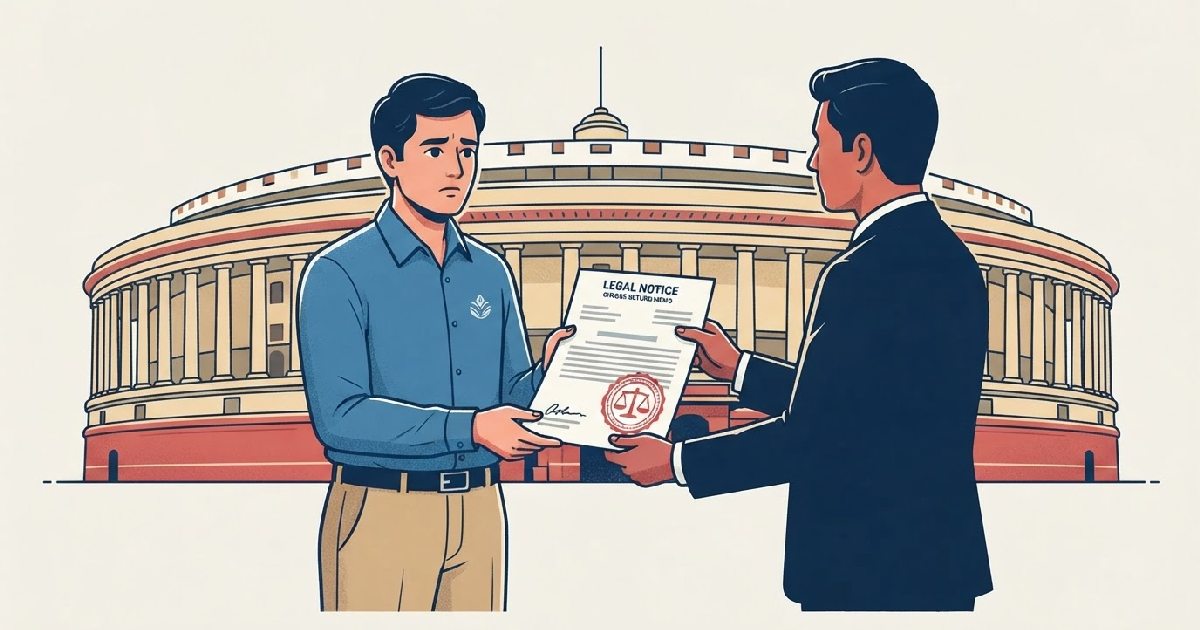
When a bank returns an unpaid cheque issued by a Non-Governmental Organization (NGO), a formal Cheque Bounce Notice to NGO becomes a mandatory legal step in India. This notice, also known as a notice of dishonour, initiates the process under the Negotiable Instruments Act, 1881 (NI Act).
Specifically, Section 138 of the NI Act criminalizes cheque dishonour under certain conditions. This legal framework ensures accountability for financial commitments, applying its provisions to NGOs much like any other entity involved in transactions.
The foundation of cheque dishonour law in India
Cheque dishonour occurs when a bank refuses to process a cheque presented for payment. Common reasons include insufficient funds in the drawer’s account, a mismatched signature, or even a stop payment instruction.
The Negotiable Instruments Act, 1881, forms the foundational legal framework in India for such incidents. It regulates negotiable instruments like cheques, bolstering their reliability and integrity in financial dealings.
Defining key terms in cheque bounce cases
Understanding the terminology is crucial. The “drawer” is the individual or entity who issues the cheque, while the “payee” is the recipient. When a cheque bounces, the bank issues a “Cheque Return Memo” to the payee.
This memo officially states the reason for non-payment and serves as vital evidence for any legal proceedings. A valid cheque bounce case under Section 138 requires the cheque to represent a “legally enforceable debt or liability.”
This means cheques issued as gifts or for illegal transactions generally fall outside the scope of this section. The underlying obligation must be genuine and binding for the law to apply.
Strict legal requirements for cheque bounce cases
The legal framework for cheque bounce cases under Section 138 of the NI Act mandates a precise sequence of steps and timelines. Adhering to these procedural requirements is critical for the legal validity of any subsequent action.
Failure to meet these strict deadlines can lead to the dismissal of a case. This structured approach emphasizes the seriousness of cheque dishonour within India’s legal system.
Navigating the cheque presentation and notice period
Firstly, the payee must present the cheque to the bank within three months from its issue date, or within its validity period, whichever is earlier. If dishonoured, the bank then issues a Cheque Return Memo to the payee.
Following this, the payee must send a written legal notice to the drawer within 30 days of receiving the memo. This notice must explicitly demand payment of the bounced cheque’s amount.
The drawer then has a 15-day window from the date of receiving this legal notice to make the payment. If payment is successfully made within this period, the matter is resolved, preventing further legal action.
Should the drawer fail to make payment, the payee can then file a criminal complaint. This complaint must be lodged in a Magistrate’s Court within 30 days after the 15-day payment window expires. Proper adherence to these timelines is essential for legal action for dishonoured cheques.
| Action Required | Mandatory Timeline | Purpose |
|---|---|---|
| Cheque Presentation | Within 3 months of issue or validity | Ensure timely deposit |
| Issuance of Legal Notice | Within 30 days of Cheque Return Memo receipt | Demand payment from drawer |
| Drawer Payment Window | 15 days from legal notice receipt | Opportunity to resolve without court |
| Filing of Criminal Complaint | Within 30 days after 15-day window expires | Initiate criminal proceedings |
Crafting a legally sound cheque bounce notice
A legally effective cheque bounce notice must be in writing and include specific details. While the NI Act doesn’t prescribe a single format, certain components are universally required for legal sufficiency.
These elements ensure the notice clearly communicates the default and the intent for legal recourse. Accuracy in detail within the notice is paramount for its effectiveness in court proceedings.
Essential details for your demand notice
The notice must include full details of both the sender (payee) and the recipient (drawer), including their names and addresses. It must also specify the cheque number, date, amount, and the bank and branch on which it was drawn.
You’ll need to detail the underlying transaction or the legally enforceable debt for which the cheque was issued. The notice also requires the dates of cheque presentation and dishonour, along with the exact reason for non-payment as stated in the bank’s return memo.
Crucially, it needs a clear demand for the full cheque amount within 15 days of receipt. The notice must also warn the drawer of the intent to initiate legal action under Section 138 of the Negotiable Instruments Act, 1881, if payment isn’t received within the stipulated time.
If an advocate sends the notice, their details and signature must be included. Proof of delivery, typically via registered post or courier with acknowledgment, is also essential for legal purposes.
Consequences for NGOs and their office bearers
When an NGO is involved in a cheque bounce case, the implications can extend significantly. Dishonour of a cheque under Section 138 of the NI Act is considered a criminal offense, carrying serious consequences designed to deter financial misconduct.
These penalties protect the payee’s interests and maintain the integrity of financial instruments. The repercussions can affect both the organization’s reputation and the personal standing of its office bearers.
Organizational and individual accountability under the NI Act
Penalties for cheque dishonour can include imprisonment for up to two years, a fine that may extend to twice the cheque amount, or both. The court may also order the NGO to compensate the payee for financial losses.
A bounced cheque can severely impact the drawer’s CIBIL score. This negative mark could potentially lead to the NGO being blacklisted for future loans, hindering its operational capacity. Beyond the entity itself, organizational liability in cheque bounce cases is a significant concern for NGOs.
While the NGO is liable as a legal entity, Section 141 of the NI Act allows for the prosecution of individual employees or office bearers. This applies if the offense occurred with their consent, connivance, or due to their neglect. Understanding NGO treasurer liability and that of other key individuals is vital.
What makes a cheque bounce notice legally valid?
A legally valid cheque bounce notice must be in writing, sent within 30 days of receiving the cheque return memo. It needs to specify all cheque details, the transaction’s nature, reason for dishonour, and demand payment within 15 days, explicitly referencing Section 138 of the NI Act.
Can individuals within an NGO be held liable for a bounced cheque?
Yes, under Section 141 of the Negotiable Instruments Act, 1881, individuals like employees or office bearers of an NGO can face criminal prosecution. This happens if their involvement, consent, connivance, or neglect contributed to the cheque’s dishonour.
What actions should an NGO take after receiving a cheque bounce notice?
Upon receiving a cheque bounce notice, an NGO should immediately verify the details against its records. If the debt is legitimate, prompt payment within the 15-day period is advisable to avoid criminal proceedings. Legal counsel should be sought if there are grounds to dispute the claim.