
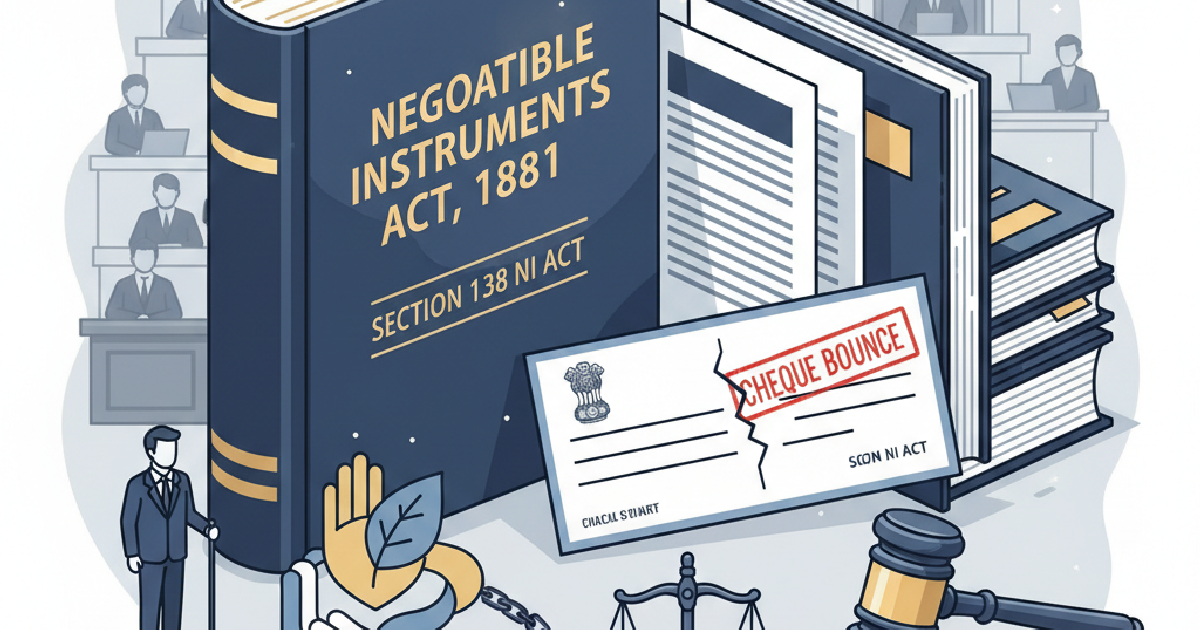
In India, navigating the legal complexities of organizational liability in cheque bounce cases involving Non-Governmental Organizations (NGOs) and Trusts is essential. The Negotiable Instruments Act, 1881, criminalizes cheque dishonour, but who bears the responsibility hinges significantly on the entity’s legal structure. This distinction shapes who faces prosecution.
As of July 16, 2026, understanding these nuances is critical for individuals and institutions managing finances in the non-profit sector. It directly impacts accountability for financial transactions and ensures compliance with Indian criminal law.
The Negotiable Instruments Act, 1881: Criminalizing dishonour
The Negotiable Instruments Act, 1881 (NI Act), stands as India’s foundational legal framework for commercial instruments like promissory notes, bills of exchange, and cheques. Its core purpose is to bolster the reliability and integrity of these financial tools. So, it includes strict provisions against cheque dishonour.
Section 138 of the NI Act specifically criminalizes the act of a cheque bouncing. This provision aims to foster financial discipline among drawers and to protect payees from fraudulent or irresponsible practices. It’s a potent legal measure designed to ensure that cheques, once issued, are honored.
Understanding cheque bounce: Common scenarios
A cheque bounce, also termed “dishonour of cheque,” happens when a bank refuses to process a cheque presented for payment. This refusal triggers a legal process under the NI Act, setting in motion potential criminal proceedings against the drawer. But why do cheques bounce?
There are several common reasons for dishonour. Insufficient funds in the issuer’s account is the most frequent culprit, but a stop payment order, signature mismatch, an incorrect date, or a closed account can also lead to the same outcome. Each of these scenarios can subject the drawer to the severe penalties outlined in the Act.
Trusts: individual accountability for trustees
When it comes to Trusts, the legal landscape for cheque bounce cases differs significantly from other organizational forms. Under the Indian Trusts Act, 1882, a Trust isn’t recognized as a juristic person. It’s not a separate legal entity that can be sued or prosecuted directly in its own name.
This means that if a cheque issued by a Trust bounces, the liability for its dishonour rests squarely on the individual Trustee or Trustees. They are the ones who signed the cheque and were responsible for the day-to-day financial management and overall conduct of the Trust’s affairs. The complaint must therefore be lodged against these individuals.
The Trust itself does not need to be named as an accused party in the legal proceedings. This distinction is crucial for anyone involved in managing trust-based non-profit operations. It places a direct personal onus on the trustees for financial probity.
NGOs as corporate entities: shared responsibility
For NGOs structured as corporate entities, such as Section 8 companies under the Companies Act, 2013, or registered societies, the liability framework shifts. These organizations are considered juridical entities, meaning they possess a distinct legal personality. Consequently, they can be prosecuted directly under Section 138 of the NI Act.
However, the accountability doesn’t stop at the organizational level. Section 141 of the NI Act extends liability to specific individuals within the organization. This includes office bearers, directors, or any authorized officials who were “in charge of and responsible for the conduct of the organization’s business” at the precise moment the cheque was dishonoured.
The Supreme Court of India has further clarified this, stating that an authorized signatory who exercises “plenary control” over an NGO’s financial transactions can be held criminally liable as the “drawer” of the cheque. This emphasis on actual control underscores the courts’ intent to hold those with real financial authority accountable. This ruling highlights the importance of clearly defined roles and responsibilities within such organizations, as explored in articles like Supreme Court rules NGO signatory with plenary control is criminally liable.
The legal process: Steps for cheque dishonour complaints
Initiating a cheque bounce case under Section 138 of the Negotiable Instruments Act involves a series of mandatory steps and strict timelines. Payees must adhere precisely to this procedural architecture for their complaint to be legally maintainable. It’s not just about the cheque bouncing; it’s about how the aftermath is handled.
Conditions for legal action
First, the cheque must have been issued to settle a legally enforceable debt or liability. Cheques given as gifts or for transactions considered illegal are generally excluded from the Act’s protection. This foundational requirement ensures the law isn’t misused for non-commercial or unlawful dealings.
Second, the payee must present the cheque to their bank within three months from its issue date, or within its overall period of validity, whichever occurs earlier. Failing to present it within this window invalidates the cheque for Section 138 purposes. This ensures prompt action and prevents stale claims.
Demand notice and payment window
Upon receiving the bank’s dishonour memo, the payee has a critical next step: issuing a legal demand notice to the drawer. This notice must be sent within 30 days of the payee receiving information about the cheque’s dishonour. It explicitly demands payment of the bounced cheque’s amount.
Once the drawer receives this legal notice, they are granted a 15-day window to make the payment. If the drawer fails to clear the outstanding amount within these 15 days, the offense under Section 138 is considered complete. This period is a final opportunity for the drawer to rectify the situation before criminal proceedings begin.
Filing the criminal complaint
If the drawer doesn’t make the payment within the stipulated 15-day period after receiving the demand notice, the payee can then file a criminal complaint. This complaint must be lodged in court within 30 days following the expiry of that 15-day payment window. Adhering to this 30-day limit is paramount; a premature or delayed complaint can lead to dismissal, a point often emphasized by various courts, as seen in cases where Supreme Court of India rules courts cannot hear premature cheque bounce complaints.
The process is designed to be clear-cut, but its strict deadlines often trip up complainants who are unfamiliar with the nuances. Proper legal counsel is essential to navigate these timelines effectively. It’s a system built on precision, leaving little room for error.
Risk management for non-profit organizations
For NGOs and Trusts, understanding the liabilities associated with cheque dishonour is crucial for robust risk management. The potential for criminal prosecution of individuals and, for corporate NGOs, the organization itself, demands proactive measures. This isn’t just about avoiding penalties; it’s about safeguarding the organization’s reputation and continuity.
Due diligence in financial operations
Organizations must implement rigorous internal controls and due diligence practices concerning cheque issuance. This includes ensuring sufficient funds are always maintained in bank accounts. Regular reconciliation of accounts can help prevent accidental dishonour and provide a clear financial picture.
It also means verifying the legitimacy of transactions for which cheques are issued. Cheques for illegal transactions or those not backed by a legally enforceable debt can still cause issues, even if they might not fall under Section 138. Transparency and meticulous record-keeping are key in these scenarios.
Clarity on signatory authority
Defining clear signatory authority is another vital aspect. For Trusts, identifying the specific Trustee(s) responsible for signing cheques is paramount, as they bear direct personal liability. For corporate NGOs, clarity on who holds “plenary control” over financial matters is essential. These individuals must be aware of their heightened personal exposure.
Organizations should also ensure that any changes in signatory powers or financial management roles are immediately updated with their banks and internally documented. This prevents situations where former officials might inadvertently create liability issues. It also creates an unambiguous trail of accountability.
Comparative overview of liability structures
The differences in liability for cheque bounce cases between various non-profit structures in India are significant. This table summarises the key distinctions, offering a quick reference for those involved in the sector.
| Entity Type | Legal Status | Primary Liable Party for Cheque Dishonour | Relevant Act |
|---|---|---|---|
| Trust | Not a Juristic Person | Individual Trustee(s) who signed the cheque and managed finances | Indian Trusts Act, 1882 & NI Act, 1881 |
| NGO (Section 8 Company) | Juridical Entity | Organization itself; plus directors/officials in charge & signatory with “plenary control” | Companies Act, 2013 & NI Act, 1881 |
| NGO (Society) | Juridical Entity | Organization itself; plus office bearers/officials in charge & signatory with “plenary control” | Societies Registration Act, 1860 (or state equivalent) & NI Act, 1881 |
This clear demarcation means that governance structures and operational protocols must align with the specific legal nature of the non-profit. It’s not a one-size-fits-all approach. Directors and trustees need to be acutely aware of their particular responsibilities.
Evolving legal landscape and global implications
The stringent provisions of the Negotiable Instruments Act, 1881, reflect India’s commitment to financial accountability. This legal framework isn’t static; interpretations by higher courts continue to refine its application. Staying updated on these judicial pronouncements is essential for effective compliance.
For individuals like Non-Resident Indians (NRIs) involved with Indian NGOs or Trusts, the implications are particularly salient. India has progressively tightened its cheque dishonour laws for NRIs, including potential prison terms. This means geographical distance doesn’t insulate individuals from legal repercussions for actions related to cheque dishonour within India, a point often emphasized in discussions around India tightens cheque dishonor laws for NRIs with 2-year prison term.
The digital age also brings new considerations for financial transactions and accountability. While the core principles of the NI Act remain, how they apply to evolving payment methods and cross-border transactions is an area of ongoing legal development. Organizations must adapt their practices to remain compliant.
Frequently Asked Questions
What is a “juristic person” in the context of cheque bounce cases?
A juristic person is a legal entity, like a company or a society, that is recognized by law as having rights and obligations separate from its individual members. This allows it to be sued or prosecuted directly. Trusts, however, are not considered juristic persons in India.
Can a cheque bounce case be settled out of court?
Yes, many cheque bounce cases are settled out of court, often through mediation or negotiation between the drawer and the payee. The primary goal of the NI Act is to ensure payment, and a settlement can achieve this without prolonged litigation. However, the legal process can still be initiated if an agreement isn’t reached.
What is “plenary control” as defined by the Supreme Court?
The Supreme Court uses “plenary control” to describe significant and comprehensive authority over an organization’s financial transactions. An authorized signatory who holds this level of control can be held criminally liable as the drawer of a bounced cheque, alongside the organization itself if it’s a corporate entity.