
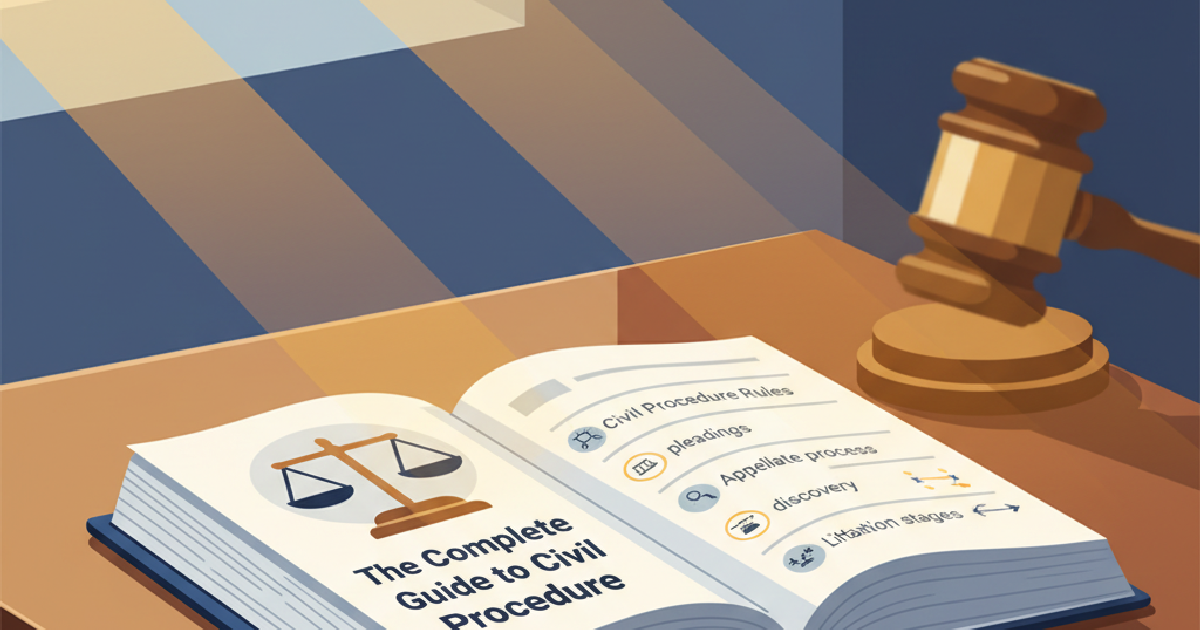
The Civil Procedure Code (CPC), often known as Civil Procedure Rules (CPR) in certain jurisdictions, stands as the fundamental legal framework governing how civil lawsuits unfold in courts.
It meticulously dictates the “how” of legal proceedings, focusing squarely on the procedural aspects of a case rather than the “what,” which falls under the purview of substantive law. This body of law ensures the just, speedy, and inexpensive determination of every action.
Understanding the Civil Procedure Code’s core principles
At its heart, the Civil Procedure Code aims to ensure justice is administered effectively and fairly. It provides a structured roadmap for handling legal disputes, ensuring consistency across various cases.
The CPC isn’t just about rules; it embodies foundational principles that underpin the entire justice system. These objectives are crucial for maintaining public trust and ensuring equitable outcomes in civil litigation.
Ensuring fairness and natural justice
A cornerstone of civil procedure is the guarantee of a fair hearing for all parties involved. This means everyone gets an equal opportunity to present their case, respond to allegations, and offer evidence.
Upholding principles of natural justice is also paramount throughout the proceedings. This involves impartiality, adequate notice, and the right to be heard before any decision is made.
Promoting efficiency and proportionality
The CPC strives for the efficient resolution of disputes, setting clear timelines and procedural requirements. This helps reduce delays and prevents unnecessary costs for litigants, making the process more accessible.
Proportionality is another key objective; cases should be dealt with in ways that reflect their complexity, the amount of money involved, and the financial standing of the parties. This prevents minor disputes from incurring disproportionate legal expenses.
Navigating the preliminary stages of a lawsuit
Before a formal lawsuit even begins, parties are often encouraged to explore other avenues for resolution. This pre-filing stage is critical for potentially avoiding lengthy and costly litigation.
Many jurisdictions, including England and Wales, have pre-action protocols that outline expected conduct and steps before commencing proceedings. These protocols aim to identify issues early and facilitate out-of-court settlements.
Commencing the suit: pleadings and formal notification
A civil action officially starts when the plaintiff files a complaint, sometimes called a plaint in India or a petition in Louisiana. This document details the parties, the alleged events, claims of wrongdoing, and the relief sought from the court.
Once filed, the defendant must be formally notified of the lawsuit through a summons and service of process. This ensures they are aware of the legal action against them and can prepare a response.
The defendant then files an answer or written statement, which can include defenses, counterclaims, or motions to dismiss. Recent rulings, like those from the Telangana High Court clarifying the 120-day limit for filing written statements in commercial suits, underscore the importance of these initial procedural deadlines.
The crucial phase of discovery and information exchange
Discovery is the fact-finding heart of civil litigation, where parties gather information from each other and third parties. This phase aims to prevent surprises at trial and ensures all relevant facts are brought to light.
The tools available during discovery are extensive, designed to allow comprehensive investigation into the claims and defenses. This thorough exchange of information is fundamental to a fair legal process.
Interrogatories and requests for production
Interrogatories involve written questions that parties must answer under oath. These help clarify facts, identify witnesses, and pinpoint specific allegations or defenses.
Requests for production, conversely, are formal demands for documents, electronic data, and other physical evidence relevant to the case. This can include contracts, emails, medical records, or financial statements.
Depositions and subpoenas for evidence
Depositions allow parties or witnesses to give out-of-court testimony under oath. This live questioning can be crucial for assessing credibility and understanding their version of events.
Subpoenas are court orders compelling third parties, who are not directly involved in the lawsuit, to provide information or appear for testimony. They ensure all necessary evidence can be accessed for the proceedings.
Pre-trial motions and setting the stage for trial
Before a case proceeds to trial, parties often file various motions asking the court for specific rulings. These motions can significantly shape the direction and scope of the litigation.
The outcomes of these pre-trial applications can either narrow the issues, compel certain actions, or even resolve the case entirely without the need for a full trial.
Motions to dismiss or for summary judgment
Motions to dismiss ask the court to throw out a case, often arguing that the complaint fails to state a valid legal claim or that the court lacks jurisdiction. If successful, this can end the lawsuit before discovery even fully begins.
A motion for summary judgment asks the court to rule in a party’s favor without a full trial. This occurs when there are no genuine disputes of material fact, and the law clearly favors one side, a principle highlighted in the Supreme Court’s new guidelines for summary judgments in commercial suits.
The J&K&L High Court also reinforced that a plaint cannot be rejected under Order VII Rule 11 CPC when property status is a triable issue, further illustrating the careful consideration courts give to these procedural challenges.
Case management and scheduling orders
Early in the process, a judge typically issues a comprehensive scheduling order. This document sets out important dates and deadlines for discovery, motions, and the trial itself, ensuring the case progresses efficiently.
Effective case management is vital for maintaining the “speedy” objective of civil procedure. These orders help streamline litigation, prevent undue delays, and provide clarity for all involved parties.
The trial process and evidentiary standards
If a settlement isn’t reached, the civil case moves to trial, the most visible phase of litigation. This involves a structured presentation of evidence and arguments before a judge or jury.
The trial brings together all the facts gathered during discovery and challenges them under formal rules of evidence. It’s where the parties make their final push for a favorable judgment.
From jury selection to closing arguments
The trial typically begins with jury selection, if applicable, followed by opening statements from the lawyers outlining their case. Witnesses are then called to present evidence, undergo examination, and face cross-examination.
After all evidence is presented, lawyers deliver their closing arguments, summarizing their case and urging a decision in their favor. The judge or jury then deliberates to render a decision.
The “balance of probabilities” in civil cases
The standard of proof in civil cases is generally “on the balance of probabilities” or “preponderance of the evidence.” This means the party bringing the claim must show it is more likely than not that their version of events is true.
This standard is considerably lower than the “beyond reasonable doubt” required in criminal cases. It reflects the differing stakes; civil cases usually involve monetary damages, while criminal cases can lead to loss of liberty.
Post-judgment procedures and appeals
After a judgment is rendered, the legal process doesn’t necessarily end immediately. The Civil Procedure Code includes mechanisms for enforcing court decisions and addressing any dissatisfaction with the outcome.
These post-trial procedures are crucial for ensuring that court rulings have real-world impact and that parties have avenues to challenge perceived errors in the judicial process.
Enforcing court decisions
The CPC provides specific procedures for the execution of judgments and decrees. This ensures that the winning party can compel the losing party to comply with the court’s orders, such as paying damages or performing certain actions.
Without effective enforcement mechanisms, court judgments would simply be declarations without practical force. These provisions are vital for the finality and authority of judicial decisions.
Grounds for appeal and review
Parties dissatisfied with a judgment have the right to file an appeal to a higher court. Appeals challenge the lower court’s decision based on alleged legal errors, not generally to re-litigate facts.
Some jurisdictions also offer avenues for review or revision of judgments under specific, limited circumstances. This appellate process is a critical safeguard against miscarriages of justice and allows for judicial oversight.
Jurisdictional variations in civil procedure
While the fundamental objectives of civil procedure are broadly consistent, the specific rules and codes vary significantly across jurisdictions. This means a lawyer practicing in one country or state must be intimately familiar with its particular procedural framework.
For instance, the Federal Rules of Civil Procedure govern federal courts in the US, while India has its Civil Procedure Code, and England and Wales operate under Civil Procedure Rules. These differences reflect distinct legal traditions and local requirements.
| Aspect of Civil Procedure | Description | Jurisdictional Example |
|---|---|---|
| Commencement Document | Formal filing to initiate a lawsuit | Complaint (US), Plaint (India), Petition (Louisiana) |
| Pre-trial Engagement | Steps before formal litigation to resolve disputes | Pre-action Protocols (England and Wales) |
| Standard of Proof | Level of certainty required to prove a case | Balance of Probabilities (most civil cases) |
| Information Gathering | Formal process for obtaining evidence | Discovery (US), Interrogatories, Depositions |
| Post-Judgment Actions | Enforcing decisions or challenging rulings | Execution, Appeal, Review/Revision |
Frequently Asked Questions
What is the primary purpose of the Civil Procedure Code?
The primary purpose of the Civil Procedure Code is to ensure the just, speedy, and inexpensive determination of every civil action. It aims to provide a fair hearing, uphold natural justice, and promote the efficient resolution of disputes while ensuring proportionality and finality in court decisions.
How does the discovery phase impact a civil lawsuit?
The discovery phase is crucial as it allows parties to gather information relevant to the case from each other and non-parties, using tools like interrogatories, requests for production, depositions, and subpoenas. This comprehensive fact-finding process helps avoid surprises at trial and informs settlement negotiations.
What happens after a judgment is rendered in a civil case?
After a judgment, the Civil Procedure Code provides mechanisms for its enforcement, known as execution, to ensure the winning party receives their relief. Additionally, parties dissatisfied with the outcome can file an appeal to a higher court, challenging the lower court’s decision on legal grounds, or seek review/revision under specific circumstances.
Call or Whatsapp for free consultation.
Related Service: https://arpitmarwah.com/civil-law/