
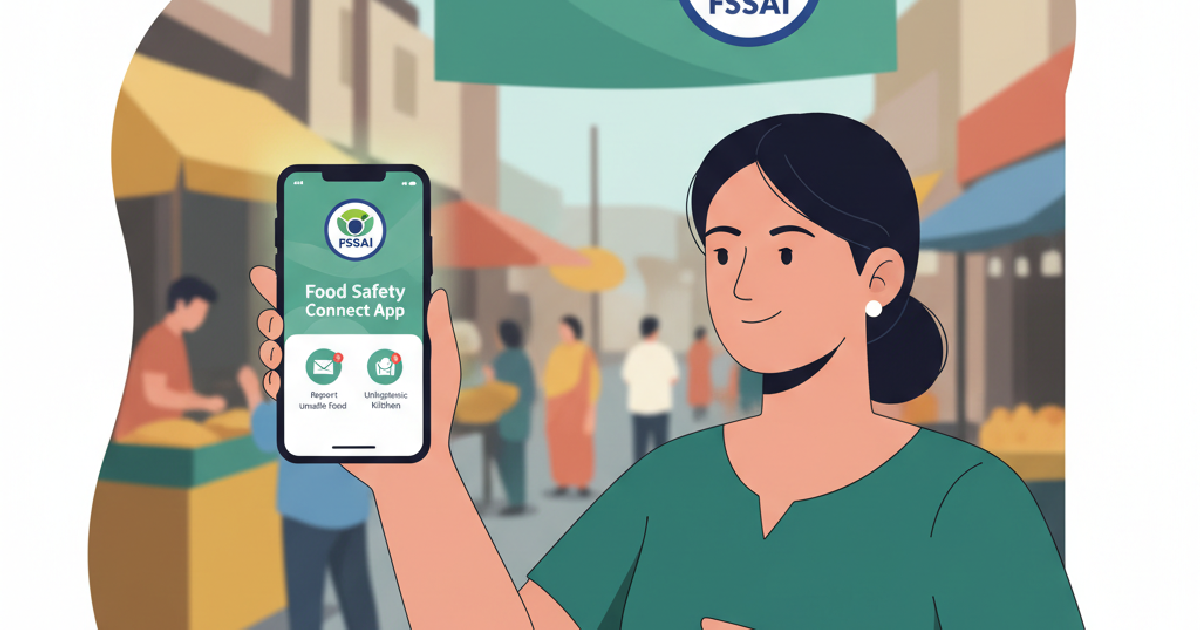
The FSSAI food safety reporting initiative, launched July 12, 2026, urges Indian citizens to report unsafe food and unhygienic practices.
This strategic move aims to leverage public vigilance through the FSSAI mobile application, specifically the “Food Safety Connect App,” strengthening the regulator’s efforts to curb the marketing and consumption of compromised food products.
FSSAI Empowers Consumers to Act as Food Safety Watchdogs
The announcement follows a series of intensified enforcement actions by the FSSAI, including issuing nine notices to quick-commerce giant Swiggy Instamart just a day prior, on July 11, 2026. Authorities also recently shut down a spice manufacturing unit in Lucknow over alleged adulteration. These recent actions underscore the FSSAI’s commitment to safeguarding public health and improving food safety compliance nationwide.
The FSSAI’s appeal directly encourages consumers to become “eyes on the ground” in the ongoing battle against food safety violations. The initiative, tagged as “Be the Eyes of Food Safety,” seeks to convert public awareness into actionable intelligence for the food regulator.
On X, formerly Twitter, the FSSAI shared a clear message: “Don’t just notice it, report it! Unsafe food practices affect everyone. Turn your awareness into action with the Food Safety Connect App.” This direct plea highlights the critical role ordinary citizens can play in maintaining food quality and hygiene standards.
Accessible Reporting Mechanisms for Unsafe Food Practices
Reporting potential violations has been streamlined through multiple channels, making it easier for citizens to flag concerns. The primary method is the “Food Safety Connect App,” which offers a user-friendly interface for lodging complaints.
Beyond the mobile application, complaints can also be submitted via the Food Safety Connect platform, accessible through the Food Safety Compliance System (FoSCoS) website. Additionally, consumers can utilise the FSSAI website, various social media platforms, email, and a dedicated grievance management website to voice their concerns.
For those preferring direct communication, a toll-free helpline number, 180011200, is available. Citizens can also lodge formal complaints directly with State Authorities, including their local Food Safety Commissioner. These varied options ensure broad accessibility for reporting any unsafe food practices.
Once a complaint is received, the FSSAI acknowledges it and forwards it to the relevant state or regional office for thorough investigation. This process often includes inspecting the premises in question and collecting samples for laboratory testing.
Complainants receive a unique ID to track the status of their report, ensuring transparency throughout the resolution process, culminating in an action taken report (ATR) and communication of the outcome.
Recent Enforcement Actions Underscore Regulatory Resolve
The FSSAI’s public call follows a period of heightened regulatory activity, demonstrating its readiness to act on reported violations. A significant incident involved the quick-commerce platform Swiggy Instamart, which received nine notices from the FSSAI on Saturday.
These notices stemmed from multiple consumer complaints alleging the supply of expired, spoiled, and contaminated food products. Specific issues included rotten eggs, expired whey protein, and damaged packaged goods. The regulator also flagged alleged licensing irregularities concerning “NOICE Eggs,” incorrect FSSAI licence details, and lapses in seller compliance and consumer grievance redressal.
The FSSAI has demanded a detailed explanation from Swiggy Instamart regarding its food safety protocols, quality assurance, inventory management, and hygiene practices. Failure to submit a compliance report within the stipulated timeline could lead to legal action under the FSS Act, 2006. Swiggy Instamart has acknowledged the issue and stated it’s reviewing the flagged listings and working with authorities.
Separately, authorities in Lucknow recently ordered the closure of a spice manufacturing unit after an inspection revealed alleged adulteration. Officials seized adulterated materials from the facility and collected samples for comprehensive laboratory testing, highlighting the tangible impact of intensified inspection efforts on local businesses. This incident shows the proactive measures being taken across various scales of food production and distribution.
Broader FSSAI Mandate and Ongoing Initiatives
The Food Safety and Standards Authority of India was established on September 5, 2008, under the Food Safety and Standards Act, 2006 (FSS Act). Its primary mission is to set science-based standards for food articles and regulate their manufacture, storage, distribution, sale, and import, ensuring safe and wholesome food for human consumption.
The FSSAI operates under the Ministry of Health & Family Welfare, Government of India, and is structured with a chairperson and 22 members, headquartered in New Delhi. The FSS Act, 2006, consolidated several older laws, including the Prevention of Food Adulteration Act, 1954, creating a unified framework for food safety. This streamlined approach allows for more coherent enforcement and standard-setting.
Beyond enforcement, the FSSAI drives several proactive initiatives aimed at fostering a culture of food safety. These include “Eat Right India,” promoting healthy and sustainable food choices, and “Food Safety on Wheels,” which offers mobile food testing and awareness camps. Programs like “Project Clean Street Food” and the “Safe and Nutritious Food” (SNF) campaign target specific segments of the food industry and consumers.
Other notable initiatives include “Repurpose Used Cooking Oil” (RUCO), focusing on sustainable waste management, and the Food Safety Training and Certification (FoSTaC) program, which trains food handlers. The FSSAI also utilises the Central Public Grievance Redress and Monitoring System (CPGRAMS) for comprehensive citizen complaint management. These broad efforts demonstrate a multi-pronged approach to achieving food safety across the country.
The Growing Importance of Public Vigilance in Food Safety
The FSSAI’s renewed emphasis on citizen reporting marks a significant evolution in India’s food safety strategy. By deputising millions of consumers as on-the-ground monitors, the regulator aims to extend its reach far beyond what traditional inspection methods alone could achieve. This collaborative approach suggests a future where food businesses will operate under constant scrutiny, not just from official bodies but from their very customer base.
The swift action against entities like Swiggy Instamart and the Lucknow spice unit serves as a stark warning to all food operators: lax standards will not be tolerated. This enhanced oversight could lead to more robust internal compliance measures within companies.
It also places greater responsibility on consumers to understand and report what constitutes unsafe practices, fostering a more informed and empowered populace regarding their food choices.
Moreover, the availability of user-friendly platforms like the Food Safety Connect App lowers the barrier for reporting, making it accessible even to those unfamiliar with bureaucratic processes. This commitment to transparency and accountability, reinforced by mechanisms for tracking complaints, could significantly boost consumer confidence in the food supply chain. It’s a pivotal step towards ensuring every meal served in India meets stringent safety standards.
The proactive engagement of citizens will be crucial in achieving the long-term goals of the FSSAI. As the Indian food industry continues to grow and diversify, particularly with the rise of quick-commerce and online food delivery, the role of an alert public becomes even more indispensable in upholding food quality and hygiene.
The success of this initiative will largely depend on sustained public participation and the FSSAI’s continued responsiveness to reported issues.
Call or whatsapp for free consultation.
Related Service: https://arpitmarwah.com/contact/