
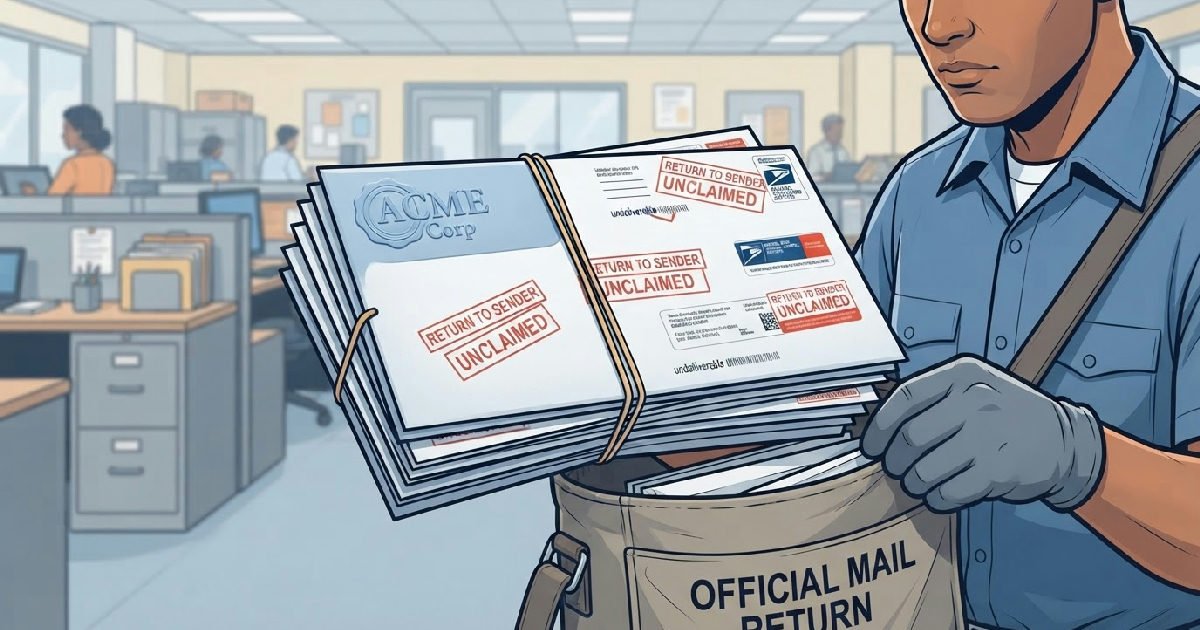
Many businesses mistakenly believe that continuous follow-ups on unpaid dues demonstrate diligence. However, this common practice, driven by a desire to maintain client relationships or avoid conflict, frequently backfires. Instead of securing payment, endless reminders without escalation often lead to significant financial losses and reduced recovery rates, effectively transforming recoverable claims into silent write-offs.
In situations where follow-ups are ineffective, considering legal action becomes essential.
Repeated polite inquiries, while well-intentioned, can inadvertently contribute to these negative outcomes.
Understanding when to escalate to legal action is crucial for recovering debts.
Failing to act can lead to circumstances where legal action is the only route left to recover debts.
This often leads to a need for legal action to enforce contractual obligations.
Deciding to pursue legal action must be well-considered to ensure the best outcomes.
Knowing when to shift from reminders to legal action is vital for success.
However, sometimes, the only remaining option for debt recovery is legal action.
This is when legal action becomes necessary for effective recovery.
Some businesses eventually find that legal action is their only recourse.
Effective debt recovery often hinges on the timing of legal action.
Prompt legal action can prevent significant losses down the line.
Legal action may become vital if the debtor remains unresponsive.
Taking legal action may feel daunting but can lead to essential resolutions.
Once the statute of limitations is close, legal action must be considered immediately.
Ignoring the need for legal action can result in permanent loss of the debt.
Understanding when to initiate legal action is critical for debt recovery.
Legal action protects your rights and preserves your claims to the debt.
Selecting the right moment for legal action is essential in this process.
Legal action can significantly improve the chances of debt recovery.
While challenging, legal action is often necessary for financial recovery.
Recognizing when to resort to legal action can save time and resources.
This approach signals weakness to debtors and, critically, can render legitimate claims legally unenforceable as statutory limitation periods expire. The comfort of repeated polite inquiries can thus become one of the most expensive habits a commercial entity maintains, costing far more than the initial unpaid invoice.
Understanding the role of legal action in debt recovery is paramount for businesses.
Ultimately, legal action serves as a backup strategy when all else fails.
What happens when polite inquiries fail
The habit of continuous “following up” feels inherently productive. It creates an impression that a company is actively pursuing outstanding money.
This perception can be deeply misleading. The strategy also conveniently sidesteps the immediate discomfort of confrontation or the perceived complexity of legal action, offering a false sense of security.
Business owners often rationalise this inaction with familiar refrains: “They will pay eventually,” “We have a long relationship,” or “Legal action should be the last resort.” These sentiments are understandable, rooted in goodwill and a desire for harmony. Yet, this very patience frequently allows perfectly valid claims to slowly erode into unrecoverable debt.
Prompt legal action is often the last resort that ensures financial recovery.
Engaging in legal action requires careful planning and strategic timing.
For some debts, pursuing legal action may be the only viable solution.
Understanding the implications of legal action can empower businesses in recovery.
Erosion of claims: how delay undermines recovery
While a company remains stuck in a cycle of polite reminders, the legal and practical landscape shifts dramatically against it. Each passing month quietly diminishes the strength and enforceability of the claim, transforming a clear receivable into an increasingly murky prospect.
This delay not only impacts the legal standing of the debt but also makes practical recovery considerably harder. Debtors’ financial situations can change, and assets may be dissipated or simply become unreachable. Such prolonged inaction provides ample opportunity for debtors to prepare defenses or strategically manage their assets.
They can also become more entrenched in their refusal to pay, making the entire recovery process more arduous and less certain. This stands true compared to if prompt action had been taken.
Furthermore, the psychological impact of delay can be profound. The longer a debt remains outstanding without firm action, the more normalized it becomes for the debtor. This erodes any initial sense of obligation or urgency.
This shift signals a lack of resolve on the creditor’s part, which debtors may exploit. It effectively turns a legitimate claim into a perceived soft target for indefinite postponement or outright avoidance.
Statute of limitations: the ticking clock
Every single month of delay brings an unpaid claim closer to becoming legally time-barred. Once the statute of limitations expires, even a completely genuine and well-documented claim for unpaid dues can become legally unenforceable in a court of law.
This means that despite clear contractual obligations, the right to seek judicial recourse simply vanishes, leaving the business with no legal leverage. Timely action is critical to remain viable.
This legal deadline is an absolute barrier, not a negotiable point. Many businesses only discover this harsh reality when they finally decide to pursue formal action, only to find their window has irrevocably closed.
The law prioritises timely pursuit of rights. Prolonged inaction is interpreted as an abandonment of those rights.
Diminishing leverage and urgency
In the early stages of a payment default, the debtor typically feels some degree of pressure to settle. They might still value the ongoing relationship or fear immediate repercussions.
However, the longer a company relies solely on follow-up emails and phone calls, the more the defaulting party realises there are no immediate, tangible consequences for non-payment.
This prolonged passivity strips away any sense of urgency. The debtor perceives the creditor’s approach as weakness rather than professionalism.
This leads them to deprioritise payment or, worse, to ignore the obligation entirely. Without the credible threat of escalation, the incentive to pay simply evaporates.
Fading evidence and operational costs
The passage of time also erodes the practical aspects of a claim. People change roles, key emails get buried, and the overall sense of immediacy surrounding the debt fades.
What might have been easily resolved with a strong, timely legal notice often requires full-fledged, costly litigation months or years down the line. This is simply because the initial evidence has become harder to compile or recall.
Moreover, the internal costs continue to mount. Management time is diverted from core business activities to chase old debts.
Emotional energy is expended in frustrating follow-ups, and significant opportunity costs accumulate. This hidden drain on resources can be substantial, impacting productivity and morale long before any external legal fees are even considered.
Financial impact of passive collection strategies
The financial ramifications of relying on endless follow-ups extend far beyond the principal amount of the unpaid invoice. Businesses incur both direct and indirect losses that collectively diminish profitability and strain cash flow.
The direct loss is, of course, the unrecovered principal itself. But this is compounded by the cost of internal resources dedicated to chasing these debts—staff salaries and communication expenses.
There’s also the lost productivity of employees who could be generating new revenue. Indirectly, the uncertainty of payment can impact financial planning, investment decisions, and even a company’s credit standing.
| Factor | Continuous Follow-Up | Formal Legal Action |
|---|---|---|
| Claim Enforceability | Decreases over time | Maintained and asserted |
| Recovery Rate | Reduced | Improved potential |
| Debtor Perception | Weakness | Seriousness, commitment |
| Time-Barring Risk | Increases with delay | Mitigated by action |
Identifying the tipping point for escalation
A critical skill for any business is discerning when polite reminders cease to be effective. There is invariably a stage where further follow-ups stop yielding any meaningful response.
This means no payment, no credible commitment, and often, no communication at all. Beyond this point, additional reminders rarely improve the outcome; they merely consume valuable time and resources.
Recognising this tipping point early is what distinguishes companies that successfully recover their money. It separates them from those that remain trapped in a cycle of circulating the same unpaid invoices for months, or even years.
This requires an objective assessment of debtor responses and a willingness to acknowledge when the soft approach has run its course. Businesses must establish clear internal protocols for debt collection.
These protocols should include defined timelines for escalation. Without such a framework, decisions often become emotional or reactive, leading to prolonged inaction.
A structured approach removes ambiguity about when to transition from polite inquiries to more formal and assertive steps.
Strategic shift: from reminders to concrete action
While follow-up certainly has its place in initial debt collection efforts, it must be time-bound and purposeful. After a reasonable period of non-payment and unanswered reminders, a company needs to decisively shift from a soft pursuit to structured, actionable steps.
This transition is not about immediate litigation, but about demonstrating a clear intent to enforce rights. One of the first steps in this structured approach is issuing a clear written demand with a definitive deadline for payment.
This formal communication signals a change in posture. If this doesn’t yield results, the next logical step is to issue a formal legal notice, drafted by legal counsel.
This sends an unequivocal message about the seriousness of the situation. It also conveys the creditor’s intent to pursue all available remedies.
Following this, a thorough evaluation of recovery options becomes crucial. This might include pursuing appropriate formal legal action.
Additionally, companies should assess whether to suspend further work or supply to the defaulting party. This prevents further exposure to risk.
Escalation doesn’t always mean immediate court action. It means ending the illusion that more polite reminders will solve a problem that has already moved beyond that stage.
Broader implications for commercial relationships
The decision to escalate legal action on unpaid dues is often fraught with concerns about damaging commercial relationships. However, a firm, principled stance can paradoxically strengthen future business dealings.
When clients understand that payment terms are serious and enforceable, it fosters a culture of prompt payment. It also builds respect for contractual obligations.
Conversely, consistently allowing late or non-payment without repercussions can inadvertently encourage repeat offences. It can also signal that payment terms are optional.
This creates an unhealthy dynamic where the debtor dictates the payment schedule. This negatively impacts the creditor’s cash flow and operational stability.
Establishing clear boundaries through decisive action, alongside understanding the consequences of ignoring formal requests, ultimately benefits both parties by fostering greater financial discipline.
Safeguarding assets: why prompt action is key
Beyond the immediate collection of debt, timely legal action serves as a crucial defensive strategy for a business. It protects not only the specific unpaid amount but also the overall financial health and reputation.
Proactive debt recovery demonstrates a commitment to sound financial management. It signals to both clients and competitors that the business values its contracts and is prepared to enforce its rights.
This fosters a culture of accountability. This defensive posture is vital because uncollected debts can significantly impair cash flow.
They can also limit investment opportunities and even jeopardise solvency. By taking swift and decisive action, a business can prevent a single overdue invoice from snowballing into a larger financial crisis.
This thereby safeguards the liquidity necessary for ongoing operations and crucial expansion. It also maintains stakeholder confidence.
Moreover, prompt legal intervention often enables a business to secure assets before they are dissipated, hidden, or claimed by other creditors. In situations where a debtor is facing financial distress or insolvency, being among the first to initiate legal proceedings can make the critical difference.
This difference is between recovering a substantial portion of the debt and receiving nothing at all. This strategic advantage ensures the company’s own capital and fair treatment are prioritized.
Why do continuous follow-ups often fail?
Continuous follow-ups often signal a lack of resolve to debtors, diminishing their urgency to pay. Without clear escalation, debtors may perceive no tangible consequences for non-payment, leading them to deprioritise or ignore their obligations.
This approach also allows crucial legal deadlines, such as statutory limitation periods, to pass. This makes claims legally unenforceable over time.
What is the “statute of limitations” and why is it important for debt recovery?
The statute of limitations is a legal deadline by which a creditor must initiate legal action to recover a debt. Once this period expires, the claim becomes “time-barred,” meaning it can no longer be enforced through the courts, regardless of its validity.
It is critical because missing this deadline can result in the complete loss of the right to judicial recourse. This turns a recoverable debt into a silent write-off.
How can businesses identify the “tipping point” for escalating debt collection efforts?
The tipping point is reached when polite reminders and informal follow-ups consistently fail to elicit payment, credible commitments, or even communication from the debtor. Businesses should establish clear internal protocols with defined timelines for escalation.
An objective assessment of debtor responses, rather than emotional attachment or hope, helps determine when to transition from soft pursuit to more formal and assertive steps, such as issuing legal notices.