
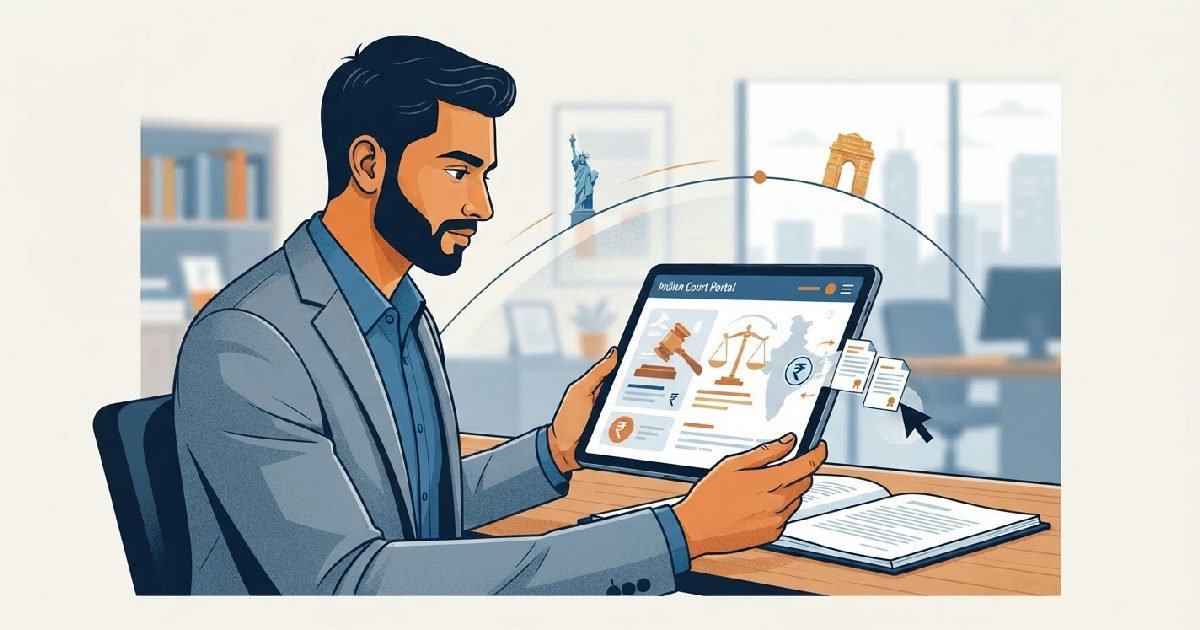
USA-based residents, including Non-Resident Indians (NRIs), Persons of Indian Origin (PIOs), and other foreign nationals, can effectively pursue the recovery of amounts from individuals or entities in India. Unpaid invoices, failed business transactions, dishonoured cheques, and breaches of commercial agreements are common financial grievances that can be addressed through the Indian legal system.
Indian law provides a clear framework for these individuals to initiate civil recovery suits, commercial suits, or even cheque bounce cases, provided the Indian court has the appropriate jurisdiction over the matter. This means that despite geographical distance, legal recourse remains a viable and potent option for those seeking to reclaim their dues.
USA residents India recovery: access to courts
A fundamental prerequisite for any lawsuit in India is that the court must have jurisdiction. For USA-based residents, understanding these jurisdictional grounds is critical before initiating any recovery proceedings against a party in India.
Indian courts can generally hear a recovery case under several conditions. These ensure that the legal process is applied fairly and effectively to all parties involved, regardless of their current country of residence. It’s about connecting the dispute to Indian legal territory.
One primary condition for jurisdiction involves the defendant’s location or business activities. If the party against whom the claim is being made resides or carries on business within India, an Indian court typically has the authority to entertain the case. This is a straightforward principle that establishes a clear link to the Indian legal system.
Furthermore, jurisdiction can be established if the cause of action, either entirely or in part, arose in India. This often applies to contracts signed or performed in India, or financial transactions that occurred within the country’s borders. The specific details of the dispute will determine if this criterion is met.
Contractual agreements frequently play a decisive role in determining jurisdiction. Many international business agreements specify that Indian courts will have jurisdiction in the event of a dispute. Such clauses simplify the process significantly, as they reflect a pre-agreed understanding between the parties.
Key Legal Avenues for Financial Recourse
USA-based residents have several distinct legal pathways available to them for recovering money in India, each suited to different types of disputes. Choosing the right avenue depends on the nature of the financial claim and the specific circumstances involved.
These legal mechanisms range from civil litigation to criminal complaints, offering a comprehensive suite of options. Understanding the nuances of each can help claimants strategise for the most efficient and effective recovery process. Each option has its own procedural requirements and implications.
Civil and Commercial Suits: Addressing Contractual Disputes
The most common approach for recovering unpaid amounts stemming from invoices, contracts, or loan agreements is through a Civil Suit or a Commercial Suit. These cases are filed in the appropriate civil court having territorial and pecuniary jurisdiction.
For disputes that meet the criteria of a “commercial dispute” under Indian law, filing before a Commercial Court can offer a significant advantage. These specialized courts are designed for faster disposal of commercial matters, potentially expediting the recovery process for overseas claimants.
Cheque Bounce Cases under Section 138
If a USA-based individual received a cheque from an Indian party that was subsequently dishonoured, they may be able to file a criminal complaint under Section 138 of the Negotiable Instruments Act, 1881. This provision is a powerful tool for cheque bounce scenarios.
However, strict timelines apply to these cases, making prompt legal action essential. A legal notice must be issued within a specific period after the cheque is returned unpaid, followed by the filing of the complaint. Failure to adhere to these deadlines can invalidate the claim.
Arbitration as an Alternative Dispute Resolution
Where the underlying contract contains an arbitration clause with its seat in India, arbitration proceedings offer another viable route for dispute resolution. Arbitration can sometimes be a quicker and more private alternative to traditional court litigation.
Initiating arbitration involves serving an arbitration notice and following the agreed-upon arbitration procedure. This method can be particularly appealing for complex commercial disputes where confidentiality and specialized arbitrators are preferred. Executing foreign judgments or awards in India also has its own set of legal requirements.
Navigating the Process Remotely: Practical Strategies for Overseas Litigants
One of the primary concerns for USA-based residents is how to manage a legal case in India without being physically present for every hearing or procedural step. Fortunately, the Indian legal system provides several mechanisms to facilitate remote participation.
These provisions ensure that geographical distance does not become an insurmountable barrier to seeking justice. Claimants can rely on established legal tools and modern technology to advance their cases effectively. It streamlines the process for those living abroad.
The Role of a Power of Attorney
A crucial tool for remote management is the Power of Attorney (POA). A USA-based resident can execute a POA in the United States in favour of a trusted relative, friend, or an appointed advocate in India. This document authorizes the designated person to act on their behalf.
The POA typically needs to be notarised in the US, and in many instances, it must also be apostilled. An apostille is a certification that authenticates the origin of a public document, making it valid for international use. This step ensures its legal recognition in India.
Leveraging Advocate Representation
Engaging a competent advocate in India is perhaps the most straightforward way to pursue a recovery case from abroad. The advocate can draft all necessary legal documents, file them with the court, and appear in the matter on behalf of the USA-based client.
This professional representation ensures that all procedural requirements are met and that the case is presented effectively. An experienced Indian lawyer understands the intricacies of the local legal landscape, which is invaluable for overseas litigants.
Modern Conveniences: Video Conferencing and Digital Filing
In a significant move towards modernization, Indian courts increasingly allow appearances through video conferencing in appropriate cases. This facility can greatly reduce the need for overseas clients to travel to India for routine hearings or certain proceedings.
Moreover, the advent of e-filing systems in many Indian courts further simplifies the process for overseas clients. Digital filing allows legal documents to be submitted electronically, making the initial stages of litigation much smoother and more accessible from anywhere in the world.
Essential Documentation and Procedural Nuances
Successful recovery of amounts in Indian courts hinges significantly on meticulous preparation and adherence to procedural requirements. USA-based claimants must gather and organize specific documentation to support their legal action.
Beyond documentation, an awareness of key legal nuances, such as limitation periods and the strategic use of legal notices, can significantly impact the outcome. These details often determine the viability and strength of a recovery claim in a foreign jurisdiction.
Crucial Paperwork for Your Claim
A robust case requires comprehensive documentation. Claimants should compile the original contract, agreement, or purchase order that underpins the debt. These documents establish the legal basis of the financial obligation.
Further essential documents include all relevant invoices, proof of goods supplied or services rendered, and any email correspondence or written communications related to the transaction. These pieces of evidence help to demonstrate the history and validity of the claim.
Proof of payments made or amounts still due is also vital. In cases involving dishonoured cheques, the original cheque and the bank return memo are indispensable. Additionally, claimants may need to provide their passport and proof of US residence, along with the notarised and apostilled Power of Attorney.
Adhering to Limitation Periods
One of the most critical aspects for USA-based clients to consider is the limitation period under Indian law. Indian statutes prescribe specific timeframes within which a legal action must be initiated. Delay can irrevocably harm even a strong claim.
For instance, a general civil suit for recovery of money typically has a limitation period of three years from the date the cause of action arises. Missing this deadline, even by a short margin, can lead to the dismissal of the case on technical grounds alone. It’s a strict rule that courts enforce.
Early legal assessment is therefore paramount to determine the exact limitation period applicable to a specific claim. While there are provisions for limitation period exclusions in certain circumstances, relying on these can be complex. Consulting with an Indian advocate immediately upon identifying a potential claim is always advisable.
Strategic Considerations for Effective Recovery
Before rushing to file a lawsuit, dispatching a well-drafted legal notice to the defaulting party in India can be highly advantageous. Often, this formal communication prompts settlement discussions and can resolve the matter without the need for prolonged litigation. It also strengthens the subsequent court case by demonstrating a good faith effort to resolve the dispute.
The effectiveness of recovery often depends on whether the opposite party possesses attachable assets in India. Identifying these assets early in the process, if possible, can significantly enhance the chances of successfully enforcing any judgment or decree obtained. This practical consideration is often overlooked by overseas claimants.
In some situations, strategically pursuing parallel proceedings, such as a cheque bounce case alongside a civil suit, can exert additional pressure and potentially expedite recovery. This multi-pronged approach, when executed judiciously, can leverage different aspects of Indian law to the claimant’s benefit. However, it requires careful legal planning.
Understanding the Landscape of Cross-Border Legal Action
The ability for USA-based individuals to pursue recovery cases in India highlights the increasingly interconnected nature of global commerce and personal finance. As cross-border transactions become more common, so too do the complexities of enforcing financial obligations across international boundaries.
Indian legal system’s provisions for foreign litigants reflect a broader trend towards making justice accessible, irrespective of residency. It’s an acknowledgment of the globalized economy, where people and businesses operate far beyond national borders. This framework supports international trust.
Comparing Recovery Mechanisms for Overseas Claimants
Choosing the right legal path is crucial for USA-based residents. Each method has its own characteristics regarding speed, complexity, and suitability for different types of financial disputes. Understanding these differences can inform a more effective legal strategy.
| Recovery Mechanism | Primary Use Case | Typical Timeframe | Complexity Level |
|---|---|---|---|
| Civil/Commercial Suit | Contract breaches, unpaid invoices, loans | 2-5 years (Commercial Courts often faster) | Moderate to High |
| Cheque Bounce Case (S. 138 NI Act) | Dishonoured cheques | 1-3 years (strict timelines apply) | Moderate |
| Arbitration | Disputes with arbitration clauses | 1-2 years (can vary based on arbitrator) | Moderate to High |
While Civil and Commercial Suits are broad in scope, they can be lengthy. Cheque bounce cases offer a more specific, potentially faster route, though with strict procedural demands. Arbitration provides a contractual alternative, often preferred for business-to-business disputes. Navigating specific procedural applications requires expert guidance.
Outlook for Overseas Claimants in India
The legal landscape in India continues to evolve, with ongoing efforts to streamline judicial processes and embrace digital solutions. This trend is generally positive for overseas claimants, making the pursuit of justice more feasible and less burdensome.
For USA-based residents with financial interests in India, this means that while challenges remain, the avenues for legal redress are robust and increasingly accessible. Proactive engagement with experienced legal counsel in India remains the most effective strategy for successful recovery.
What types of cases can USA-based residents file for money recovery in India?
USA-based residents can file civil recovery suits for contractual breaches or unpaid debts, commercial suits for business-related disputes, and cheque bounce cases if they received a dishonoured cheque from an Indian party. The chosen path depends on the nature of the specific financial claim.
Do I need to travel to India frequently to pursue a recovery case?
No, frequent travel to India is generally not required. You can manage your case remotely by granting a Power of Attorney to a representative or an advocate in India. Many courts also facilitate video conferencing for appearances and accept digital filings, minimizing the need for physical presence.
What are the most important documents needed for filing a recovery case?
Key documents typically include the underlying contract or agreement, invoices, proof of services/goods, all relevant communication, and records of payments made or due. For cheque bounce cases, the original dishonoured cheque and bank return memo are critical. A notarised and apostilled Power of Attorney is also essential if you’re pursuing the case remotely.