
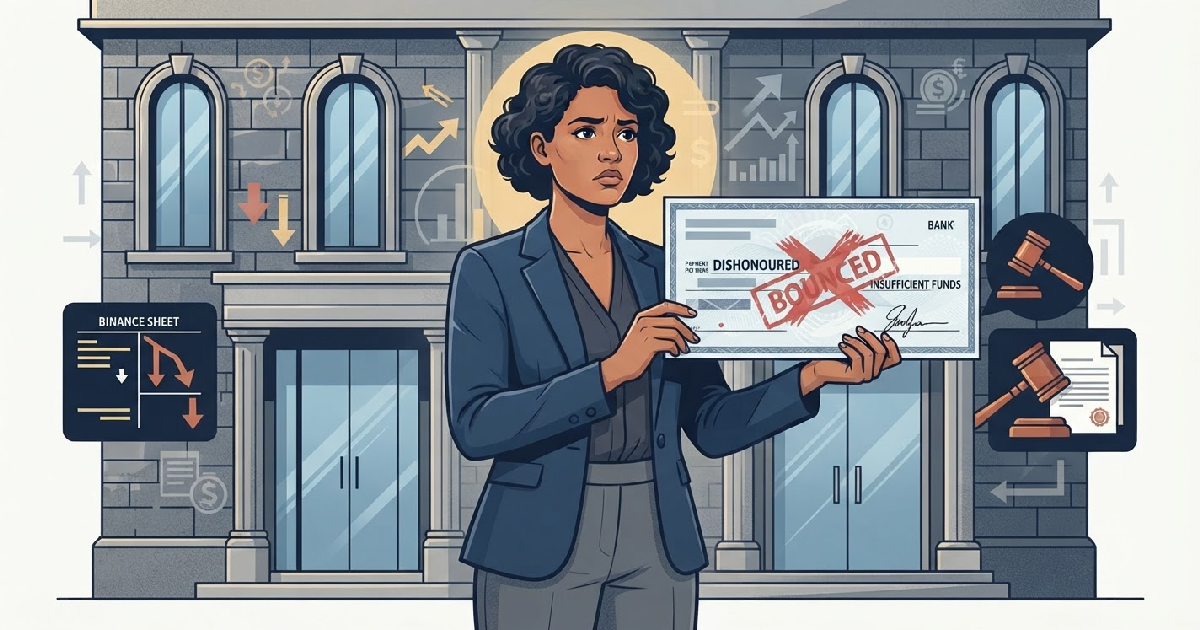
The Role of Treasurer in Cheque Dishonour cases is fundamental, encompassing significant responsibilities in financial oversight and risk management. When a cheque is rejected by a bank, it carries serious financial and legal ramifications for the issuing entity.
Treasurers act as crucial guardians of an organization’s fiscal health, working diligently to prevent such occurrences and mitigate their impact. They are instrumental in ensuring compliance with relevant legal frameworks.
What constitutes a dishonoured cheque?
A cheque is formally dishonoured when the bank it’s drawn on declines to process it for payment. While “bounced cheque” is a common term often linked to insufficient funds, “dishonoured cheque” is the broader legal phrase.
This formal term covers all potential reasons a cheque might be returned unpaid by the bank. Such incidents carry significant financial and legal consequences for the issuing organization and its financial steward.
Primary reasons for cheque rejection
Many factors can lead to a cheque being dishonoured, with insufficient funds (NSF) standing as the most frequent culprit. This occurs when the account lacks adequate cleared funds to cover the cheque’s value.
A signature mismatch is another common issue, where the signature on the cheque fails to match the account holder’s record on file. Banks rigorously verify signatures to prevent unauthorized transactions and potential fraud.
Sometimes, an account holder might issue a stop payment instruction, explicitly telling their bank not to pay a specific cheque. Additionally, a cheque can be dishonoured if the account is closed or frozen, rendering funds inaccessible.
Technical errors also cause rejections, including overwriting, alterations, physical damage, or discrepancies in the written and numerical amounts. Incorrect or missing dates, such as post-dated cheques presented early or stale-dated ones presented too late, will also result in dishonour.
Banks will also dishonour an instrument if there’s a valid reason to suspect fraud or forgery. This vigilance protects both the bank and the account holder from malicious financial activity.
| Reason for Dishonour | Description | Treasurer’s Preventive Action |
|---|---|---|
| Insufficient Funds (NSF) | Inadequate cleared funds in the account. | Robust cash flow management and accurate financial forecasting. |
| Signature Mismatch | The cheque’s signature doesn’t match the bank’s record. | Developing policies for cheque issuance and managing bank accounts. |
| Stop Payment Instruction | Account holder has explicitly requested the bank not to pay. | Establishing clear approval hierarchies for cheque issuance. |
| Account Closed or Frozen | Funds are inaccessible due to account status. | Diligent management of bank accounts as part of internal controls. |
| Technical Errors | Includes issues like overwriting, alterations, or date discrepancies. | Meticulous cheque issuance procedures and quality control checks, such as verifying dates and amounts. |
| Fraud or Forgery | The bank suspects the cheque is fraudulent or forged. | Implementing strong internal controls and security measures to prevent unauthorized cheque production or alteration. |
Strategic financial oversight and planning
Treasurers play a pivotal role in preventing cheque dishonour through diligent financial oversight. They are responsible for monitoring daily cash inflows and outflows and forecasting future needs.
This careful planning helps ensure an organization maintains sufficient liquidity to cover its financial obligations. Overseeing and presenting budgets, accounts, and financial statements to the management committee falls under this crucial function.
A treasurer’s watchful eye acts as a primary defense against unexpected financial shortfalls. They are the “watchdog” over financial management, continuously assessing the organization’s fiscal health.
Implementing robust internal controls
Establishing strong financial systems and controls is another critical duty for treasurers. This includes creating clear policies for cheque issuance and establishing approval hierarchies for payments.
Such measures are designed to minimize the risk of errors or unauthorized transactions. Many organizations, for instance, mandate at least two signatures for cheques to enhance security and accountability.
These internal checks and balances are essential in preventing situations that could lead to a dishonoured cheque. Ensuring these robust internal controls are in place is paramount for any organization, as they directly impact adherence to relevant legal frameworks. Key cheque bounce laws often emphasize such preventative measures.
Immediate actions and mitigation post-dishonour
Should a cheque be dishonoured, the treasurer must act swiftly to understand the cause and resolve the issue. This often involves immediate communication with the bank and the payee to clarify the situation.
Prompt arrangements for payment are crucial to rectify the situation. Addressing the problem quickly helps mitigate further legal or reputational damage to the organization.
This rapid response is part of the treasurer’s risk management portfolio, ensuring financial integrity is upheld. It also demonstrates commitment to financial responsibility.
Legal and compliance considerations
Cheque dishonour carries significant legal implications, especially in jurisdictions with strict laws. The treasurer, as the financial steward, needs to understand the potential liabilities for the organization arising from such incidents.
These liabilities can range from financial penalties to more severe legal actions. This awareness is key to implementing effective preventive measures and responding appropriately when issues arise.
Familiarity with specific statutory periods is vital for compliance, as courts cannot hear premature cheque bounce complaints. Failing to meet these requirements can escalate the legal consequences.
Continuous monitoring and reporting
A treasurer’s role extends to continuous financial monitoring and transparent reporting to the management committee. Regular review of budgets, accounts, and financial statements helps identify potential risks early on.
This vigilance is crucial for maintaining financial stability and preventing future dishonour incidents. They are also responsible for banking and bookkeeping, ensuring all transactions are accurately recorded and reconciled.
This meticulous record-keeping is fundamental for demonstrating financial prudence and compliance. It builds a clear audit trail for all financial activities.
The importance of policy adherence
Ensuring all relevant staff are trained on financial policies and cheque issuance procedures is vital. This includes educating employees on the importance of accurate details, correct dates, and valid approval for all cheques.
Proper training reduces the likelihood of technical errors and ensures consistency across operations. Adherence to these internal controls, combined with the treasurer’s vigilant oversight, forms a robust defense against cheque dishonour.
This continuous effort underscores the critical cheque dishonour laws and rulings that treasurers must navigate. Their proactive approach in areas like risk management and compliance is central to preventing financial pitfalls.
What is the primary responsibility of a treasurer regarding cheques?
A treasurer’s main responsibility is to safeguard an organization’s financial health by preventing cheque dishonour through robust oversight and internal controls. This includes managing cash flow, budgeting, and establishing clear policies for cheque issuance.
What are the most common reasons for a cheque to be dishonoured?
The most frequent reason for dishonour is insufficient funds, meaning there isn’t enough money in the account to cover the cheque. Other common causes include signature mismatches, stop payment instructions, closed accounts, or various technical errors.
How can a treasurer help prevent cheque dishonour?
Treasurers prevent dishonour through proactive financial planning, rigorous cash flow monitoring, and implementing strict internal controls. These measures involve setting up approval hierarchies for payments and ensuring all financial transactions comply with organizational policies and legal requirements.