
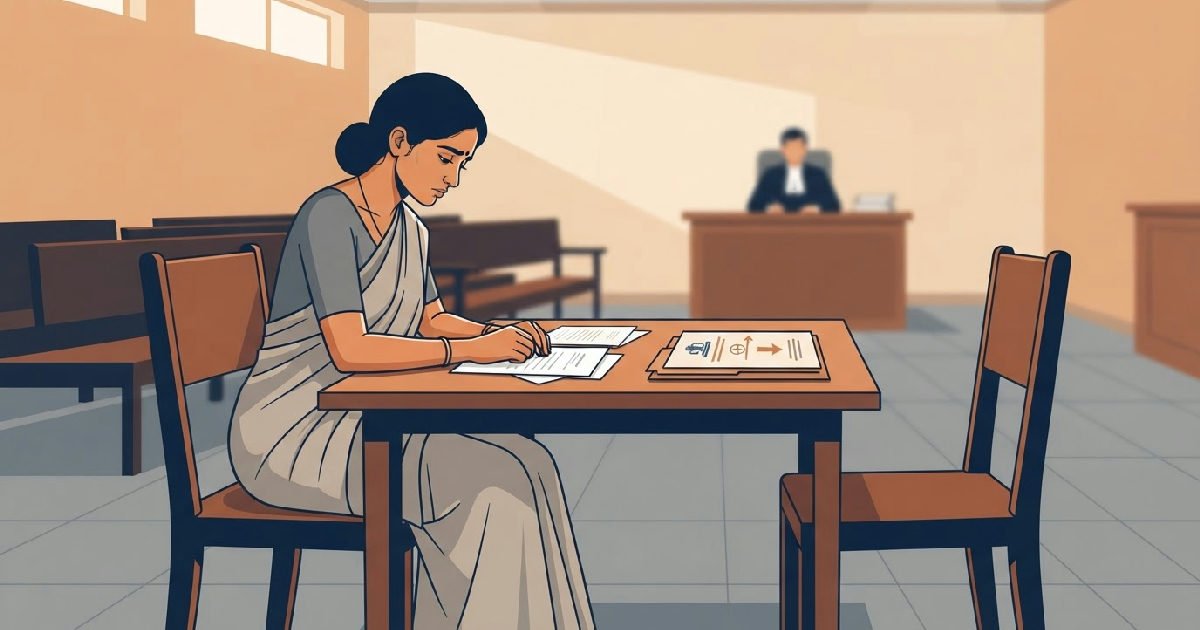
Delhi’s Family Courts are increasingly navigating complex scenarios where mutual consent divorce proceedings hit a snag during the crucial Second Motion. While the initial agreement might seem straightforward, issues arise when one spouse fails to appear or suddenly introduces new financial conditions, effectively stalling the divorce.
This turn of events leaves the other party in a precarious legal position, as Indian matrimonial law explicitly prevents courts from compelling a spouse to grant consent. Spouses facing such circumstances must understand their options, which range from waiting out the situation to initiating a contested divorce.
Understanding the Mutual Consent Divorce Process
The journey through a mutual consent divorce in Delhi, governed by Section 13B of the Hindu Marriage Act, 1955, is typically a two-stage process. It’s designed for couples who amicably agree to dissolve their marriage and settle all associated disputes, including child custody, property division, and spousal support, outside of prolonged litigation.
For a petition to be filed, both spouses must freely and willingly consent to the divorce. They must also have lived separately for at least one year and agree that their marriage is irreconcilable. Crucially, all terms regarding property, financial assets, alimony, and child custody must be mutually settled before the process begins.
The First Motion: Initial Agreement
The first significant step involves both spouses, alongside their legal representation, filing a joint petition in the Family Court. This petition meticulously details the marriage’s facts, the period of separation, and the mutually agreed-upon terms of settlement.
Both parties then appear before a judge to formally record their statements, confirming their free consent and full comprehension of the terms. Once satisfied, the court passes the First Motion order, marking the official commencement of the cooling-off period.
The Cooling-Off Period: A Time for Reflection
Following the First Motion, Section 13B(2) of the Hindu Marriage Act, 1955, mandates a statutory cooling-off period. This interlude typically lasts for a minimum of six months but can extend up to eighteen months.
The primary intent behind this waiting period is to offer couples an opportunity to reconsider their decision and, potentially, explore avenues for reconciliation. It serves as a safeguard against hasty decisions, ensuring both parties are certain about their choice to proceed with the divorce.
When Consent Falters: Second Motion Roadblocks
The most common and challenging hurdle in a mutual consent divorce often appears during the Second Motion stage. This phase requires both parties to reaffirm their commitment to the divorce after the cooling-off period.
The core principle here is that mutual consent must persist unequivocally until the final divorce decree is formally passed. If either spouse retracts their consent, or simply fails to appear, the entire mutual consent petition can collapse.
Non-Appearance and Withdrawn Consent
Should one spouse fail to appear for the Second Motion, the court is legally unable to grant a mutual consent divorce. Such non-cooperation typically leads to the dismissal of the petition.
Indian matrimonial law doesn’t empower the court to compel a spouse to appear or force them into an agreement if they’ve had a change of heart. This emphasizes the purely consensual nature of Section 13B proceedings, which distinguishes it significantly from other types of matrimonial disputes.
This situation can leave the complying spouse feeling trapped. It underlines the importance of meticulously drafted settlement agreements and clear communication throughout the process, even when the relationship is ending. The breakdown at this late stage often necessitates a complete re-evaluation of legal strategy.
Navigating New Financial Demands
Another frequent complication arises when a spouse introduces new financial conditions at the Second Motion stage. These demands, often for additional money, were not part of the original, agreed-upon settlement in the First Motion petition.
Legally, a spouse cannot unilaterally force these new terms unless the other party also agrees. The settlement agreement, established during the First Motion, is considered the backbone of the proceedings; it must be drafted with precision to avoid later disputes.
Practically, this can create a difficult impasse. The advice from legal experts is clear: “Do not keep paying informal cash with no receipt ‘to keep peace’.” Any financial transactions must be formally documented as part of a comprehensive settlement.
Informal payments can complicate matters further and are difficult to prove in court, potentially weakening one’s position if the case moves to a contested phase. For further reading on financial claims, explore articles discussing monetary claims in divorce settlements.
Strategic Alternatives for the Aggrieved Spouse
When mutual consent fails, the aggrieved party isn’t without recourse. Several strategic options are available, though they often require a shift in legal approach and can prolong the overall process.
Waiting for Reconciliation or Reconsideration
One immediate option is to request an adjournment. Courts might grant this, allowing up to the maximum 18-month period for the Second Motion. This window provides an opportunity to persuade the non-cooperative spouse to reconsider their stance and reappear.
However, this strategy carries inherent risks. There’s no guarantee of a change of heart, and it simply extends the period of legal uncertainty. It’s a gamble on the hope of revived consent rather than a definitive solution.
Transitioning to a Contested Divorce
If reconciliation proves impossible or if the non-cooperation persists, the aggrieved party can withdraw the mutual consent petition. The next step often involves filing a contested divorce petition. This requires establishing specific grounds for divorce under relevant laws, such as Section 13 of the Hindu Marriage Act, 1955.
Grounds can include cruelty, desertion, or adultery. The fact that a spouse previously signed a settlement agreement, accepted benefits, and then withdrew consent without justification can serve as compelling evidence of mental cruelty in a contested divorce. This avenue, while more time-consuming, offers a definitive path forward. Learn more about pursuing contested divorce in Delhi.
Recovery of Funds and Revival of Cases
In instances where a spouse has received settlement money or
Comparing Divorce Proceedings
| Aspect | Mutual Consent Divorce | Contested Divorce |
|---|---|---|
| Consent Required | Both parties must agree at all stages | Only one party needs to file; grounds must be proven |
| Timeframe (Typical) | 6-18 months (cooling-off period) | 2-5 years or more, depending on complexity |
| Grounds for Divorce | Irreconcilable differences, mutual agreement | Cruelty, desertion, adultery, etc. (as per law) |
| Complexity & Cost | Generally less complex and more cost-effective | Significantly more complex and costly due to litigation |
| Outcome Control | Parties have more control over settlement terms | Court decides terms based on evidence and law |
What is the “cooling-off period” in a mutual consent divorce?
The cooling-off period is a statutory waiting period, typically lasting from six to eighteen months, mandated after the First Motion in a mutual consent divorce. Its purpose is to give couples an opportunity to reconsider their decision and potentially reconcile before the divorce is finalized.
What happens if one spouse withdraws consent during the Second Motion?
If one spouse withdraws their consent or fails to appear for the Second Motion, the court cannot grant a mutual consent divorce. The petition typically gets dismissed, as Indian law does not allow courts to compel a spouse to give consent. The aggrieved party may then need to consider alternative legal strategies, such as filing a contested divorce.
Can new financial demands be introduced by a spouse during the Second Motion?
While a spouse might attempt to introduce new financial demands, legally, these cannot be unilaterally forced if they were not part of the original settlement agreement established during the First Motion. The agreed-upon settlement forms the backbone of the proceedings. Introducing new demands often leads to an impasse, potentially causing the mutual consent petition to collapse and requiring a new legal approach.
Second motion stuck in Delhi? WhatsApp or call for free consultation.
Related: https://arpitmarwah.com/matrimonial-lawyers-in-delhi/