
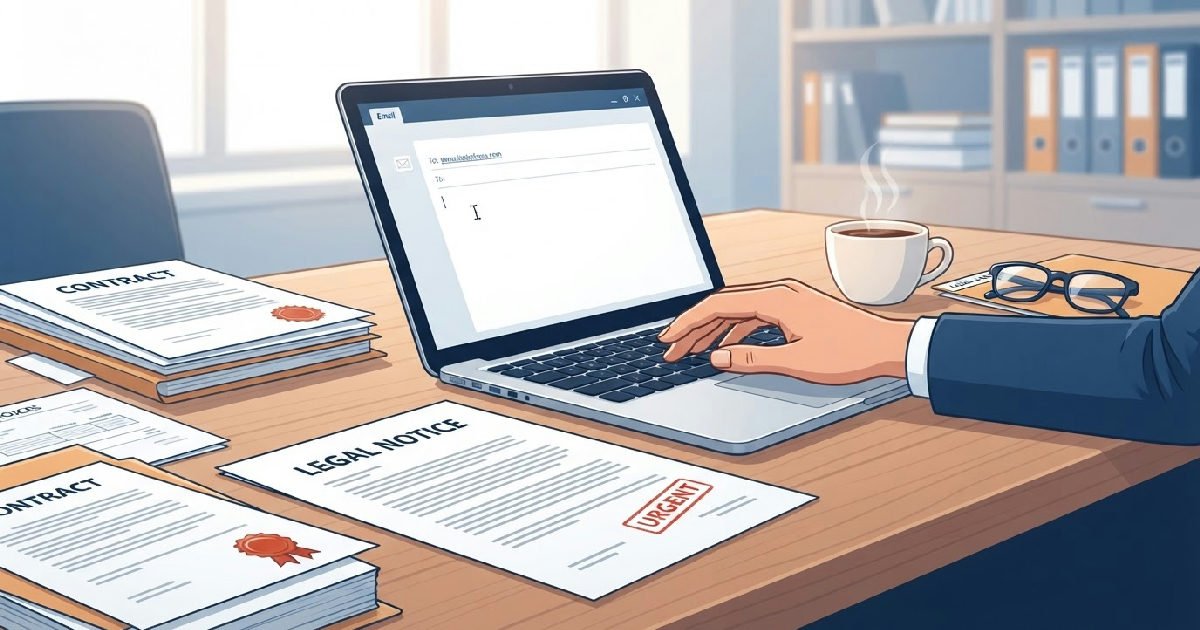
Receiving a legal notice can often trigger immediate reactions of fear or anger within a company. However, the initial steps taken when facing such a demand are critical, and a calm documented response is essential for a strong defense.
These early actions frequently determine whether a dispute settles amicably or escalates into costly litigation, making a calm, documented, and timely response paramount for protecting corporate interests.
Received a Legal Notice? Calm Documented Response
The first 48 hours after a company receives a legal notice are arguably the most critical period for legal strategy. Swift, yet measured, action is required to build a strong foundation for any subsequent defense.
When a company received a legal notice, understanding the implications and responding appropriately is key to mitigating risks.
This initial window allows the company to gather vital information and prevent missteps that could prove detrimental. Proper documentation of the receipt is the very first step in this crucial process.
Secure vital information and documentation promptly
It’s imperative to note the exact date of receipt immediately, as all response deadlines commence from this point. Companies should retain the original envelope, courier receipts, email timestamps, and any acknowledgment of delivery.
Concurrently, gathering all pertinent documents is essential. This includes contracts, invoices, emails, delivery proofs, payment records, and all prior correspondence related to the claim.
Verify claim details and avoid informal discussions
Once documents are assembled, a thorough check of the claim’s accuracy against company records must be performed. Legal notices often contain exaggerations, inaccuracies, or critical omissions that can be challenged.
Crucially, employees must refrain from discussing the matter informally via internal emails or messaging platforms like WhatsApp. Such communications can inadvertently become part of the dispute’s official record, potentially harming the company’s position.
Prioritize obtaining expert legal advice
Before any reply is drafted or sent, companies should always seek comprehensive legal counsel. An experienced legal professional can assess the notice, review collected documents, and advise on the most prudent course of action.
A concise, carefully worded response, formulated with legal guidance, is always preferable to a lengthy, emotional, or ill-considered one. This proactive step helps frame the company’s narrative from the outset, demonstrating proper handling of legal notices.
The perils of inaction or hasty responses
Companies often underestimate the severe repercussions of mishandling a legal notice. Both ignoring the notice entirely and responding impulsively can lead to a significantly worse outcome than if a strategic approach had been adopted.
These missteps not only complicate the immediate dispute but can also damage a company’s long-term operational and financial health. Understanding these risks is vital for sound business law practices.
Ignoring a legal notice escalates risks significantly
Failing to respond to a legal notice almost guarantees an escalation to formal legal proceedings. This inevitably increases costs and the overall complexity of the situation for the company.
Ignoring the notice also weakens the company’s defense narrative in court, as it forfeits the chance to formally deny incorrect allegations or clarify facts. This silence can easily be interpreted by courts as an admission of claims or an unwillingness to resolve the issue.
Furthermore, inaction can result in increased financial exposure, including higher interest claims and the opposing party seeking recovery of their legal costs. Companies might also face injunctions or adverse orders that disrupt their normal business operations.
Beyond financial and operational impacts, ignoring a legal notice can severely damage a company’s reputation and credibility. It signals uncooperativeness to future partners and investors, making it a critical strategic error.
Reckless replies can undermine your legal case
While ignoring a notice is dangerous, a hasty reply filled with errors or premature admissions can be even more detrimental. Such responses can be used against the company later in court, providing ammunition to the opposing party.
Emotional or aggressive communications complicate matters further, often creating unnecessary antagonism and making an amicable settlement more difficult to achieve. It’s a common reason why avoidable mistakes in disputes occur.
Every word in a reply must be considered for its legal implications. Any admission, even partial, or an unclear statement, can be spun by the opposing counsel to prejudice the company’s position.
Strategic advantages of a measured, professional reply
A well-crafted and legally reviewed response to a legal notice offers numerous benefits. It transforms a potentially damaging situation into an opportunity to assert the company’s position and control the narrative.
This approach isn’t merely reactive; it’s a proactive measure that can significantly influence the trajectory and outcome of a dispute. It safeguards assets and reputation simultaneously.
Correcting misconceptions and strengthening your position
A proper reply allows the company to explicitly correct any false facts or misrepresentations presented in the notice. It enables the clear presentation of the company’s own version of events, backed by evidence.
This formal rebuttal protects the company from later allegations of silence or acquiescence, thereby strengthening its overall legal position should the matter proceed to litigation.
Moreover, a reasoned response demonstrates professionalism and a commitment to resolving disputes responsibly. This can be viewed favorably by mediators, arbitrators, or even judges if the case moves into formal proceedings.
Differentiating legal notices from court orders
It’s crucial for businesses to understand that a legal notice is a formal warning and a demand, not an official court order. It serves as a precursor to litigation, an invitation to resolve the issue before court intervention.
Many notices are sent primarily to exert pressure, and some claims may be weak or entirely unfounded. Companies cannot determine the strength of a claim until all documents are thoroughly examined and legal advice is sought.
In contrast, a court order signifies that a formal legal case has been filed, requiring engagement with the judicial system. This distinction guides the appropriate level and type of response required.
Navigating potential response pathways
Once a company has calmly assessed the legal notice and consulted with counsel, several strategic response pathways become available. The optimal choice depends entirely on the specific facts and the strength of the opposing claim.
These options range from full compliance to preparing for a robust defense, each carrying its own set of legal and commercial implications. A tailored approach is always best.
Evaluating options based on claim specifics
If the claim is clearly due and verifiable through company records, the most straightforward response might be to pay the claim. This can prevent further legal costs and preserve commercial relationships.
Alternatively, if the claim is disputed, the company can send a detailed written reply denying it, either fully or partially, supported by relevant evidence. This sets the stage for formal disagreement.
Sometimes, simply seeking additional time to verify documents and facts before providing a substantive response is prudent. This allows for a more thorough investigation without committing prematurely.
Another viable option is to propose a structured settlement. This allows for negotiation of terms and conditions that might be more favorable than a full court judgment, avoiding prolonged legal battles.
Finally, if all indications suggest that filing a case is likely or unavoidable, the company must prepare for litigation. This involves compiling evidence, identifying witnesses, and formulating a robust defense strategy.
The pivotal role of expert legal guidance
Each response pathway carries intricate legal considerations, making expert legal guidance indispensable. Legal professionals can weigh the pros and cons of each option, considering potential outcomes and costs.
They can also draft the response in a manner that protects the company’s interests, ensuring all communications are legally sound and do not inadvertently prejudice future arguments. This expertise is a vital safeguard.
Broader implications for corporate legal strategy
The handling of a single legal notice can have ripple effects that extend far beyond the immediate dispute, influencing a company’s long-term legal health and market perception. Therefore, viewing each notice through a strategic lens is crucial.
Developing a robust internal protocol for managing such communications is not just about compliance; it’s about proactive risk management and maintaining competitive advantage in the business landscape.
Preventing future disputes through proactive measures
Investing in regular legal audits and employee training on legal compliance can significantly reduce the likelihood of receiving such notices. This proactive approach saves substantial resources over time by mitigating potential legal challenges.
Errors in initial contract formation frequently lead to expensive disputes down the line, underscoring why careful upfront work is critical. Understanding various debt recovery legal options can also help businesses strengthen their position pre-emptively.
Reputational management in legal conflicts
How a company manages legal challenges, including its response to notices, directly impacts its reputation among clients, partners, investors, and the public. A professional, ethical approach fosters trust.
Conversely, a perception of stonewalling or aggressive tactics can erode goodwill, making it harder to forge new partnerships or retain existing ones. Transparency and fairness are often rewarded.
In today’s interconnected business world, news of legal disputes can spread rapidly. Managing the public perception alongside the legal reality is an integral part of modern corporate governance.
Here’s a comparative overview of different approaches to receiving a legal notice:
| Action Taken | Potential Short-Term Outcome | Long-Term Implications |
|---|---|---|
| Ignoring the Notice | Guaranteed escalation, missed settlement | Weakened defense, increased costs, reputational damage, adverse orders |
| Hasty, Emotional Reply | Errors, accidental admissions, increased animosity | Complicated settlement, prejudiced legal position, protracted litigation |
| Calm, Documented, Timely Response with Legal Counsel | Accurate facts presented, potential for amicable settlement | Strengthened defense, protected reputation, reduced legal costs, operational stability |
What is the difference between a legal notice and a court order?
A legal notice is a formal warning and a demand, serving as a precursor to potential litigation. It gives the recipient an opportunity to rectify an issue or negotiate. A court order, conversely, is an official document issued by a court of law, indicating a formal case has been filed and requires engagement with the judicial system.
How quickly should a company respond to a legal notice?
While specific deadlines vary, the initial actions within the first 48 hours are crucial for documentation and seeking legal advice. A formal, legally reviewed response should be prepared and sent within the timeframe specified in the notice, avoiding any unnecessary delay.
Can an informal email or WhatsApp message be used as evidence in a legal dispute?
Yes, internal and external communications conducted through informal channels like email or WhatsApp can absolutely become part of the dispute’s record and be used as evidence. It’s vital to keep all discussions regarding a legal notice formal and through approved channels after legal counsel has been obtained.
Received a legal notice? WhatsApp or call for a free consultation.