
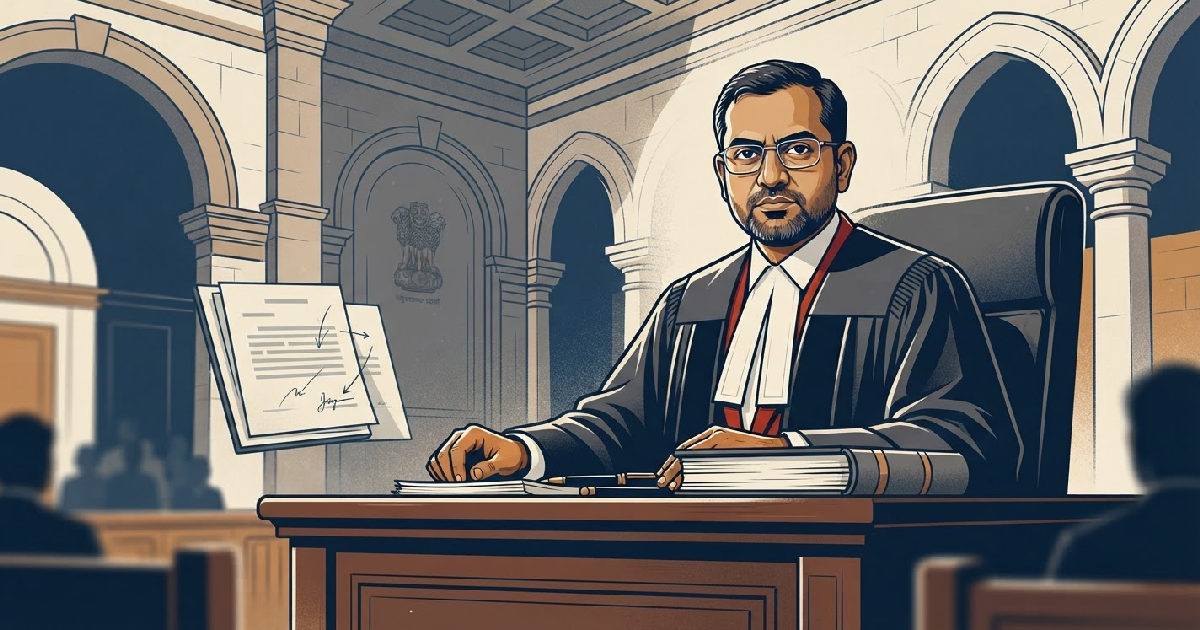
The Rajasthan High Court has delivered a significant ruling on evidentiary standards in cheque dishonour cases. On May 12, 2026, Justice Farjand Ali ruled that once a complainant denies their handwriting and signature on a document, they cannot subsequently argue that the document is irrelevant to the transaction.
This decision directly impacts the use of Forensic Science Laboratory (FSL) examinations in such disputes, ensuring a more consistent approach to judicial proceedings.
Clarifying evidentiary standards in cheque dishonour cases
The ruling came in the case of Vikram Singh v. State of Rajasthan & Anr., where the High Court overturned a trial court’s decision to refuse an FSL examination of a crucial receipt. The court emphasized that parties cannot selectively oppose evidence. It’s a move designed to prevent litigants from having it both ways in court.
High court overturns trial court’s FSL rejection
Justice Farjand Ali of the Rajasthan High Court issued a clear directive on May 12, 2026, setting aside a trial court’s refusal to send a disputed document for forensic analysis.
The court’s decision underscores a fundamental principle: a litigant cannot simultaneously deny the authenticity of a document, including their signature or handwriting, and then assert its irrelevance. This stance aims to ensure fairness and consistency within the legal process.
The High Court explicitly stated that the trial court’s rejection of the FSL referral was based on “wholly conjectural premises,” suggesting a lack of robust reasoning in the initial decision. This directive mandates that the disputed document, identified as Exhibit D01A, be sent to the FSL.
There, it will undergo a thorough comparison with the complainant’s admitted and undisputed handwriting and signatures, including those found on legal documents such as vakalatnamas.
The pivotal case of Vikram Singh v. State of Rajasthan
The case at the heart of this ruling involves petitioner Vikram Singh and complainant Virendra Singh. Singh was facing charges under Section 138 of the Negotiable Instruments Act, 1881, after a cheque he issued for Rs 10,00,000 was dishonoured due to insufficient funds. During the trial, Singh presented Exhibit D01A, a receipt he argued was central to the financial transaction in question.
Virendra Singh, the complainant, categorically denied both the handwriting and the signature on Exhibit D01A. Despite this explicit denial, the trial court, on January 3, 2026, dismissed the petitioner’s request for an FSL examination. The trial court had contended that such a verification wouldn’t impact the trial’s ultimate outcome.
Justice Ali’s ruling directly challenges this previous stance, emphasizing the critical need for thorough forensic examination when authenticity becomes a point of contention.
Understanding Section 138: the core of cheque bouncing
Cheque dishonour cases in India primarily fall under the ambit of the Negotiable Instruments Act, 1881 (NI Act). Specifically, Section 138 of the NI Act makes the bouncing of a cheque a criminal offense under certain conditions. This provision was introduced through a 1988 amendment, specifically designed to instill confidence in cheque transactions and foster financial discipline across the country.
For an offense under Section 138 to be established, several conditions must be met. The cheque must have been issued for the discharge of a legally enforceable debt or other liability, and presented within its validity period.
If it’s returned unpaid, typically due to insufficient funds or exceeding the amount arranged to be paid from that account, then the person who drew the cheque commits an offense. The law outlines a strict procedure for prosecution.
The payee must issue a demand notice to the drawer within 30 days of receiving the ‘cheque return memo’ from the bank. The drawer then has 15 days to make the payment.
Failure to do so within this period allows the payee to file a criminal complaint within 30 days after the notice period expires, before a Judicial Magistrate First Class (JMFC) or a Metropolitan Magistrate. Penalties can include imprisonment for up to two years, a fine up to twice the cheque amount, or both.
Burden of proof and legal presumptions
A key element in these proceedings is the shifting burden of proof. Sections 118(a) and 139 of the NI Act establish a significant legal presumption: a cheque is presumed to have been received for the discharge of a debt or other liability. This presumption is rebuttable, meaning the accused can present evidence to prove otherwise.
The initial burden lies with the complainant to establish the foundational facts – that a cheque was issued, presented, and subsequently dishonoured.
Once these basic elements are proven, the burden automatically shifts to the accused. They must then demonstrate, through cogent and probable evidence, that the cheque was not issued for a legally enforceable debt or that there was no existing liability.
This isn’t a mere procedural hurdle; it requires the accused to produce concrete evidence, not just a bare denial, to challenge the statutory presumption. The accuracy of signatures and handwriting often plays a crucial role in this rebuttal.
Section 45 of the Indian Evidence Act
Forensic Science Laboratory (FSL) examinations are crucial when the authenticity of a document, such as a signature or handwriting, becomes a point of contention in legal disputes. Such examinations serve to ascertain the genuineness of these elements, or even the age of the ink used on a document.
The legal framework for this is established under Section 45 of the Indian Evidence Act, 1872. This section allows courts to seek expert opinions on handwriting and signatures, providing a scientific and objective basis for resolving complex evidentiary disputes.
Moreover, Section 73 of the Evidence Act grants courts the power to conduct their own comparison of signatures. However, the reliance on FSL experts often provides a more objective and detailed analysis, especially in cases where the technical intricacies of handwriting analysis are beyond the court’s immediate expertise.
This becomes particularly vital when a fair trial is at stake, as confirmed by various judicial pronouncements, ensuring that the accused has every opportunity to present their defense.
Precedent from other Rajasthan High Court rulings
This latest ruling from Justice Farjand Ali isn’t an isolated incident. The Rajasthan High Court has consistently highlighted the importance of FSL examinations for ensuring a fair trial.
For instance, on April 13, 2026, Justice Anoop Kumar Dhand ruled that denying an accused the opportunity for a forensic handwriting examination amounts to denying a fair trial.
This earlier decision overturned a Judicial Magistrate’s 2015 order in the case of Mahesh Tiwari of Gangapur City, Sawai Madhopur, emphasizing the fundamental right of the accused to present evidence to challenge statutory presumptions.
The court explicitly directed the trial court to obtain specimen signatures and send them, along with the disputed cheque, to the FSL for an expeditious report.
Similarly, Justice Sandeep Mehta has often directed FSL examinations where signatures are genuinely disputed and supported by credible specimen handwriting. However, he also cautions against using FSL applications as mere delay tactics, stressing that the application must be genuine and material to the defense, with prima facie evidence and available specimen signatures.
These rulings collectively underscore the High Court’s commitment to a balanced and thorough approach to evidence in criminal proceedings.
Preventing selective opposition to evidence
The ruling by Justice Farjand Ali sends a clear and unequivocal message: complainants can’t pick and choose which aspects of evidence they’ll contest. If a complainant denies both their signature and handwriting on a document, they’ve fundamentally challenged its authenticity and veracity.
This denial then legitimately opens the door for a thorough forensic investigation, irrespective of their subsequent claims about the document’s relevance or nexus to the transaction. It’s about maintaining consistency in legal arguments and preventing tactical inconsistencies that could undermine justice.
This decision is critical in preventing potential abuse of the legal process. A party shouldn’t be able to deny a document’s authorship to weaken a defense, only to then claim it’s unimportant or unrelated to the transaction if forensic scrutiny is sought.
This judicial stance ensures that the pursuit of truth takes precedence and discourages strategic, but inconsistent, legal maneuvers. It holds parties accountable for their initial denials and demands a commitment to uncovering the truth.
Ensuring a just adjudication process
The High Court’s decision directly supports the constitutional right to a fair trial, a cornerstone of the Indian legal system, particularly as enshrined in Article 21 of the Indian Constitution.
By mandating FSL examination when a complainant denies a document’s authenticity, the court is ensuring that all relevant evidence is properly assessed and that no party is unfairly disadvantaged.
Denying such an examination, especially when a document could potentially rebut a statutory presumption against the accused, could unfairly prejudice their case and compromise the integrity of the trial.
Justice Farjand Ali’s observation that an expert examination could have a “direct bearing on the just adjudication of the matter” reinforces this commitment to judicial fairness. It means that technicalities or procedural hurdles should not prevent a comprehensive and scientific review of crucial evidence.
This move contributes significantly to stronger judicial integrity and aims to deliver more equitable outcomes in the complex arena of cheque dishonour cases, balancing the rights of all parties involved.
Supreme Court’s evolving stance on FSL requests
The Supreme Court of India consistently shapes the interpretation and application of the NI Act, with recent rulings providing crucial context for lower courts. For instance, in a January 29, 2024, judgment in Ajitsinh Chehuji Rathod v. State of Gujarat & Anr. (Criminal Appeal No.
478 of 2024), the apex court clarified the nuances of rebutting presumptions under the NI Act. It stressed that while the initial presumptions favour the complainant, the onus is on the accused to present “appropriate evidence” to rebut them.
The Court stated it couldn’t be expected to actively help the accused in gathering evidence on their behalf, a subtle but important distinction.
Furthermore, the Court noted the inherent power of judicial bodies, under Section 73 of the Evidence Act, to conduct their own comparisons of signatures and also sanctioned the use of certified copies of specimen signatures from banks for such purposes.
However, the Supreme Court also demonstrated a different emphasis in a ruling on February 22, 2024. This judgment concerned a blank cheque voluntarily signed and given to a payee, reaffirming that it’s presumed to have been issued to settle a legally enforceable debt under Section 139 of the NI Act.
Crucially, the Court overturned a High Court’s decision that had allowed the accused-drawer to seek a forensic opinion on the signature on such a blank cheque. The apex court underscored that the statutory presumption “cannot be rebutted merely by a handwriting expert’s report” if it’s proven that the cheque was indeed voluntarily signed.
These nuanced rulings highlight the judiciary’s continuous effort to balance fair trial rights with the need to prevent frivolous defenses and unnecessary delays in a system already burdened by a high volume of these cases. This demonstrates the Supreme Court’s stance on maintaining judicial efficiency while upholding the spirit of the law.
The volume of cheque bounce cases
Cheque bounce cases represent a significant portion of pending litigation in India. Estimates suggest there are between 38 and 40 lakh such cases pending across the country. This sheer volume places immense pressure on the judicial system, leading to backlogs and prolonged legal battles for many individuals and businesses.
Therefore, rulings that clarify evidentiary standards and streamline the trial process are not just legally significant; they are vital for managing the caseload while simultaneously upholding principles of justice.
The prevalence of these cases underlines the importance of clear legal guidelines, particularly concerning forensic evidence. Ensuring that FSL examinations are appropriately utilized can lead to more efficient resolutions and reduce the backlog.
This specific ruling by the Rajasthan High Court contributes to a clearer legal landscape for these common disputes, offering a degree of predictability for litigants and legal practitioners alike. It’s a step towards more effective judicial administration in a critical area of commercial law.
Procedural clarity and potential delays
This ruling by Justice Farjand Ali means that trial courts will now need to be more diligent in assessing requests for FSL examinations in cheque dishonour cases. When a complainant challenges the authenticity of a document by denying their signature or handwriting, a forensic analysis can no longer be easily dismissed.
This procedural clarity is a positive step towards ensuring all relevant evidence is considered, thereby strengthening the fairness of the trial process.
However, there’s also the potential for increased trial durations. FSL examinations can be time-consuming, and directing them mid-trial could lead to adjournments and delays. Courts will need to carefully balance the accused’s right to a fair trial with the imperative for expeditious justice.
The High Court’s directive for the trial court to send the document to FSL, and the temporary stay on further proceedings until the report is received, clearly illustrates this careful balancing act. Litigants will need to factor these potential timelines into their overall legal strategies.
Refiling complaints after technical dismissals
In a related and equally important development, the Rajasthan High Court on January 3, 2025, clarified another significant procedural point for cheque bounce cases. It ruled that a fresh complaint is legally maintainable even if an earlier complaint was dismissed for being premature.
This decision, rooted in the legal maxim “Ubi Jus Ibi Remedium” (where there is a right, there must be a remedy), ensures that a technical error in initial filing doesn’t permanently bar a complainant from seeking justice. This allows complainants to refile within one month of dismissal due to such technicalities.
This ruling reflects a broader judicial approach aimed at preserving substantive rights despite procedural missteps. It provides a vital safety net for complainants who might inadvertently make procedural errors. This context is important for understanding the broader environment in which cheque dishonour cases are heard and resolved, emphasizing the judiciary’s role in safeguarding access to justice even amid the complexities of the law.
Key statistics and procedural overview
Understanding the procedural flow and the volume of cases helps illustrate the impact of rulings like Justice Farjand Ali’s. Cheque dishonour cases are a prevalent issue, contributing significantly to the judicial workload in India.
| Aspect of Cheque Dishonour Cases | Detail | Legal Basis / Context |
|---|---|---|
| Primary Legislation | Negotiable Instruments Act, 1881 | Sections 138, 118(a), 139 |
| Cheque Amount in Featured Case | Rs 10,00,000 | Vikram Singh v. State of Rajasthan & Anr. |
| Typical Notice Period for Payment | 15 days post-demand notice | Section 138 NI Act |
| Maximum Imprisonment | 2 years | Section 138 NI Act |
| FSL Examination Provision | Expert opinions on handwriting/signatures | Section 45 Indian Evidence Act, 1872 |
| Estimated Pending Cases (India) | 3.8 – 4 million (38-40 lakh) | 213th Law Commission Report estimates |
The table above highlights both the specific facts of the recent ruling and the broader legal and statistical landscape of cheque bounce cases. It underscores why judicial clarity on evidentiary matters is crucial for an efficient and fair legal system.
What was the key ruling by the Rajasthan High Court?
The Rajasthan High Court, in a May 12, 2026, ruling by Justice Farjand Ali, held that a complainant cannot dispute the connection of a document to a transaction after they have denied their signature and handwriting on it. This decision came in a cheque dishonour case, emphasizing that such a denial opens the door for a Forensic Science Laboratory (FSL) examination.
Why is this ruling significant for cheque dishonour cases?
This ruling is significant because it prevents complainants from inconsistently challenging evidence. They cannot deny signing or writing a document to undermine its validity, and then subsequently claim it’s irrelevant to avoid forensic scrutiny. It reinforces fair trial principles and ensures a more consistent approach to how evidence is treated in court, particularly when the authenticity of documents is disputed.
What happens if a complainant denies their signature on a document now?
If a complainant denies their signature or handwriting on a document, the recent Rajasthan High Court ruling mandates that the document must be sent for Forensic Science Laboratory (FSL) examination. This allows for a scientific comparison with their admitted signatures and handwriting, ensuring a thorough assessment of the evidence before the court.
The trial court’s prior rejection of such a request in the case of Vikram Singh v. State of Rajasthan & Anr. was set aside by the High Court.