
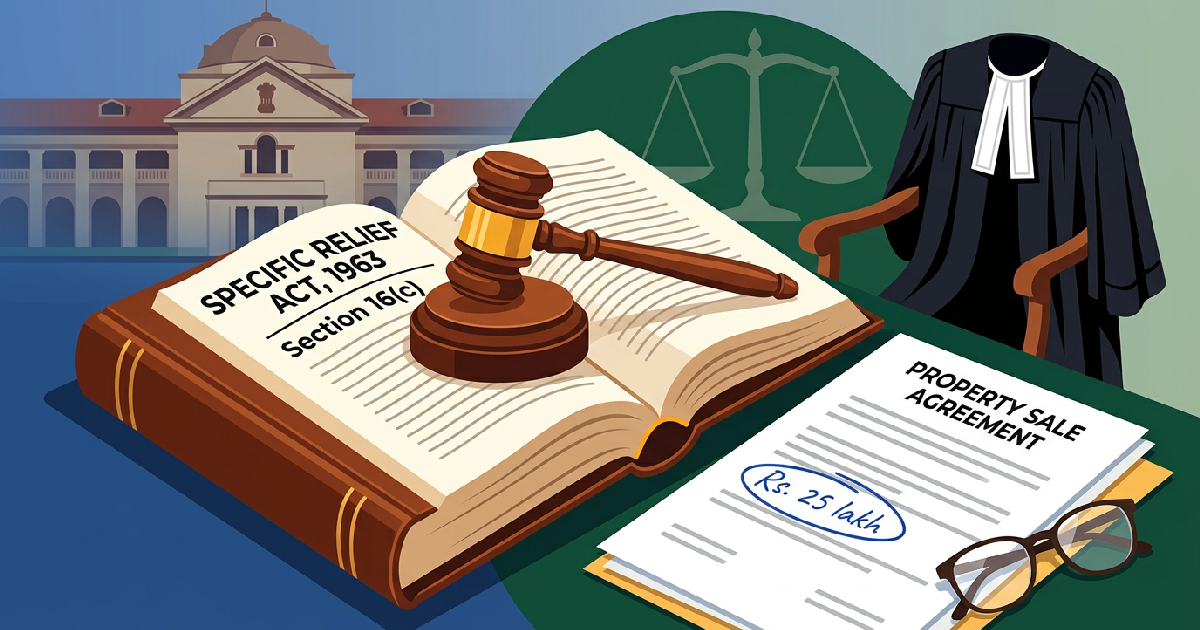
The Patna High Court ruled on June 20, 2026, that a buyer who fails to fulfill the essential terms of a property agreement is legally barred from seeking specific performance.
Justice Jitendra Kumar, presiding over a Single Judge Bench, held that a plaintiff must demonstrate consistent readiness and willingness to perform their contractual obligations to enforce a sale.
The court emphasized that Section 16(c) of the Specific Relief Act, 1963, serves as a personal bar to relief for any party responsible for a breach of contract.
Can a buyer still get a refund if they default on a property deal?
Yes, but not necessarily a full refund. As shown in this case, the court may allow the seller to deduct a percentage of the advance (10% in this instance) as per the contract terms, while ordering the rest returned with interest to prevent unjust enrichment.
What is the “readiness and willingness” requirement under Indian law?
Under Section 16(c) of the Specific Relief Act, a plaintiff must prove they were both financially capable (ready) and intentionally proactive (willing) to complete the sale. Failing to meet a specific payment deadline often proves a lack of readiness.
How much interest can a court award on a refunded property deposit?
The rate varies based on the judge’s discretion and the contract. In this Patna High Court case, the judge awarded 6% per annum from the date of default, with a penal rate of 12% if the payment is not made within a two-month window.