
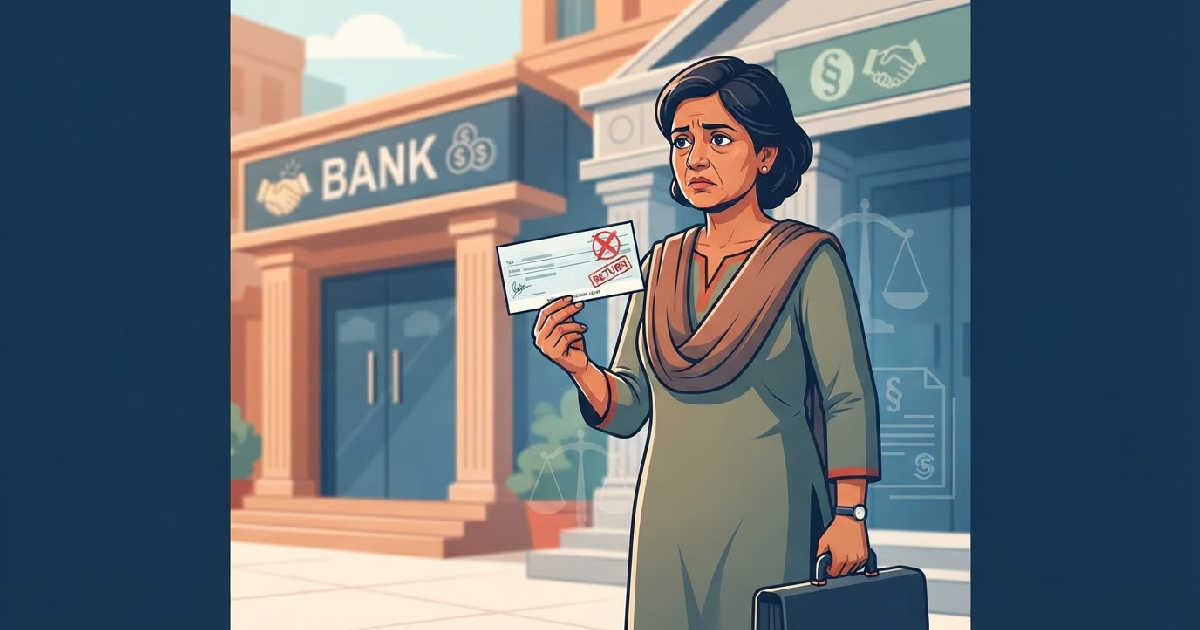
An NGO Secretary can indeed be held liable for a cheque bounce within India’s legal framework, specifically under the Negotiable Instruments Act, 1881 (NI Act). This isn’t an automatic consequence, though; liability depends heavily on the Secretary’s precise role, responsibilities, and direct involvement in the non-profit organization’s financial dealings.
Cheque bounce, also known as dishonour of cheque, occurs when a bank declines to process a cheque presented for payment. This act is criminalized under specific conditions outlined in the NI Act, making it a serious matter for individuals associated with the issuing entity.
Understanding Cheque Dishonour and Organizational Roles
A cheque is considered dishonoured when a bank rejects it. Various issues can cause this, such as insufficient funds in the issuer’s account, the implementation of a stop payment order, a mismatch in signatures, an incorrect date, or even a closed account.
The NI Act criminalizes cheque dishonour, underscoring the gravity of such financial incidents within the Indian legal system. It aims to reinforce trust in transactional instruments.
Generally, an NGO Secretary plays a vital role in communication, meticulously managing organizational records, and ensuring adherence to bylaws. Their duties often encompass issuing meeting notices, maintaining corporate documents, and meeting various legal requirements.
But when assessing liability for a bounced cheque, the focus shifts. It specifically scrutinizes their financial responsibilities and the extent of their authority within the organization’s financial operations.
India’s Negotiable Instruments Act, 1881
The legal framework for cheque bounce involving an NGO primarily rests on Sections 138 and 141 of the Negotiable Instruments Act, 1881. These sections are central to understanding cheque dishonour law in India.
Section 138 specifically criminalizes the act of issuing a cheque for a legally enforceable debt or liability that is subsequently returned unpaid by the bank. This provision holds individuals accountable for financial commitments made via cheques.
For an action under Section 138 to proceed, certain conditions must be met. The cheque must have been issued against a legally enforceable debt or other liability, rather than as a gift or a security instrument without a clear underlying obligation.
Section 141: Extending Corporate Liability
Section 141 of the NI Act extends liability to companies and other organizations, including NGOs, when a cheque they issue is dishonoured. It stipulates that if an offense under Section 138 is committed by a company, then every individual responsible for conducting its business at that time is deemed guilty.
This includes various officers, such as directors, managers, or secretaries. The provision prevents individuals from evading accountability by hiding behind the organizational structure when financial misconduct occurs, thereby strengthening organizational liability.
However, an individual will not be held liable if they can prove the offense was committed without their knowledge. They must also demonstrate that they exercised all due diligence to prevent its occurrence, establishing a clear defense.
Establishing Liability for an NGO Secretary
An NGO Secretary can be held liable under Section 141 if they were in charge of and responsible to the organization for the conduct of its business at the time the offense was committed. It’s important to note that merely holding the title isn’t sufficient for automatic liability.
Establishing an NGO Secretary’s liability requires concrete evidence of their involvement. This means showing they had a direct role in the cheque’s issuance or were actively participating in the financial decisions that led to its dishonour.
Such involvement could manifest if the Secretary signed the cheque, authorized the payment, or possessed knowledge of insufficient funds in the organization’s account. This clarifies the need for demonstrable participation in the relevant financial actions.
The core principle is that liability isn’t assumed but must be proven through specific actions or documented responsibilities. It highlights the importance of precise roles within non-profit governance.
Common Reasons for Cheque Dishonour
Understanding why a cheque might be rejected is crucial for any organization, including NGOs. These reasons directly contribute to the conditions under which an NGO Secretary might face criminal implications.
The NI Act considers several circumstances that lead to a cheque’s dishonour. These range from technical errors to deliberate financial shortcomings, each carrying potential legal ramifications.
| Reason for Dishonour | Description | Impact on Cheque Validity |
|---|---|---|
| Insufficient Funds | Account lacks the money to cover the cheque amount. | Direct cause for bounce, often leading to Section 138 action. |
| Stop Payment Order | Issuer instructed the bank to halt payment. | Can trigger cheque bounce liability if related to a legally enforceable debt. |
| Signature Mismatch | Signature on cheque doesn’t match bank records. | Technical reason for dishonour, requiring issuer verification. |
| Incorrect Date | Cheque contains an erroneous or future date. | Bank may refuse processing until correction or valid date. |
| Closed Account | The issuer’s bank account has been terminated. | Clear reason for non-payment, often indicating severe financial issues. |
Navigating Due Diligence and Exceptions
Section 141 provides important exceptions for individuals who might otherwise be implicated in a cheque bounce case. These exceptions are crucial for protecting officers who were not genuinely involved in the wrongdoing.
An individual can escape liability if they prove that the offense was committed without their knowledge. This places the burden of proof on the accused to demonstrate a lack of awareness regarding the cheque’s problematic issuance or the underlying financial situation.
Furthermore, they must establish that they exercised all due diligence to prevent the commission of such an offense. This involves demonstrating a proactive and reasonable effort to ensure financial compliance and prevent irregularities within the NGO.
It emphasizes that while holding a position like NGO Secretary carries significant responsibility, it doesn’t automatically imply guilt without proven involvement or a failure of reasonable oversight. This nuanced approach helps clarify the application of cheque bounce law.
This legal emphasis on knowledge and due diligence encourages transparency and robust internal controls within non-profit organizations. It ensures that those truly responsible for financial mismanagement are held accountable under the NI Act.
Implications for NGO Governance
The potential for an NGO Secretary to face liability under the NI Act underscores the critical need for transparent financial management and clear authority structures within non-profit organizations. It means that secretaries must be acutely aware of their financial duties.
NGOs should establish clear internal policies regarding cheque issuance, payment authorizations, and financial oversight to protect their officers. Regular audits and clear documentation can serve as vital safeguards against future legal challenges.
Ultimately, the legal framework aims to foster greater accountability and prevent financial misconduct in the non-profit sector. Understanding these provisions helps NGOs operate with integrity and avoid potential criminal implications.
What is a cheque bounce under Indian law?
A cheque bounce, or dishonour of cheque, happens when a bank refuses to process a cheque for payment. It is criminalized under India’s Negotiable Instruments Act, 1881, under specific conditions.
Can an NGO Secretary be held liable for a bounced cheque issued by the NGO?
Yes, an NGO Secretary can be held liable under the Negotiable Instruments Act, 1881. This liability is not automatic but depends on their specific role, responsibilities, and involvement in the NGO’s financial operations.
What are common reasons a cheque might be dishonoured?
Common reasons for cheque dishonour include insufficient funds in the issuer’s account, a stop payment order, a signature mismatch, an incorrect date, or a closed account.