
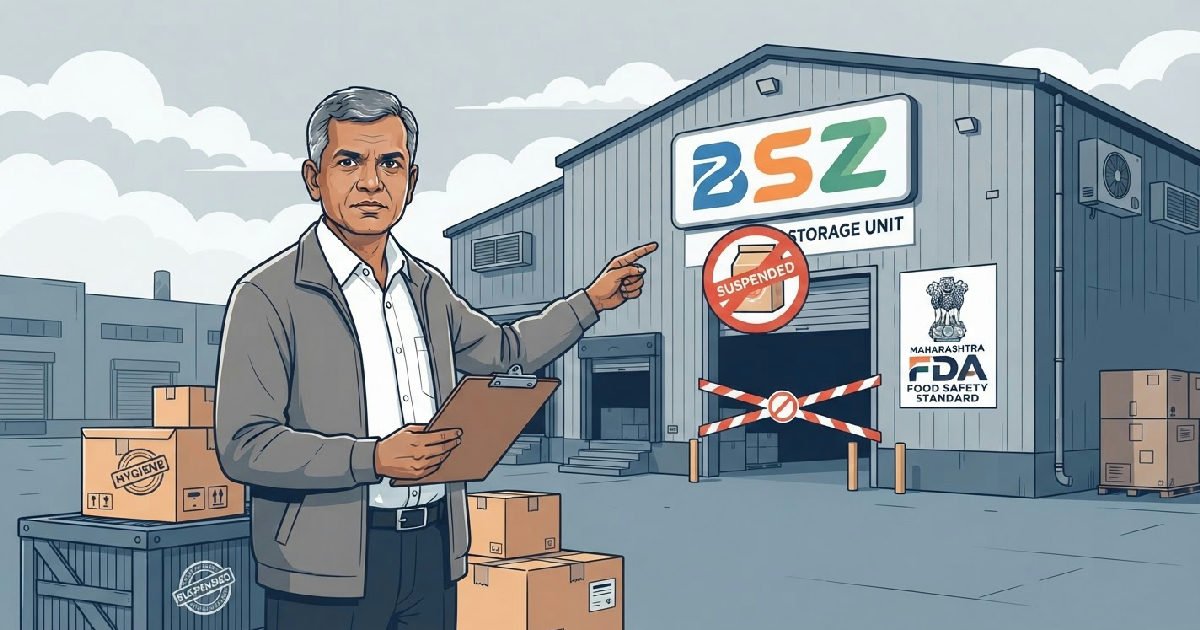
Maharashtra state’s food safety chief, Tukaram Mundhe, 51, has taken decisive action against India’s booming quick commerce sector, suspending the permits of 12 warehouses operated by grocery giants Eternal (Blinkit), Swiggy (Instamart), and Zepto. This widespread crackdown follows detailed inspections that uncovered alarming hygiene violations, including cockroach infestations, spoiled produce, rodent waste, and unsanitary storage conditions.
The suspensions mark a significant escalation in the state’s efforts to enforce food safety standards across the food and grocery industries. The move sends a clear message to companies prioritizing rapid delivery over public health, drawing considerable public and media attention to an issue historically plagued by lax enforcement.
Maharashtra food safety cracks down on quick commerce
The state’s Food and Drug Administration (FDA) announced on Friday that it had inspected 86 establishments across Maharashtra, issuing 60 “improvement notices” alongside the permit suspensions. Of the 12 warehouses shut down, five belonged to Eternal’s Blinkit, five to Zepto, and two to Swiggy’s Instamart.
Inspectors documented a litany of disturbing findings during their raids. At one Blinkit facility, India’s biggest quick commerce company, officials reported a rampant cockroach infestation and the presence of rotten vegetables.
Other sites revealed further issues, with inspectors finding rodent droppings and generally unhygienic conditions. The FDA statement also highlighted a Zepto warehouse in Nashik, northwestern Maharashtra, where delivery staff were seen entering food storage areas wearing street footwear, raising significant cross-contamination risks.
Mundhe’s rigorous enforcement drive
This latest action targeting the “quick commerce” sector, known for delivering groceries within minutes, isn’t an isolated incident for Tukaram Mundhe. He has earned a reputation for his rigorous approach to food safety.
Just this week, his department also shut down four Domino’s outlets, India’s largest fast-food chain, which many consumers typically associate with stricter safety protocols. Mundhe’s drive is garnering widespread public and media attention for its unyielding stance, particularly in a country where reports of food contamination are common but robust enforcement has historically been scarce.
This sustained focus suggests a broader shift in how food safety regulations are being applied across the state. His department’s actions signal a clear intent to elevate public health standards, regardless of the size or influence of the companies involved.
Booming sector under intense scrutiny
The quick commerce industry, valued at $13 billion, has rapidly expanded in India, attracting billions in foreign capital and processing an estimated 9 million daily orders. Companies like Swiggy and Zepto each operate roughly 1,100 delivery outlets nationwide, while Blinkit boasts an even larger network of 2,200.
Despite this impressive growth, the recent crackdown has thrust the sector’s operational integrity into the spotlight. Photos released by the state FDA, circulated by local media, depicted rusted and dirty storage racks with cockroaches crawling amongst food items, sparking outrage.
Consumers swiftly voiced their frustration on social media over the weekend, expressing shock and demanding broader action. Nolan Lucano D’souza, for instance, commented on X that “A city wide crackdown in all quick e-commerce warehouses is needed,” reflecting a widespread sentiment for increased accountability.
Public health and future implications
“We will not tolerate any playing with public health,” Tukaram Mundhe declared in the FDA statement, issuing a stern warning of tougher action against unsafe food preparation and unhygienic storage practices. His uncompromising stance underscores the regulatory body’s commitment.
A Reuters photographer visiting one of the scrutinised Blinkit stores observed cleaning and pest-control efforts underway, with overflowing trash bins outside. This suggests an immediate, albeit reactive, response from the companies facing these critical violations.
However, the long-term impact on consumer trust and industry practices remains to be seen. Swiggy and Eternal declined to comment on the suspensions, and Zepto did not respond to Reuters’ queries, indicating a cautious approach from the affected companies.
Lessons from past violations
Mundhe’s prior actions, such as shutting down multiple Domino’s outlets, serve as a potent reminder of his commitment to enforcing food safety regardless of brand recognition. These earlier closures set a precedent, suggesting that no major player is immune to scrutiny.
Historically, India’s food sector has often faced criticism for inconsistent enforcement of hygiene standards. But Mundhe’s concerted efforts are now changing that narrative, pushing for more robust and consistent adherence to regulations across the board.
Industry response and adaptations
The quick commerce sector will likely face increased pressure to overhaul its internal hygiene protocols and supply chain management. This might include implementing stricter training for delivery personnel and investing more in regular pest control and facility maintenance.
Companies operating in this competitive, high-volume market may also need to enhance transparency regarding their food handling practices. Rebuilding consumer confidence, particularly after such public revelations, will be crucial for these platforms.
The crackdown in Maharashtra could also inspire similar intensified inspections in other Indian states. Regulators nationwide are likely observing Mundhe’s success in driving compliance, potentially leading to a ripple effect across the country’s broader food distribution network.
Ultimately, this initiative highlights the growing demand for accountability in an industry that has grown exponentially. As quick commerce continues to expand, maintaining public health must remain paramount, pushing companies to integrate stringent safety measures into their core operational models.