
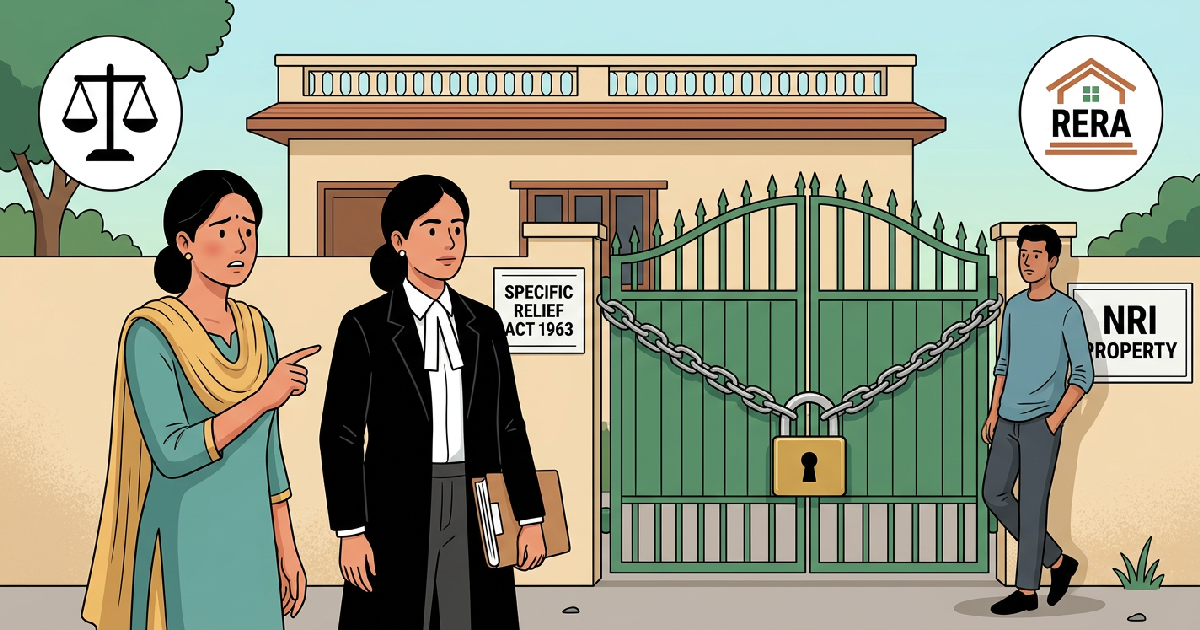
The litigation process in property disputes for Non-Resident Indians (NRIs) involves navigating specific Indian laws, establishing clear ownership, and often appointing a local representative. Over 60% of NRI property owners encounter issues like illegal encroachment or fraudulent claims, necessitating a structured legal approach. These challenges are particularly prevalent in states such as Punjab, Haryana, and Gujarat.
Understanding the nuances of Indian real estate law is crucial for Non-Resident Indians. The Indian legal system utilizes several frameworks, including the Specific Relief Act, 1963, for repossession and the Real Estate (Regulation and Development) Act, 2016 (RERA) for developer-related claims. This comprehensive guide outlines the essential steps and legal considerations.
Understanding the NRI Property Dispute Litigation Process
The initial phase of any property conflict for Non-Resident Indians involves accurately identifying the dispute type. This critical step dictates the court’s jurisdiction and the specific laws that will apply to the case. A clear understanding from the outset streamlines the entire legal journey and informs strategic decisions.
For instance, approximately 40% of property complaints from NRIs involve family inheritance conflicts. These often arise when a property is passed down without a formal will. For those facing issues with project delays or fraudulent claims, understanding the mandatory rights of NRIs under the RERA Act is a crucial starting point for seeking compensation or refunds.
Legal Complexities Under NRI Property Laws in India
Indian property laws present unique challenges for Non-Resident Indians due to their residency status. Legal frameworks like the Foreign Exchange Management Act (FEMA) and specific state land laws can influence property ownership, transfer, and dispute resolution for NRIs. These complexities often require specialized legal counsel to ensure compliance and effective representation.
If informal negotiations fail, NRIs may turn to the Civil Courts or specialized tribunals. Because most owners reside abroad, the appointment of a trusted representative via a Power of Attorney (PoA) is almost always mandatory. This representative manages the day-to-day legal requirements on behalf of the NRI, including court appearances and document filings.
The PoA must be attested by the Indian Embassy or Consulate in the NRI’s current country of residence. Following attestation, it must be registered with the Sub-Registrar in India to carry full legal weight. Proper execution and registration of the PoA are vital for its validity in court proceedings and to avoid future challenges.
Common Property Disputes Faced by Non-Resident Indians
Non-Resident Indians frequently encounter specific types of property disputes in India, often exacerbated by their physical absence. These issues range from unauthorized occupation to complex family inheritance battles. Recognizing these common scenarios helps NRIs prepare for potential legal challenges and take preventive measures.
Illegal Property Occupation and Encroachment
Illegal encroachment is a significant concern, affecting over 60% of NRI property owners. This involves squatters or relatives unlawfully seizing land or property. Early detection and swift legal action are essential to prevent adverse possession claims under the Limitation Act, 1963. Regular property inspections and clear boundary markings can help deter such activities.
Fraudulent Transfer of Property
NRIs are vulnerable to fraudulent property transfers, often involving forged documents or impersonation. This can include the sale of property using fabricated Power of Attorney documents or falsified signatures. Criminal remedies are available under the Bharatiya Nyaya Sanhita (BNS) 2023 for such cases, alongside civil actions to reclaim ownership.
Inherited Property Disputes Among Family
Inheritance disputes constitute a large portion of NRI property complaints, approximately 40%. These typically arise from properties passed down without a formal will, leading to conflicts among family members over shares and ownership. The Indian Succession Act, 1925, governs such intestate succession cases, providing a legal framework for distribution.
Getting Into Dispute With Developers and Builders
Many NRIs invest in new properties, leading to disputes with developers and builders over project delays, quality issues, or non-compliance with agreements. The RERA Act, 2016, provides a robust framework for addressing these grievances. It allows NRIs to seek compensation or project completion through a regulated process.
For those dealing with construction fraud, filing a RERA complaint against a builder from abroad provides a structured path. This mechanism helps hold developers accountable for project delays or other contractual breaches. The RERA authority aims for timely resolution of such complaints, offering a specialized forum for redressal.
Ancestral Property Dispute Resolution
Disputes over ancestral property are common, particularly concerning division and ownership rights among multiple generations. These cases often involve complex family histories and multiple claimants based on birthright. Legal action typically requires proving lineage and understanding specific Hindu Succession Act provisions, which govern ancestral property rights.
Establishing Evidence and Governing Legal Acts
The strength of any land claim for an NRI relies heavily on the documented evidence presented to the court. Relevant materials include original title deeds, sale agreements, and recent tax receipts. Encumbrance certificates also confirm the property is free from legal liabilities, providing a clear ownership history.
While newer laws like the Bharatiya Sakshya Adhiniyam, 2023, are now cited as part of the governing legal framework for litigation, the core of most property cases still rests on historical revenue records. These records provide crucial evidence of ownership and property history, such as mutation entries and Jamabandi records. Maintaining clear communication logs is equally vital for a strong case.
Evidence can comprise telephonic or electronic conversations, photographs, and witness statements. NRIs must be particularly vigilant regarding the Limitation Act, 1963. If an encroacher holds continuous possession of a property for 12 years, they may attempt to claim rights through adverse possession. Systematic tracking of property maintenance and tax payments serves as a primary defense against such claims, demonstrating active ownership.
Statistical Overview of NRI Property Challenges
The following table illustrates the most common legal challenges faced by the Indian diaspora regarding their domestic real estate holdings. This data highlights the prevalence of various dispute types and their primary legal frameworks, offering insight into typical NRI property issues.
| Issue Type | Primary Cause | Estimated Frequency | Key Governing Law |
|---|---|---|---|
| Illegal Encroachment | Squatters or relatives seizing land | 60% of NRI property owners | Specific Relief Act, 1963 |
| Inheritance Disputes | Lack of a formal will (Intestate) | 40% of property complaints | Indian Succession Act, 1925 |
| Tenant Issues | Refusal to vacate or rent default | 35% of management issues | Transfer of Property Act, 1882 |
Legal Resolution Steps for NRI Property Disputes
Before initiating a protracted court battle, many legal advocates suggest exploring alternative dispute resolution (ADR) mechanisms. These methods can offer quicker and less adversarial solutions, often preserving relationships and reducing legal costs. Mediation and arbitration are two primary ADR options available to NRIs.
Mediation and Arbitration for Property Conflicts
Mediation is a court-provided setup where a neutral third party facilitates discussions to find common ground. It is voluntary and non-binding, allowing parties to reach a mutually agreeable settlement. This process often preserves relationships and reduces legal costs, making it a preferred initial step.
Conversely, arbitration is a more formal process where an arbitrator or panel passes a final, enforceable decision. This method is generally quicker than standard litigation and the decision is binding on both parties. Arbitration is often preferred for its efficiency and finality, especially in commercial property disputes.
Formal Lawsuit and Court Proceedings
When ADR fails, the NRI must file a civil lawsuit, or “plaint,” through their authorized representative. This document must clearly state the legal grounds of the claim and the specific relief required. Reliefs can include monetary damages, possession of property, or a permanent injunction against further interference.
The court will then serve a summons or notice to the defendant, marking the beginning of formal hearings. During this phase, the evidence gathered in earlier stages is presented and examined. Proactive management of revenue records, including mutation entries and Jamabandi records, is essential to prove ownership and prevent further manipulation of land status.
The Code of Civil Procedure, 1908, outlines the procedural aspects of such lawsuits.
What is the difference between mediation and arbitration?
Mediation is a voluntary, non-binding process where a facilitator helps parties reach a mutually satisfied outcome. Arbitration is a more formal setup where a neutral arbitrator or panel hears arguments and passes an order or decision that is final and enforceable by law.
How does the 12-year rule affect NRI property?
Under the Limitation Act, 1963, if an encroacher maintains continuous, uninterrupted possession of a property for 12 years, they may acquire legal rights through adverse possession. NRIs must monitor their properties and take legal action before this period expires to prevent losing ownership.
Can an NRI seek criminal remedies for property fraud?
Yes. Criminal remedies are available under the Bharatiya Nyaya Sanhita (BNS) 2023 for cases involving cheating, forgery, and criminal breach of trust. This is often applicable when properties are sold through forged Power of Attorney documents or fabricated signatures. The Indian Penal Code, 1860 (now BNS 2023), provides the legal framework for these offenses.