
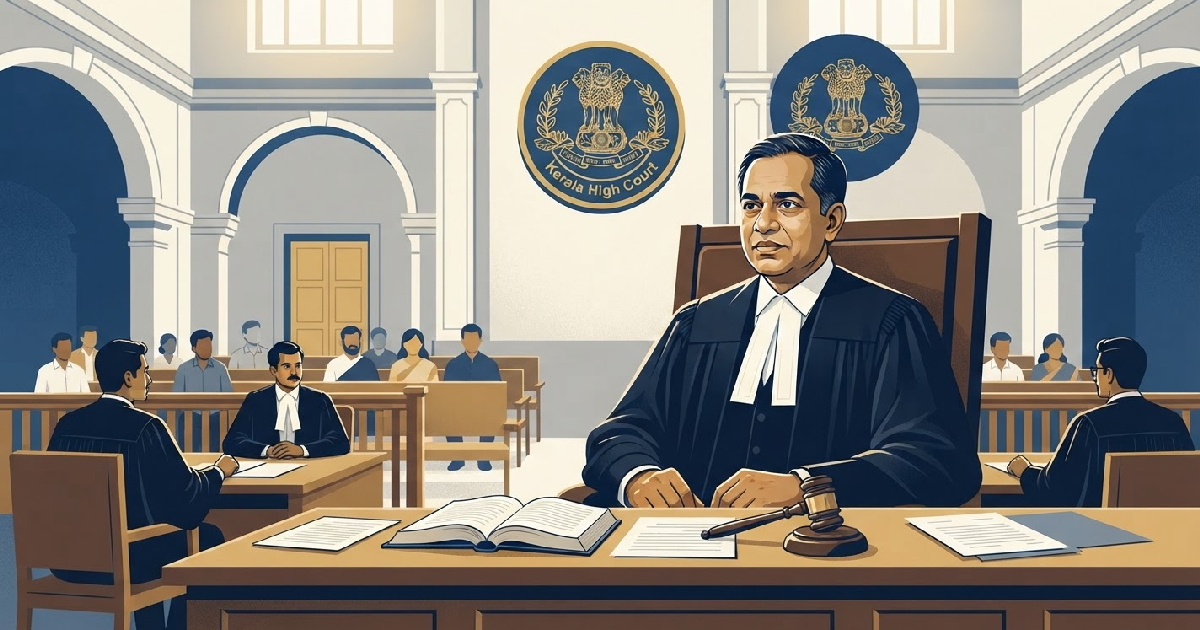
The Kerala High Court ruled that complainant and accused names cannot be substituted at the appellate stage in cheque dishonour cases, according to Justice Johnson John.
This decision, handed down on January 13, 2026, specifically highlighted the impropriety of such an amendment when sought 27 years after the initial complaint was filed, citing a lack of enabling provisions in the Criminal Procedure Code (CrPC) and potential prejudice to the accused.
Appellate stage amendments rejected by Kerala High Court
The judgment directly impacts the procedural aspects of cases filed under Section 138 of the Negotiable Instruments Act, 1881 (NI Act), reinforcing the principle of judicial finality and timely prosecution. It underscores the judiciary’s stance against protracted litigation and attempts to alter fundamental parties at advanced stages of a legal battle.
Justice Johnson John delivered the pivotal judgment in a case involving a cheque dishonour appeal. The court was considering an application to substitute the names of both the complainant and the accused, which had been presented an astonishing 27 years after the original complaint was initiated. The request stemmed from a case concerning an offense under Section 138 of the Negotiable Instruments Act, 1881.
The original dispute involved a cheque for ₹1,39,285.50 issued by the accused to a company where the complainant served as Managing Director. The trial court had initially taken cognizance of the offense, but the High Court determined this was against the mandate of Section 142(1)(a) of the NI Act.
Rationale behind the prohibition on substitution
Justice John was clear in his reasoning, emphasizing that the Criminal Procedure Code lacks any provision allowing such substitutions at the appellate stage. He noted that the requested amendment was not a minor, curable infirmity. It sought to fundamentally alter the identities of the parties involved, which would undoubtedly cause substantial prejudice to the accused, particularly given the decades-long delay.
His ruling states: “I find force in the argument of the learned State Brief that the name of the complainant and the accused cannot be substituted at the appellate stage and that the amendment sought for does not relate to a curable infirmity that can be corrected by a formal amendment.
Since the amendment sought for is having the effect of substituting the name of the complainant and the accused after 27 years of filing the complaint, I find that the same would cause prejudice to the accused and it cannot be allowed at the appellate stage.
As noticed earlier, the trial court took cognizance of the offence against the mandate of Section 142(1)(a) of the N.I Act and therefore, I find that the amendment application and the appeal are liable to be dismissed.” This firm stance highlights the court’s commitment to procedural fairness and the integrity of judicial proceedings.
Broader implications for cheque dishonour cases in India
This ruling from the Kerala High Court comes amidst a persistent challenge of high pendency rates in cheque dishonour cases across India. The sheer volume of these cases often strains the judicial system, leading to significant delays in justice delivery. As of December 2024, more than 43 lakh cheque bounce cases were pending in Indian courts.
Delhi’s trial courts alone accounted for 5.55 lakh such cases as of October 2025, representing a substantial 36% of their total caseload. The average pendency period for these matters in subordinate courts stands at approximately 1,326 days, which is over three years and seven months. Such prolonged timelines underscore the importance of rulings that promote efficient and definitive legal processes from the outset.
The purpose of Section 138 of the Negotiable Instruments Act
Section 138 of the Negotiable Instruments Act, 1881, was enacted to instill confidence in financial transactions and bolster the banking system. It criminalizes the act of cheque dishonour under specific conditions, providing a legal recourse for payees.
For an offense to be established, several criteria must be met, including the cheque being issued for a legally enforceable debt, its presentation within three months, and subsequent non-payment due to insufficient funds.
The process mandates that the payee issue a statutory notice to the drawer within 30 days of the cheque’s dishonour, demanding payment. If the drawer fails to comply within 15 days of receiving this notice, a complaint can then be lodged.
Penalties for conviction can include imprisonment for up to two years, a fine up to twice the cheque amount, or both, making it a powerful tool for financial discipline. Understanding cheque dishonour case law in India is crucial for anyone involved in these types of financial disputes.
The critical role of procedural accuracy at initial stages
The Kerala High Court’s judgment powerfully reinforces the necessity of meticulous accuracy during the initial filing of complaints. This isn’t just about minor technicalities; it’s about ensuring that the correct parties are identified from the very beginning. Errors in naming the complainant or the accused, particularly in cases involving entities like partnership firms or companies, can have profound long-term consequences, as this case clearly demonstrates.
Waiting decades to rectify such fundamental errors is now definitively deemed unacceptable at the appellate level. It places a greater burden on legal practitioners to verify all party details exhaustively before initiating proceedings. This prevents the judicial system from being bogged down by cases that require retrospective overhauls, maintaining the sanctity of the trial process.
Preventing prejudice and ensuring fair trial rights
The court’s emphasis on avoiding “prejudice to the accused” is a cornerstone of criminal jurisprudence. Allowing name substitutions after such an extensive period could unfairly disadvantage the accused, who would have structured their defense based on the initial complaint. Memories fade, evidence can be lost, and circumstances change dramatically over 27 years.
This ruling safeguards the accused’s right to a fair trial, ensuring they aren’t suddenly confronted with a different complainant or an altered identity years into the legal process. It aligns with broader principles of due process, where basic procedural integrity is prioritized over late-stage attempts at convenience or correction.
Impact on legal practitioners and business entities
For legal practitioners, this judgment serves as a stern reminder of the immutable importance of initial due diligence. Lawyers handling cheque dishonour cases must meticulously ensure the correct identification of all parties, especially when dealing with complex corporate structures or partnership firms.
Failing to do so can lead to an outright dismissal of the case at advanced stages, wasting years of effort and legal resources. This ruling implicitly demands a higher standard of initial investigation and pleading from the legal fraternity.
For businesses, particularly small and medium enterprises (SMEs) that frequently rely on cheques for transactions, the decision highlights the need for robust internal record-keeping and precise legal counsel.
When initiating legal action under the Negotiable Instruments Act, accurately identifying the drawer and payee, along with their legal capacities (e.g., managing director of a company), is paramount. Companies must also be mindful of the strict notice period for cheque dishonour cases, as procedural missteps can invalidate an otherwise strong claim.
The judiciary’s push for timely dispute resolution
The Kerala High Court’s decision can also be seen as part of a larger judicial effort to streamline legal processes and reduce the backlog of cases. India’s courts are grappling with millions of pending cases, and procedural clarity, coupled with a firm stance against undue delays, is crucial for improving judicial efficiency.
This ruling discourages the practice of attempting to correct fundamental errors decades after the fact, pushing litigants towards more diligent initial filings.
The judiciary has consistently stressed the need for speedy disposal of cases, particularly those that clog the system. For instance, the Supreme Court has also emphasized the necessity of proper procedural adherence, including rulings that courts cannot hear premature cheque bounce complaints. This cumulative approach aims to ensure that justice is not merely delivered but delivered in a timely and equitable manner.
The table below outlines key aspects and statistics related to cheque dishonour cases in India, highlighting the scale and procedural elements:
| Aspect | Detail | Significance |
|---|---|---|
| Total Cheque Dishonour Cases (Dec 2024) | Over 43 Lakh | Illustrates the massive judicial backlog. |
| Average Pendency in Subordinate Courts | 1,326 days (3+ years) | Highlights delays in justice delivery. |
| Maximum Imprisonment (Section 138 NI Act) | Up to 2 years | Deters cheque drawers from deliberate default. |
| Maximum Fine (Section 138 NI Act) | Up to twice the cheque amount | Provides financial recompense to payees. |
| Statutory Notice Period for Payment | 15 days post-demand | Crucial step before filing a complaint. |
Forward outlook for cheque dishonour enforcement
This ruling by Justice Johnson John will likely set a strong precedent within the Kerala High Court’s jurisdiction and may influence other High Courts grappling with similar procedural ambiguities.
It sends a clear message: the appellate stage is for reviewing the merits of a trial, not for rectifying fundamental errors that should have been addressed decades prior. This approach could encourage a more rigorous and cautious initiation of cheque dishonour complaints, thereby reducing the instances of flawed cases reaching higher courts.
While the ruling addresses a specific procedural issue, its broader impact is on the integrity and efficiency of the legal system dealing with commercial disputes. It suggests a future where courts will increasingly prioritize timely and procedurally sound legal actions, pushing back against attempts to extend or complicate litigation through belated amendments.
Litigants and their legal counsel are now expected to be even more scrupulous in their initial filings, ensuring that all necessary details are correct and complete.
What was the key ruling by the Kerala High Court regarding cheque dishonour cases?
The Kerala High Court ruled that it is not permissible to substitute the names of the complainant or the accused at the appellate stage in cheque dishonour cases. This applies particularly when such an amendment is sought many years after the initial complaint was filed.
Why did the court reject the substitution of names?
The court rejected the request because the Criminal Procedure Code (CrPC) does not contain any provision allowing for such substitutions at the appellate stage. Additionally, the court found that making such a change, especially after 27 years, would cause significant prejudice to the accused.
What does this ruling mean for future cheque dishonour cases under the Negotiable Instruments Act?
This ruling emphasizes the critical importance of procedural accuracy and diligence when filing initial complaints in cheque dishonour cases. It means that lawyers and complainants must ensure that all parties are correctly identified from the outset, as fundamental errors are unlikely to be corrected at later appellate stages, especially after significant delays.