
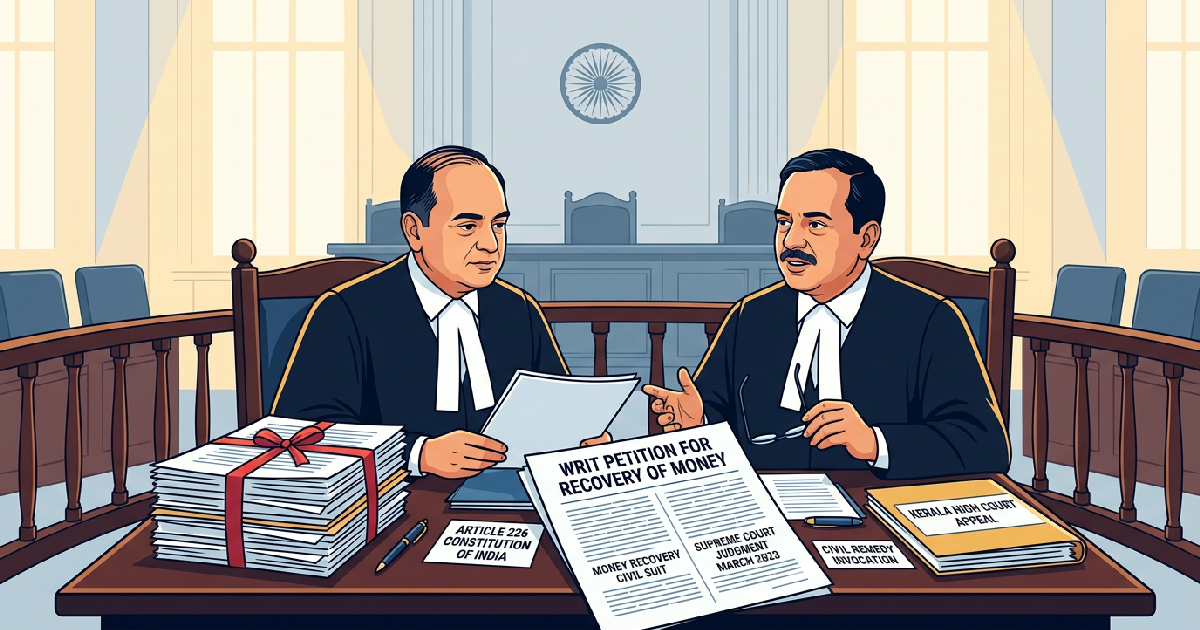
An Indian Supreme Court bench comprising Justice M.R. Shah and Justice C.T. Ravikumar has ruled that a writ petition for recovery of money cannot be entertained when a civil remedy has already been utilized.
The decision, delivered on March 21, 2023, specifically addresses cases where a litigant attempts to use Article 226 of the Constitution of India as a shortcut after a civil suit has been dismissed in default.
The bench clarified that the High Court should not act as a substitute for civil courts in matters involving unpaid bills or invoices.
Can I file a writ petition for a refund from a government department?
While possible in limited circumstances involving rights violations, the Supreme Court generally discourages writ petitions for money recovery. If the dispute is based on a contract, invoice, or bill, you are typically required to file a civil suit. If you have already filed a suit, you cannot switch to a writ petition if the suit fails or is dismissed in default.
What happens if my civil recovery suit is dismissed in default?
If your suit is dismissed because you or your lawyer failed to appear, your legal remedy is to file an application for restoration in the same court. According to the Supreme Court’s latest ruling, you cannot file a fresh writ petition under Article 226 to recover that money simply because the civil suit was dismissed.
Is there a time limit for filing a money recovery case in India?
Yes, the standard limitation period for filing a money recovery suit is three years from the date the cause of action arises. For example, the clock usually starts from the date of the unpaid invoice or the date payment was refused. High Courts may also refuse writ petitions if there has been an unreasonable delay, known as laches.