
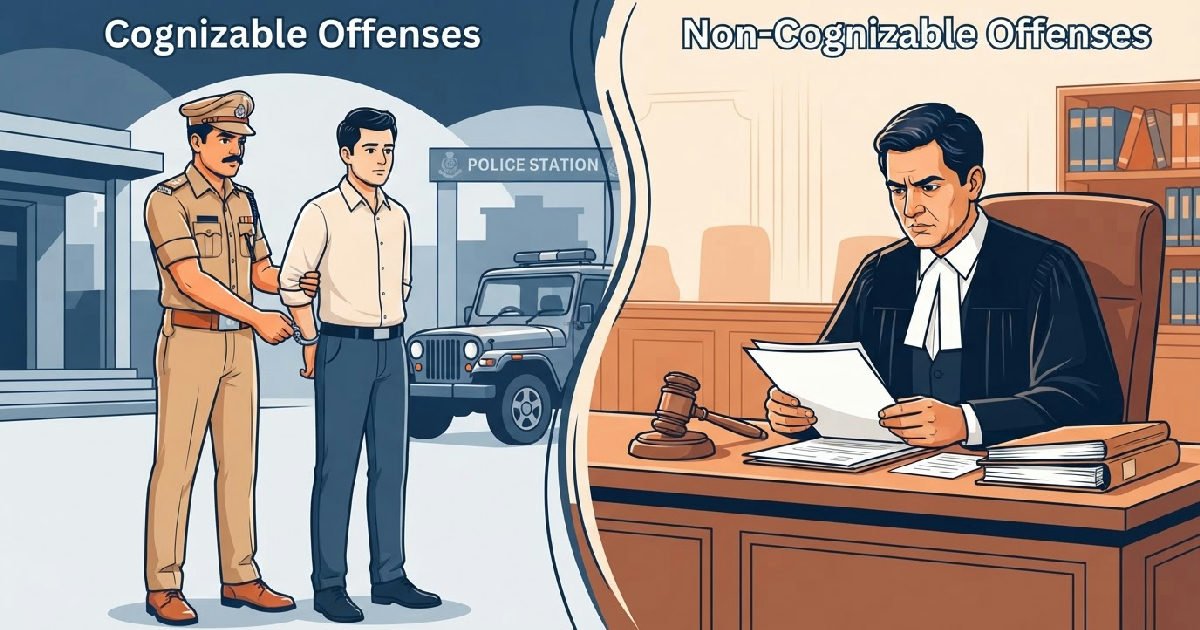
Cognizable vs. Non-Cognizable Offenses in India, Bangladesh, and Pakistan determine if a first information report can be filed and an arrest made without a warrant. Non-Cognizable Offenses forms a cornerstone of criminal procedure. This crucial classification directly influences the authority vested in law enforcement regarding arrests and the initiation of investigations. It fundamentally shapes how criminal cases proceed from the very outset.
Understanding these categories is paramount for anyone navigating the complex legal landscape in these countries. The implications range from immediate police action without a warrant to cases where judicial approval is a prerequisite for any investigative steps. This foundational difference dictates the entire trajectory of a criminal matter.
Cognizable vs. non-cognizable offenses: the distinction
The core difference between these two classifications hinges on the gravity of the alleged crime and the corresponding powers granted to police officers. Cognizable offenses are typically more serious in nature, demanding swift and decisive action from authorities. Non-cognizable offenses, by contrast, are considered less severe and necessitate a more measured, judicially sanctioned approach.
This legal dichotomy ensures police powers remain proportionate to the perceived threat a crime poses to society. It also serves as a vital check against potential overreach by law enforcement in less serious matters, thereby upholding due process for citizens. The procedural variations are significant and impact every stage of a case.
| Feature | Cognizable Offense | Non-Cognizable Offense |
|---|---|---|
| Severity | Serious crimes against society | Less serious crimes, often affecting individuals |
| Arrest Power | Police can arrest without a warrant | Police require a judicial warrant for arrest |
| Investigation Power | Police can investigate without court order | Police require a magistrate’s order to investigate |
| Examples | Murder, Rape, Kidnapping, Theft, Robbery | Assault, Cheating, Forgery, Defamation, Public Nuisance |
| Legal Basis (BNSS 2023) | Section 2(g) | Section 2(o) |
| Legal Basis (CrPC 1973) | Section 2(c) | Section 2(l) |
As the table highlights, the procedural mandates differ profoundly, guiding police actions from the moment an incident is reported. This framework ensures that justice is administered appropriately, balancing public safety with individual rights. The nature of the offense dictates the speed and autonomy of police intervention.
Cognizable offenses: serious crimes, immediate action
A cognizable offense signifies a serious crime where police officers are empowered to arrest an accused person without a warrant. They can also initiate a full investigation into the matter without needing prior permission from a magistrate. These offenses are universally recognized as grave, posing a significant threat to public safety and order.
Examples of such serious crimes include murder, rape, kidnapping, theft, and robbery. The law grants police this immediate authority to respond effectively to acts that severely undermine societal well-being. This proactive approach aims to prevent further harm and ensure quick apprehension of perpetrators.
Historically in India, the legal basis for these offenses was defined under Section 2(c) of the Criminal Procedure Code (CrPC), 1973. However, with the recent legal reforms, the newer Bharatiya Nagarik Suraksha Sanhita (BNSS), 2023, now defines them under Section 2(g). It’s a shift that reflects ongoing efforts to refine criminal justice procedures.
The swift action permitted for cognizable offenses is often critical in preserving evidence and preventing suspects from absconding. This is why the state grants such expansive powers to law enforcement in these specific, high-stakes situations. It underscores the severity with which these crimes are viewed.
Non-cognizable offenses: lesser crimes, judicial oversight
Conversely, a non-cognizable offense is characterized as a less serious crime where police officers lack the authority to make an arrest without a judicial warrant. Furthermore, they cannot commence an investigation into the alleged crime without first obtaining an explicit order from a magistrate. This layer of judicial review serves as a safeguard.
These offenses generally have a more limited societal impact, often affecting individuals directly rather than threatening the broader community. Common examples include assault, cheating, forgery, defamation, and public nuisance. They typically don’t involve immediate physical danger requiring spontaneous police intervention.
In India, these offenses were previously defined under Section 2(l) of the CrPC, 1973. Under the updated legal framework of the BNSS, 2023, their definition is now found under Section 2(o). This consistent categorization across legal codes highlights their distinct treatment.
The requirement for a magistrate’s order ensures that less serious allegations are vetted before an investigation drains police resources or infringes on personal liberties. It provides a crucial check on police discretion, emphasizing due process. This distinction is vital for maintaining balance within the criminal justice system.
Impact of legal reforms: BNSS 2023
The introduction of the Bharatiya Nagarik Suraksha Sanhita (BNSS), 2023, marks a significant legislative overhaul in India’s criminal procedure. This new code replaces the nearly 50-year-old Criminal Procedure Code (CrPC), 1973, bringing updated definitions and procedures. The classifications of cognizable and non-cognizable offenses remain, but their legal references have shifted.
Specifically, cognizable offenses, once under CrPC Section 2(c), are now defined in BNSS Section 2(g). Non-cognizable offenses, formerly CrPC Section 2(l), are now found in BNSS Section 2(o).
These renumberings reflect a comprehensive restructuring aimed at modernizing the country’s legal framework. This legislative evolution aims for greater clarity and efficiency.
For legal practitioners and citizens alike, this means familiarizing oneself with the updated code is essential. While the fundamental concepts of police powers concerning arrests and investigations for these offense types haven’t radically changed, the specific legal citations have. This continuity helps maintain an understanding of established legal precedents.
Streamlining legal processes and definitions
The BNSS, 2023, aims to streamline various aspects of criminal justice, including how offenses are categorized and handled. This legislative update underscores a commitment to adapting archaic laws to contemporary challenges. Such reforms are crucial for enhancing the effectiveness of law enforcement while protecting individual rights.
By clearly delineating police authority for different types of offenses, the system endeavors to reduce ambiguity and expedite justice delivery. The updated code reflects a concerted effort to create a more responsive and accountable legal environment. It’s a step towards more efficient judicial administration.
Navigating the justice system: implications for citizens
For citizens, understanding whether an alleged crime is cognizable or non-cognizable carries profound implications for their interaction with the law. If you’re reporting a serious crime like robbery, police are mandated to act immediately without requiring a warrant. This provides a direct path to intervention and investigation.
Conversely, for less severe matters such as a dispute involving defamation, the police’s initial role is limited to recording the complaint. They will then typically direct the aggrieved party to a magistrate to secure an order for investigation or arrest. This process introduces a necessary judicial filter.
It’s crucial to seek appropriate legal counsel when involved in either type of case, as the procedural intricacies can be significant. A lawyer can guide individuals through the correct legal steps, especially for matters like cheque bounce cases. Expert guidance is invaluable in these complex situations.
The clear demarcation of police powers serves to protect citizens from arbitrary arrests for minor infractions. At the same time, it empowers law enforcement to address grave threats to society with the urgency they demand. This balanced approach is central to the rule of law and highlights the importance of the legal framework in daily life.
What is the primary difference between cognizable and non-cognizable offenses?
The main difference lies in the severity of the crime and the police’s power to act. For cognizable offenses, police can arrest without a warrant and begin investigation immediately due to the serious nature of the crime. For non-cognizable offenses, which are less serious, police need a warrant to arrest and a magistrate’s order to investigate.
Can a non-cognizable offense become cognizable?
The research does not provide information regarding whether a non-cognizable offense can become cognizable. The classification of an offense is based on legal definitions, such as those found in the Criminal Procedure Code (CrPC) or the Bharatiya Nagarik Suraksha Sanhita (BNSS) in India.
What role do specific reports play in these classifications?
The provided research does not contain information about the specific role of a First Information Report (FIR) or Non-Cognizable Reports (NCRs) in these classifications. The distinction remains centered on the police’s authority to arrest without a warrant and to initiate investigations without a magistrate’s order.