
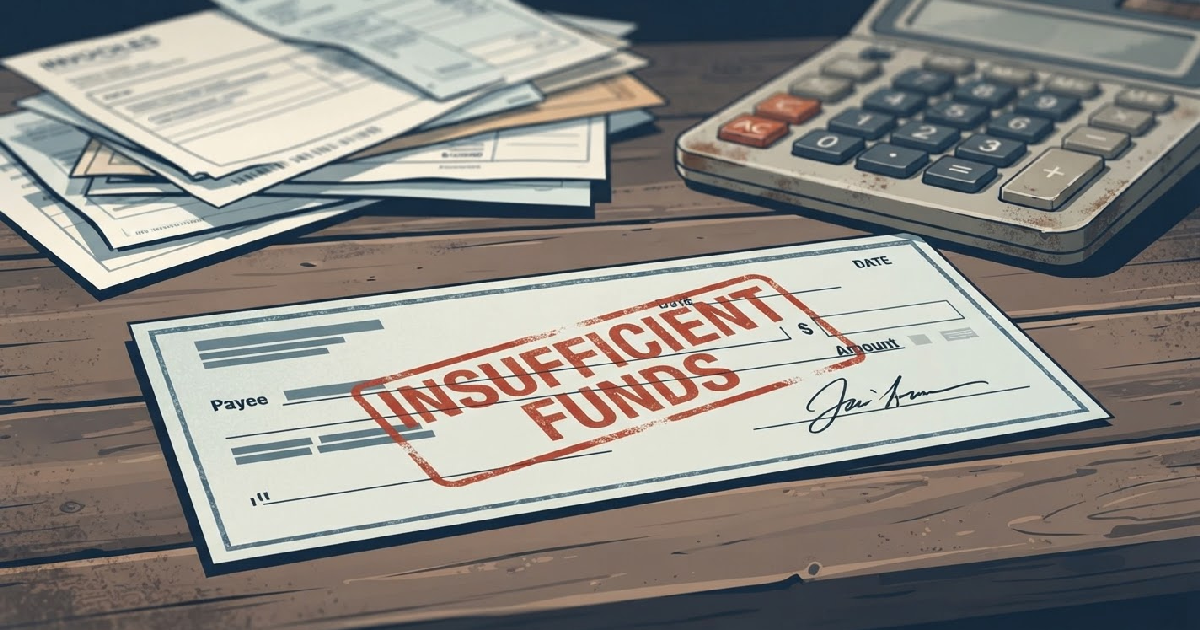
Bouncing a check is not always a felony, but the check bounce case punishment varies by state and intent. Many wonder, “Is bouncing a check a felony?” The answer isn’t simple; it depends heavily on the check writer’s intent, the amount of the check, and the specific laws in the state where it was written.
While an accidental overdraft typically results in bank fees and civil penalties, intentionally issuing a check with insufficient funds or on a closed account, especially with intent to defraud, can trigger criminal prosecution. These offenses may be classified as either a misdemeanor or a felony, each carrying vastly different penalties.
felony vs. misdemeanor: how bounced checks are classified
Whether a bounced check results in a felony charge hinges on a critical distinction: intent. If an individual knowingly issues a check without enough money, or from a closed account, it moves beyond a simple banking error.
This deliberate act, particularly with an intent to defraud, transforms the issue from a civil matter into a criminal offense. State laws across the United States dictate the exact thresholds and definitions that differentiate a misdemeanor from a felony in these scenarios.
understanding criminal offense severity
In the United States, criminal offenses fall into two broad categories: felonies and misdemeanors. This classification is primarily based on the severity of the crime and the potential penalties faced by a convicted individual.
Grasping this fundamental distinction is essential for anyone dealing with the potential legal ramifications of writing a bad check, as the consequences vary significantly.
A felony is a serious crime that typically results in much harsher penalties than a misdemeanor. Felony convictions can lead to potential imprisonment for more than one year, often served in a state prison, along with substantial fines.
These serious offenses are reserved for crimes that cause significant physical, financial, or emotional harm to others or society. A felony conviction can also result in long-term consequences, such as a permanent criminal record, loss of civil rights like voting or owning firearms, and limitations on professional licenses.
In contrast, a misdemeanor is considered a “lesser” criminal act, though still more serious than a minor infraction. Misdemeanors are generally punishable by imprisonment for up to one year, usually in a local or county jail.
Other common penalties include monetary fines, community service, or probation. Many states further categorize misdemeanors into different classes, such as Class A, B, or C, reflecting varying degrees of seriousness and corresponding penalties.
| Classification | Maximum Imprisonment | Typical Imprisonment Venue |
|---|---|---|
| Felony | More than one year | State prison |
| Misdemeanor | Up to one year | Local or county jail |
| Accidental Overdraft | None (Not criminal) | N/A |
the critical role of intent to defraud
The presence or absence of intent to defraud is often the decisive factor separating a civil banking issue from a criminal offense. An accidental overdraft, resulting from an oversight, typically leads only to bank fees and civil collection efforts.
However, deliberately writing a check knowing it won’t clear, especially to obtain goods or services under false pretenses, can trigger criminal charges. The possibility of criminal prosecution depends on this intent and varies by state law.
how a bounced check works and its legal framework
Understanding the mechanical process of a bounced check and its governing legal structures helps clarify the potential for criminal charges. The entire process involves several stages, each with specific implications for both the check writer and the recipient.
While the mechanics are standardized, the criminal penalties remain largely at the state level, informed by broader legal principles.
mechanics of a dishonored check
A “bounced check,” also known as a “bad check” or “insufficient funds (NSF) check,” occurs when a check is presented for payment, but the account it’s drawn on lacks enough money. This can also happen if the account was closed prior to the check’s presentment.
The process starts when an individual or entity writes a check to a payee. The payee then deposits or cashes this check at their bank, initiating an attempt to collect funds from the drawer’s bank.
If the drawer’s account doesn’t hold sufficient funds, or if it’s closed, the drawer’s bank will not honor the check. Consequently, the check is “dishonored” or “returned” unpaid, bouncing back to the payee’s bank.
Both the drawer’s bank and the payee’s bank may charge Insufficient Funds (NSF) fees to their respective customers. This adds a financial penalty on top of the original unpaid amount, highlighting the immediate financial consequences.
legal safeguards and opportunity to pay
In many jurisdictions, before criminal charges are formally filed, the check writer often receives a formal notification. This might be a 5-day or 10-day letter, providing a chance to rectify the situation by making good on the check and covering any associated fees.
This grace period allows individuals who might have accidentally overdrawn their account to resolve the issue without facing criminal prosecution. It serves as an important safeguard against unwarranted legal action for minor banking errors.
The foundational legal framework governing check transactions across the United States is primarily found within Articles 3 and 4 of the Uniform Commercial Code (UCC). This code has been adopted, with slight variations, by every U.S. state, providing consistency in how these financial instruments are handled.
preventing bounced check charges and financial issues
Avoiding bounced check charges, whether they lead to civil or criminal proceedings, largely comes down to diligent financial management. Proactive steps can significantly prevent both legal troubles and unnecessary fees.
Maintaining accurate records and regularly monitoring bank accounts are essential practices. Individuals should consistently check their account balances and reconcile their statements regularly to catch any discrepancies promptly.
Beyond potential criminal charges, a bounced check can lead to several financial consequences. These include multiple bank fees and civil penalties. It’s a financial pitfall best avoided through careful banking practices.
What determines if bouncing a check is a felony?
Whether bouncing a check constitutes a felony primarily depends on the check writer’s intent, the amount of the check, and the specific laws of the state where it was issued. If there’s a clear intent to defraud, criminal charges are more likely, potentially escalating to a felony.
What are the typical penalties for a misdemeanor bad check charge?
Misdemeanor charges for a bounced check generally carry penalties less severe than felonies. These can include imprisonment for up to one year, typically in a local or county jail, monetary fines, community service, or probation. Exact penalties vary by state statutes and case specifics.
How does the Uniform Commercial Code (UCC) apply to bounced checks?
The Uniform Commercial Code (UCC), specifically Articles 3 and 4, provides the overarching legal framework for check transactions across the United States. While the UCC addresses the mechanics of checks, individual state laws determine the criminal penalties for bouncing a check, often incorporating UCC principles.