
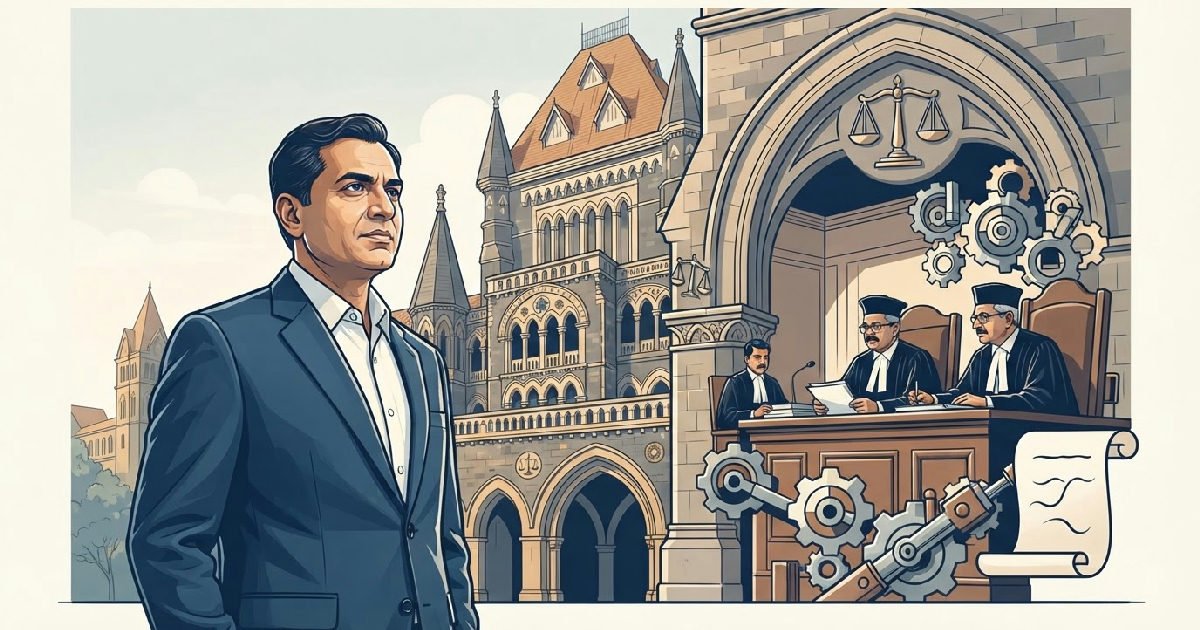
On August 7, 2026, the Bombay High Court restored a ₹2.04 crore recovery suit filed by Jivaraj Ravaji Gandhi. 04 crore recovery suit filed by Jivaraj Ravaji Gandhi against Solapur Jilha Dudh Utpadak va Prakriya Sangh Maryadit and other cooperative societies. This significant ruling underscored that litigants should not suffer due to errors attributable to the judicial machinery.
Justices Madhav J. Jamdar and Pravin S. Patil, sitting as a Division Bench, invoked the fundamental legal maxim “Actus Curiae Neminem Gravabit.” This principle dictates that an act of the court must prejudice no one, ensuring a litigant’s right to a fair process despite procedural missteps.
A Landmark Ruling for Commercial Litigation
The dispute centered on unpaid invoices totaling ₹2,04,24,712 for goods supplied by Gandhi to the cooperative societies in 2020 and 2021. The defendants sought to reject the plaint, citing a failure to comply with mandatory pre-institution mediation requirements.
Initially, a District Judge-1 in Malshiras had accepted this objection, rejecting Gandhi’s plaint on August 21, 2025. Gandhi then appealed the decision, leading to the Bombay High Court’s intervention and the reinstatement of the substantial recovery suit.
The foundation of pre-institution mediation
The Commercial Courts Act, 2015, was enacted to ensure faster resolution of complex commercial disputes. A 2018 amendment introduced Section 12A, making pre-institution mediation (PIM) mandatory before filing a commercial suit, unless urgent interim relief is sought.
District Legal Services Authorities (DLSAs) are designated as nodal agencies for conducting this pre-institution mediation. Their role is crucial in facilitating amicable dispute resolution and reducing the burden on the judicial system.
Malshiras Mediation Failure Under Scrutiny
Jivaraj Ravaji Gandhi had initiated the pre-institution mediation process diligently, filing an application with the Malshiras Taluka Legal Services Committee on April 29, 2023. He also paid the prescribed ₹1,000 fee, fulfilling his initial procedural obligations.
However, the process encountered difficulties when an initial mediation notice failed to yield proceedings. Gandhi requested a reissuance on October 18, 2023, leading to a fresh notice for mediation scheduled on October 30, 2023. The cooperative societies did not attend this session.
Critical omission by the legal services committee
The Malshiras Taluka Legal Services Committee subsequently issued a “non-starter” report on December 11, 2023. Crucially, the committee failed to issue a mandatory final notice under Rule 3(3) of the Commercial Courts (Pre-Institution Mediation and Settlement) Rules, 2018.
The Bombay High Court highlighted that the Chairman of the Malshiras Taluka Legal Services Committee, a senior judicial officer, was responsible for this oversight. The court asserted that Gandhi could not be penalized for a procedural lapse by the judicial system itself.
Upholding Justice: “Actus Curiae Neminem Gravabit”
The core of the Bombay High Court’s decision rests on the Latin maxim “Actus Curiae Neminem Gravabit,” meaning “an act of the court shall prejudice no one.” This principle is a cornerstone of Indian jurisprudence, deeply rooted in equity and ensuring fairness for litigants.
It means that if any delay or error arises from the court or its administrative machinery, the litigant should not suffer adverse consequences. Instead, the legal system has a duty to correct such errors and restore parties to their original position.
Supreme Court’s consistent endorsement
India’s Supreme Court has consistently upheld this maxim, reinforcing the idea that judicial errors should not harm those seeking justice. This principle safeguards litigants’ rights against procedural mishaps caused by the very system designed to protect them.
This commitment to fairness extends across various procedural contexts, from correcting clerical errors to mitigating delays. The appealability of plaint orders under the Commercial Courts Act remains subject to this overarching judicial philosophy.
Pre-Institution Mediation: Intent Versus Reality
Section 12A of the Commercial Courts Act aimed to streamline dispute resolution and improve India’s Ease of Doing Business ranking. The goal was to reduce court caseloads by encouraging out-of-court settlements and fostering amicable resolutions.
Despite its commendable intentions, the implementation of mandatory mediation has faced significant practical challenges. The Supreme Court, in *Patil Automation Pvt. Ltd. v. Rakheja Engineers Pvt. Ltd.* (2022), affirmed Section 12A’s mandatory nature, making non-compliance a ground for plaint rejection.
Low success rates and procedural hurdles
Empirical research, including a 2023 EAC-PM Working Paper, revealed a concerning trend in Mumbai district courts between 2020 and 2023. Nearly 98% of pre-litigation mediation applications were classified as “non-starters.”
Only about 1% of these mediation attempts resulted in successful settlements. These figures highlight the significant gap between the intended efficiency of mandatory mediation and its actual effectiveness in resolving commercial disputes.
| Key Aspect | Detail | Significance |
|---|---|---|
| Claim Value | ₹2.04 Crore | Substantial commercial dispute amount. |
| Plaintiff | Jivaraj Ravaji Gandhi | Supplier seeking recovery for goods delivered. |
| Defendant Primary | Solapur Jilha Dudh Utpadak va Prakriya Sangh Maryadit | Cooperative society involved in the dispute. |
| District Court Ruling | Plaint rejected on August 21, 2025 | Initial setback for the plaintiff due to procedural technicality. |
| High Court Ruling | Suit restored on August 7, 2026 | Overturned lower court, emphasizing judicial fairness. |
The “urgent interim relief” conundrum
A notable exception within the mandatory mediation framework applies to cases seeking “urgent interim relief.” Parties often utilize this clause to bypass mediation altogether, leading to judicial scrutiny regarding the authenticity of such urgency claims.
This route for skipping commercial mediation can inadvertently complicate processes rather than simplifying them. It adds another layer of legal maneuvering for parties involved in commercial court proceedings.
Broader Legal and Commercial Implications
This Bombay High Court ruling sends a clear message to the legal community and businesses: procedural requirements, while vital, cannot be used to penalize a litigant when the judicial machinery itself is at fault. It reinforces confidence in the judicial system by protecting individuals from systemic errors.
For businesses and individuals entangled in commercial disputes, this decision provides greater assurance. Their cases are less likely to be dismissed on technicalities stemming from the court’s own processes, reinforcing the judiciary’s commitment to substantive justice.
Evolving landscape of dispute resolution
The legal landscape surrounding mediation remains somewhat inconsistent, posing its own set of challenges. While the Mediation Act, 2023, generally makes pre-litigation mediation voluntary for civil cases, it remains mandatory for commercial disputes under Section 12A. This duality can create confusion.
The ruling reignites discussions about optimizing mandatory mediation processes. It suggests that for mediation to be truly effective, particularly in high-value commercial recovery suits, the process itself requires robust and error-free execution by the responsible authorities.
Outlook: Balancing Efficiency and Equity
The Bombay High Court’s decision serves as an important reminder of the judiciary’s role in balancing procedural rigor with the overarching principle of fairness. It shows that courts are prepared to intervene when systemic failures threaten a litigant’s access to justice.
This case will likely influence how legal services committees manage their responsibilities under the Commercial Courts Act moving forward. It may prompt a closer examination of the mechanisms ensuring mandatory mediation processes are both effective and equitable for all parties involved in commercial disputes.
The ruling doesn’t diminish the importance of mandatory pre-institution mediation. Instead, it highlights the need for flawless execution by the legal services authorities. For actual commercial cases, the procedural path must be clear, though issues around employment disputes in commercial courts continue to be clarified by various High Courts.
What was the core issue in the Bombay High Court’s recent ruling?
The Bombay High Court addressed a ₹2.04 crore recovery suit that was initially rejected due to the Malshiras Taluka Legal Services Committee’s failure to issue a mandatory final mediation notice. The court ruled that the litigant should not be penalized for an error made by the judicial machinery.
What does “Actus Curiae Neminem Gravabit” mean in this context?
“Actus Curiae Neminem Gravabit” is a Latin maxim meaning “an act of the court shall prejudice no one.” In this case, it signifies that because the error in the mediation process was caused by the legal services committee, the court reversed the earlier decision to ensure the litigant was not unfairly harmed by the judicial system’s mistake.
How does this ruling impact mandatory pre-institution mediation for commercial disputes?
This ruling reinforces the principle that while pre-institution mediation is mandatory under the Commercial Courts Act, the proper execution of the mediation process by legal services authorities is paramount. It ensures that procedural lapses by the judicial system do not unjustly block a litigant’s access to justice in commercial recovery suits.
Tags:
- actus curiae neminem gravabit
- bombay high court
- commercial courts act
- commercial dispute resolution
- jivaraj ravaji gandhi
- judicial machinery error
- legal services committee
- mediation act 2023
- mumbai district courts
- patil automation
- pre-institution mediation
- section 12a
- solapur jilha dudh utpadak va prakriya sangh maryadit