
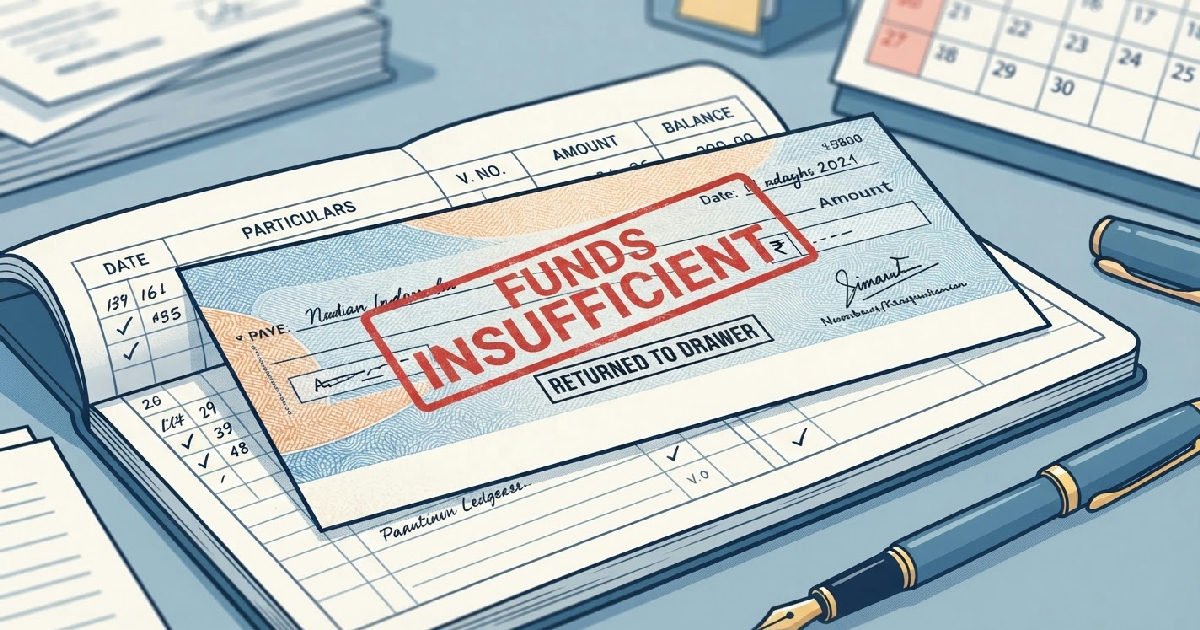
Post-Dated Cheques Taken by a Small Trader
For many small traders across India, extending credit through post-dated cheques (PDCs) is a common, yet often risky, business practice. These instruments, designed to secure future payments, can quickly become a legal quagmire if a bounced cheque is dishonored.
Understanding the precise legal framework under Section 138 of the Negotiable Instruments Act, 1881 (NI Act) is crucial to protect businesses from significant financial losses and navigate the intricate process of legal recourse.
Post-Dated Cheques Taken by a Small Trader: navigating India’s laws
A bounced post-dated cheque isn’t merely a financial inconvenience; it triggers a specific set of criminal proceedings in India. Traders must meticulously follow strict timelines and procedural requirements to pursue justice, especially when managing post-dated cheque presented against multiple credit sales. Failing to adhere to these steps can jeopardize their ability to recover funds, even when the law is on their side.
The legal backbone for dealing with dishonored cheques in India is enshrined in Section 138 of the Negotiable Instruments Act, 1881. This pivotal section criminalizes the act of issuing a cheque that subsequently bounces, provided certain conditions are met. It acts as a significant deterrent against fraudulent practices and aims to instill confidence in financial transactions.
Specifically, Section 138 applies when a cheque is dishonored due to insufficient funds in the drawer’s account or if the amount exceeds the arrangement with the bank. The law is clear: it intends to hold individuals accountable for their financial commitments when they issue a cheque, regardless of whether it’s dated for the present or the future.
The Negotiable Instruments Act, Section 138
Section 138 of the NI Act isn’t a blanket provision for all cheque-related issues. It specifically targets situations where a cheque is issued for a “legally enforceable debt or liability.” This distinction is critical; a cheque given as a gift, for instance, would not fall under the purview of this section if it bounces.
The law ensures that the instrument represents a genuine financial obligation. Small traders, therefore, must ensure that any PDCs they accept are directly linked to a specific sale or service for which payment is genuinely owed, strengthening their position should the cheque later be dishonored.
Post-Dated Cheques as Bills of Exchange
A common point of confusion arises with post-dated cheques (PDCs). Before the date inscribed on it, a PDC is legally treated not as a cheque, but as a bill of exchange. This means it lacks the immediate enforceability of a regular cheque. Its true legal status as a cheque, subject to Section 138, only crystallizes on the date specified on the instrument.
This legal nuance is vital for traders. Presenting a PDC to the bank before its designated date, even if by accident, means it cannot trigger the Section 138 provisions if dishonored at that premature stage. It’s imperative to present them strictly on or after the date mentioned to ensure they acquire the full legal weight of a cheque.
Critical Steps After a Cheque Dishonour
Once a cheque, particularly a post-dated one, is dishonored, a strict sequence of actions must be followed to initiate a successful legal proceeding under Section 138. Missing any of these steps can invalidate the entire case, leaving the payee without recourse. This process demands precision and timely execution.
The bank will provide a “cheque return memo” specifying the reason for the dishonour, which is the starting point for the legal clock. Small businesses need to treat this document as highly important evidence. They should store it securely and ensure they understand its contents fully.
Strict Timelines for Legal Action
The timeline for action is unforgiving. First, the cheque must be presented to the bank within three months from its date of issuance. This period was previously six months but has since been shortened, making prompt presentation even more crucial for traders. Failing this, the cheque becomes stale and cannot be legally pursued under Section 138.
Upon receiving the return memo, the payee has a mere 30 days to dispatch a written legal demand notice to the drawer. If the drawer fails to make the payment within 15 days of receiving this notice, the payee then has another 30 days to file a criminal complaint in the appropriate Magistrate’s court. These windows are non-negotiable; missing them can severely compromise the case.
Crafting an Effective Legal Notice
The legal demand notice is not just a formality; it’s a critical legal document. It must clearly state the cheque’s details, including its number, date, amount, and the bank branch involved. Crucially, it must also articulate the precise reason for the dishonour and demand payment of the exact cheque amount within 15 days.
Moreover, the notice should explicitly warn the drawer of potential criminal prosecution under Section 138 if payment is not made within the stipulated period. If any part-payment was made against that specific cheque, it must be mentioned within the notice to maintain accuracy and prevent future disputes.
For proof of dispatch and delivery, these notices are typically sent via registered post with acknowledgment due (RPAD), often supplemented by courier and email.
Consequences for Dishonouring a Cheque
The implications of a dishonored cheque under Section 138 are significant and designed to compel compliance. The law empowers courts to impose substantial penalties on those found guilty, reflecting the serious nature of undermining financial trust. These consequences can range from monetary fines to periods of imprisonment, or a combination of both.
These penalties serve as a powerful disincentive for individuals or businesses attempting to evade their financial obligations. For small traders, knowing these potential consequences can sometimes aid in out-of-court settlements, as drawers may prefer to avoid criminal proceedings.
Penalties and Interim Compensation
A person convicted under Section 138 can face imprisonment for up to two years. Additionally, the court may impose a fine that can be as high as twice the amount of the dishonored cheque. In many cases, both imprisonment and a fine are levied, depending on the specifics and severity of the case.
In a significant move to alleviate the immediate financial burden on payees, Section 143A of the NI Act allows courts to order interim compensation. This can be up to 20% of the cheque amount, typically ordered at the stage of framing charges.
This amount must generally be paid by the drawer within 60 days of the court order, providing some immediate relief to the affected party.
Filing Separate Complaints
A crucial clarification from the Supreme Court of India states that each dishonored cheque constitutes a separate cause of action. This holds true even if multiple cheques originate from a single transaction or an overarching agreement. Consequently, separate criminal complaints can generally be filed for each individual bounced cheque.
While courts sometimes favor a single complaint for multiple cheques from the same transaction to avoid an excessive number of proceedings, this approach is often contingent on specific circumstances.
It’s generally safer for a small trader to file separate complaints, especially when cheques have differing dishonour dates, separate statutory notices, involve different accounts, or represent independent liabilities. This ensures that each instrument’s legal standing is individually protected.
Practical Strategies for Small Businesses
Small traders, often operating with limited resources, must adopt proactive strategies to mitigate the risks associated with accepting post-dated cheques. Understanding the legal landscape is only the first step; implementing sound business practices can significantly reduce exposure to potential losses and streamline the recovery process if a cheque bounces.
The meticulous management of PDCs and associated documentation can make all the difference in a legal dispute. This includes everything from the initial agreement to the final complaint filing. Traders can protect their interests by being diligent and systematic.
Importance of Due Diligence
Before accepting PDCs, small businesses should conduct thorough due diligence on their clients. This includes verifying their financial stability and track record. While not always feasible for every small transaction, for larger credit sales, this can prevent significant headaches down the line.
Equally important is maintaining impeccable records. Every PDC received, its corresponding invoice, date of presentation, bank return memo, and subsequent legal notices must be systematically documented. This paper trail is invaluable evidence in court and can expedite the legal process, demonstrating a clear case of non-payment.
When to Seek Legal Counsel
Given the intricate legal requirements and strict timelines, engaging specialized legal counsel is often the most prudent course of action for small traders facing cheque bounce cases. Lawyers, particularly those experienced in Section 138 NI Act matters in urban centers like Delhi, offer critical assistance.
They can draft and send precise legal notices, ensuring all statutory requirements are met. Furthermore, they are adept at filing criminal complaints within the prescribed windows, representing clients in court, and negotiating settlements. Critically, these legal professionals calendar the dates to prevent traders from missing any essential deadlines, a common pitfall that can derail an otherwise strong case.
Evolving Legal Interpretations and Challenges
The legal landscape surrounding cheque bounce cases is dynamic, with courts continuously issuing clarifications and interpretations. These developments significantly influence how cases are pursued and defended, impacting both the payee and the drawer. Staying informed about these judicial pronouncements is essential for effective legal strategy.
The Supreme Court of India, in particular, plays a vital role in shaping the application of the NI Act. Its rulings often aim to streamline the legal process, prevent misuse, and ensure fair outcomes for all parties involved.
Avoiding Multiplicity of Proceedings
While the Supreme Court has affirmed that each dishonored cheque can lead to a separate complaint, there’s also an emphasis on avoiding the “multiplicity of proceedings” where practical. This usually comes into play when multiple cheques arise from the very same transaction and are dishonoured around the same time.
In such scenarios, a consolidated legal demand notice can be sent for these connected cheques, provided each cheque’s details are meticulously mentioned within the notice. However, careful consideration is needed. If the cheques involve different dates of dishonour, distinct accounts, or separate liabilities, pursuing individual complaints often remains the more robust strategy to avoid technical challenges.
The Role of Jurisdiction in Filing
Another crucial procedural aspect is determining the correct jurisdiction for filing a complaint. The law stipulates that the criminal complaint must be filed in the court having jurisdiction over the bank branch where the payee’s account is maintained and where the cheque was presented for collection.
Incorrectly filing in the wrong court can lead to significant delays and even the dismissal of the case, requiring re-filing.
This rule aims to localize the legal proceedings, making it more convenient for the payee to pursue their claim. Small traders must verify the correct court before initiating proceedings, a step where legal counsel proves invaluable due to the nuances of jurisdictional rules, particularly in large metropolitan areas with multiple court districts.
Summary of Key Cheque Bounce Timelines
The legal framework governing cheque dishonour cases in India is marked by extremely strict and unforgiving timelines. Each stage of the process, from the initial presentation of the cheque to the final filing of a criminal complaint, is bound by specific deadlines.
Missing even one of these crucial windows can irrevocably compromise a payee’s ability to seek recourse under Section 138 of the Negotiable Instruments Act, potentially rendering an otherwise strong case invalid due to procedural lapses.
These rigid timelines are not arbitrary; they are designed to ensure the swift resolution of disputes, prevent frivolous litigation, and maintain confidence in financial instruments. For instance, the prompt presentation of a cheque within three months of its issuance ensures that financial liabilities are addressed without undue delay.
Similarly, the tight deadlines for issuing legal notices and filing complaints push both parties towards an expedited resolution, either through payment or formal legal proceedings.
| Action Required | Timeline from Event | Legal Basis |
|---|---|---|
| Cheque Presentation | Within 3 months from issue date | Section 138 NI Act |
| Sending Legal Demand Notice | Within 30 days of receiving bank’s return memo | Section 138 NI Act |
| Drawer Payment Window | Within 15 days of receiving legal notice | Section 138 NI Act |
| Filing Criminal Complaint | Within 30 days of expiry of 15-day notice period | Section 138 NI Act |
| Interim Compensation Payment | Within 60 days of court order (if applicable) | Section 143A NI Act |
Can I combine multiple bounced cheques into one legal notice?
You can send a consolidated legal demand notice for multiple cheques if they arise from a connected transaction and are dishonoured around the same time. However, you must clearly mention the specific details of each cheque within that single notice. For cheques with different dishonour dates or unrelated liabilities, separate notices and complaints are often safer.
What happens if I miss the deadline for filing a complaint?
If you miss the 30-day deadline for filing the criminal complaint after the notice period expires, you can file a request for “delay condonation” under Section 142 of the NI Act. However, you’ll need to provide a valid and compelling reason to the court for the delay. The 30-day deadline for sending the initial legal demand notice cannot be extended, however.
Are post-dated cheques always covered under Section 138?
Yes, post-dated cheques are legally valid and are covered under Section 138 of the NI Act. But, they become legally enforceable as a “cheque” only on the date mentioned on the instrument. Before that date, they are considered a bill of exchange.
You must present the cheque to the bank on or after its stated date for it to fall under Section 138 if it bounces.
Several post-dated cheques from the same buyer are now bouncing? Call or Whatsapp for consultation.
Related: https://arpitmarwah.com/cheque-bounce-lawyers-in-delhi/