
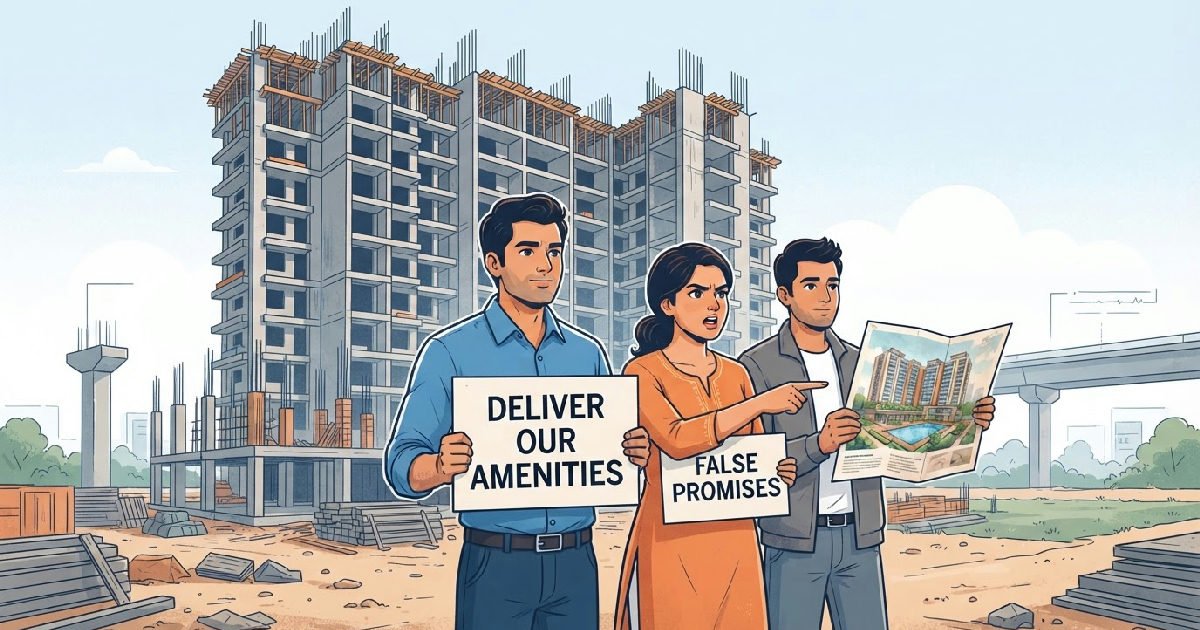
Homebuyers across the Delhi National Capital Region (NCR) are locked in escalating disputes with real estate developers. This growing problem concerns promised amenities that never materialize, despite explicit inclusions in brochures and buyer agreements.
Essential features like clubs, parks, and even crucial metro connectivity often remain unbuilt years after possession. This widespread failure to deliver has left many residents feeling cheated and seeking legal recourse.
Flat advertised amenities missing
A persistent issue plaguing the Delhi NCR real estate sector sees developers routinely failing to deliver on amenities extensively advertised during project launches. From sprawling clubhouses to meticulously landscaped parks and even convenient metro access, these features often remain on paper only. Many homebuyers are now turning to RERA lawyers for resolution.
The problem isn’t confined to minor details; it involves major attractions that significantly influence purchase decisions and property values. Homebuyers often factor these lifestyle enhancements into their financial planning. Their absence consequently leaves them with properties that feel incomplete and devalued compared to initial expectations.
The Pervasive Gap in Developer Promises
Many agreements between developers and buyers explicitly list these promised facilities, making their non-delivery a clear breach of contractual obligations. Verbal assurances from sales desks, while influential, often hold little weight in legal disputes without written confirmation. Buyers typically rely on the detailed documents they sign, only to find later that key elements are missing.
The scale of the problem is significant, impacting thousands of families across new and even some older residential complexes. Homeowners are increasingly banding together to amplify their collective voice. This united front aims to pressure developers into fulfilling their obligations or facing organized legal challenges.
The Gap Between Brochure Promises and Reality
Developers frequently use an array of attractive amenities as primary selling points, showcasing them prominently in marketing materials and architectural renderings. These often include state-of-the-art gyms, swimming pools, community centers, and dedicated green spaces. The allure of such a lifestyle often justifies the premium prices buyers pay.
However, once construction concludes and possession is handed over, many buyers discover these features are either partially built, substandard, or entirely absent. This creates a frustrating disconnect between the vision sold and the living experience delivered. The promised community facilities, integral to the project’s appeal, simply aren’t there.
Common Unfulfilled Amenities and Their Impact
The list of missing amenities is varied, but certain categories appear more frequently. These often include recreational facilities, communal spaces, and infrastructural benefits. The lack of these promised additions significantly degrades the quality of life residents expected.
For families, the absence of parks and playgrounds removes essential spaces for children. Similarly, the non-existence of clubs or community halls hinders social interaction and community building. Critically, unfulfilled promises of metro connectivity can leave residents reliant on less convenient or more expensive transport options.
| Advertised Amenity | Common Delivery Status | Impact on Homebuyers |
|---|---|---|
| Clubhouse/Community Center | Not built or significantly scaled down | Loss of social and recreational space, reduced community engagement |
| Landscaped Parks/Green Areas | Undeveloped plots, reduced size, poor maintenance | Lack of green space, health implications, aesthetic degradation |
| Swimming Pool/Gymnasium | Unfinished, non-functional, or absent | Loss of wellness facilities, need for external memberships |
| Metro Connectivity/Shuttle Service | No infrastructure developed, service not provided | Increased commuting time and cost, accessibility issues |
| Sports Facilities | Not constructed or poor quality surfaces | Limited recreational options, dissatisfaction for active residents |
Legal Recourse for Aggrieved Flat Buyers
Homebuyers facing this predicament are not without options. The Real Estate (Regulation and Development) Act, 2016 (RERA), provides a structured framework for addressing such grievances. It mandates transparency and accountability from developers, offering consumers a path to redressal.
A crucial first step involves meticulously compiling all relevant documents, including the brochure, the builder-buyer agreement, and payment receipts. These papers form the bedrock of any complaint. They clearly demonstrate the promises made and the financial commitment undertaken by the buyer.
Filing a RERA Complaint for Non-Delivery
For those in Delhi NCR, filing a complaint before the respective state RERA authority is the primary official avenue. This is essential, regardless of residency, as the authority governing the project’s location holds jurisdiction. The process allows buyers to formally present their case against developers for non-compliance.
Understanding how to file a RERA complaint effectively is crucial for success. Homebuyers need to detail the specific amenities promised and those that remain undelivered, citing clauses from their agreement. This precision strengthens their position before the regulatory body.
Beyond RERA: Other Legal Avenues
While RERA is the most direct route, other legal avenues exist. Buyers can also pursue consumer forums or civil courts, depending on the specifics of their case and the relief sought. However, RERA’s specialized nature often makes it more efficient for real estate-specific disputes. Buyers should also check if their project is registered under RERA, as this impacts the available legal strategies.
Seeking legal counsel from property law experts specializing in RERA cases can significantly improve outcomes. These professionals can guide buyers through the complexities of real estate law, ensuring their claims are robustly presented. Their expertise can be invaluable in navigating the often-intimidating legal landscape.
Eroding Trust in the Residential Property Market
The recurrent failure of developers to deliver advertised amenities is severely eroding consumer trust within the Delhi NCR real estate market. This problem extends beyond individual disputes, casting a shadow over the entire sector.
Prospective buyers become increasingly wary of developer claims. This widespread skepticism makes it harder for reputable developers to differentiate themselves from those who routinely fall short of their promises.
Impact on Developer Reputation and Future Sales
Developers who consistently fail to deliver on promised amenities face significant reputational damage. News of such discrepancies spreads quickly among potential buyers through word-of-mouth and online forums.
This negative publicity can severely impact future sales and the long-term viability of their projects. A tarnished reputation makes it challenging for developers to attract new investors or secure financing for ventures, particularly if the builder stopped construction.
In a competitive market, trust is a valuable currency. Losing it can lead to a downward spiral of declining sales and financial instability.
Regulatory Oversight and Enforcement Challenges
RERA was established precisely to address such issues, promoting transparency and protecting homebuyer interests. However, the effectiveness of its implementation varies across different states in the NCR. Enforcement remains a critical challenge for regulatory authorities.
While the legal framework exists, the speed and efficacy of dispute resolution can sometimes be slow. This often leaves homebuyers in prolonged legal battles, adding to their financial and emotional burden. The capacity of RERA bodies to handle a large volume of complaints is also a factor.
Strengthening RERA’s Mandate for Amenity Delivery
Many advocate for stronger enforcement mechanisms within RERA to ensure developers are held strictly accountable for their advertised promises. This could include more stringent penalties for non-compliance and quicker dispute resolution processes. Clear guidelines on what constitutes “delivery” of an amenity could also help.
Increased proactive monitoring by regulatory bodies during project development might also prevent these issues from escalating. Regular inspections could ensure that amenities are on track for completion. This shifts the focus from reactive complaint handling to preventive oversight, benefiting all stakeholders.
Steps for Buyers to Safeguard Their Investment
Prospective homebuyers in Delhi NCR should adopt a proactive and cautious approach when purchasing property. Thorough due diligence is no longer just advisable; it is essential. Every promise, especially concerning amenities, should be critically examined and verified.
Buyers must scrutinize developer brochures, marketing materials, and the builder-buyer agreement with extreme care. Any feature that influences the purchase decision should be explicitly mentioned in the legally binding agreement. Verbal assurances, however persuasive, are often legally unenforceable.
Verifying Developer Claims and Project Status
Before signing any agreement, buyers should request detailed plans and specifications for all advertised amenities. It’s also wise to visit existing projects by the same developer to assess their track record for delivering promises.
Talking to current residents can provide invaluable insights into a developer’s reliability. Their experiences often shed light on the true quality of delivered promises.
Consulting with a legal expert before finalizing any property purchase agreement is a critical safeguard. A lawyer can review the terms, highlight potential pitfalls, and ensure all promised features are adequately documented and legally binding.
This proactive step can prevent costly disputes later on. It offers buyers significant protection against future grievances.
Future Outlook for Real Estate Accountability
The increasing number of disputes over missing amenities suggests a growing need for enhanced accountability in the Delhi NCR real estate sector. Regulatory bodies, developers, and homebuyers all have roles to play in fostering a more transparent and trustworthy market. Industry experts believe that consistent enforcement of RERA provisions is paramount.
There’s a strong call for developers to adopt more ethical marketing practices, ensuring that promises made can actually be delivered. Building trust through transparent dealings and timely project completion, including all promised amenities, will be key to sustainable growth. Homebuyers, for their part, must remain vigilant and informed.
Towards Greater Transparency and Compliance
The push for greater transparency could lead to requirements for developers to provide detailed timelines for amenity completion, distinct from the overall possession timeline. Escrow accounts specifically for amenity development funds could ensure dedicated resources are available.
These measures aim to restore faith in the region’s property market and protect consumer interests more effectively. Ensuring the complete delivery of promised features will be crucial for the sector’s future health.
What are common missing amenities in Delhi NCR residential projects?
Commonly missing amenities include clubhouses, landscaped parks, swimming pools, gymnasiums, and promised metro connectivity or shuttle services. These features are often extensively advertised but frequently remain undelivered or incomplete.
What legal options do homebuyers have for missing amenities?
Homebuyers can file a complaint with the Real Estate Regulatory Authority (RERA) of the state where the project is located. They can also pursue cases in consumer forums or civil courts, depending on the specific circumstances and desired relief.
What documents are essential when complaining about undelivered amenities?
Key documents include the builder-buyer agreement, the project brochure highlighting promised amenities, all payment receipts, and any correspondence with the developer. These documents provide crucial evidence to support the claim.
Amenities on the brochure, not on site? Call or Whatsapp for free consultation.
Related Service: https://arpitmarwah.com/rera-lawyers-in-delhi/