
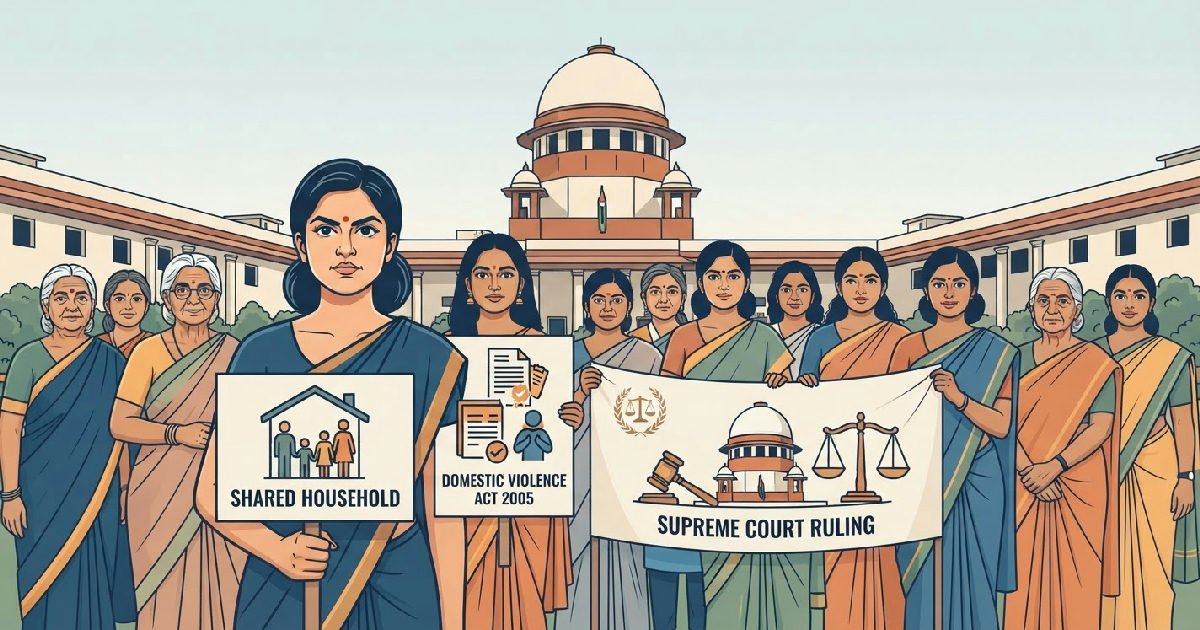
In Delhi matrimonial cases, the right to stay in the shared household is a critical and often urgent issue. It’s primarily governed by the Protection of Women from Domestic Violence Act, 2005 (DV Act), providing a legal framework for women facing marital discord. A recent Supreme Court ruling has further clarified and broadened the definition of a shared household.
This right to stay in the shared household is distinct from broader divorce proceedings or cases filed under Section 498A of the Indian Penal Code, focusing specifically on a woman’s entitlement to shelter. Recent judicial interpretations continue to refine its scope, balancing protection with existing property rights.
Right Stay Shared understanding the ruling
Understanding the Right to Stay in the Shared Household
The DV Act, specifically Section 2(s), broadly defines a “shared household” as any house where an aggrieved woman lives or has lived in a domestic relationship with the respondent. This definition is expansive, covering both current and past residences that formed part of the shared domestic life.
Critically, the nature of ownership or title isn’t the decisive factor in determining whether a property qualifies. This means a home owned solely by the husband, jointly owned by the couple, rented, or even belonging to in-laws can be considered a shared household, provided the domestic relationship existed there.
Matrimonial lawyers in Delhi treat residence as an urgent matter, focusing on proving the household is shared, demonstrating urgent need, and creating a safe record of the situation. This approach helps in securing immediate legal remedies for affected women.
Broadening the Definition through Landmark Judgments
The interpretation of “shared household” saw significant expansion with the Supreme Court’s 2020 ruling in Satish Chander Ahuja v. Sneha Ahuja. This pivotal judgment clarified that a home owned by in-laws, where the couple had previously resided together, qualifies as a shared household under Section 17 of the DV Act.
This decision provided greater legal clarity and protection, preventing women from being easily evicted from a marital home simply because it was owned by the husband’s parents. It underscored the protective intent of the DV Act, ensuring continued shelter even when ownership structures are complex.
Upholding the Right to Residence (Section 17)
Every woman in a domestic relationship holds a statutory right to reside in the shared household, irrespective of the property’s ownership or title. This fundamental protection ensures she cannot be evicted or excluded from the home except through a duly established legal procedure.
This right persists even if the husband has been disowned by his parents, highlighting its independent nature within the DV Act’s framework. It’s a crucial safeguard, guaranteeing a woman’s access to a safe living environment during periods of marital strife.
Protection Against Arbitrary Eviction
The right to residence continues even after cohabitation formally ends. Moreover, if a woman leaves the shared household for safety reasons, it doesn’t automatically result in the loss of legal remedies, as clarified by the Supreme Court in Prabha Tyagi v. Kamlesh Devi.
This means a woman can enforce her statutory residence right even after vacating the premises, ensuring her past experiences don’t undermine her future protection. This provision is vital for victims of domestic violence who might need to leave for immediate safety.
Judicial Scrutiny and Limitations of Residence Rights
While the right to reside in a shared household is robust, it’s not absolute. The Delhi High Court has consistently stated that a wife’s right to reside is not an unconditional guarantee of permanent residence under all circumstances, acknowledging practical and equitable considerations.
Section 19 of the DV Act outlines conditions for continued residence. A daughter-in-law cannot be dispossessed except in accordance with the law. Courts may also direct the husband to provide suitable alternate accommodation or cover the rent for such an arrangement if living in the shared household becomes unfeasible.
The Reena Grover Precedent on Voluntary Relocation
A recent Delhi High Court ruling, delivered on March 23, 2026, in Reena Grover v. Ramesh Grover & Ors., further clarified these nuances. Justice Ravinder Dudeja stated that the DV Act doesn’t confer an absolute right to insist on residence in a particular property if a woman has voluntarily moved to alternate accommodation that remains available.
The court observed that a “shared household must be a subsisting sharehood in presenti, not one surviving merely in historical memory.” This ruling emphasizes that relief under Section 19 is discretionary, protective, and equitable, rather than an automatic re-entry right to any past residence.
Balancing Rights in Complex Family Structures
The DV Act aims to balance the aggrieved woman’s rights with those of other occupants and owners. The Delhi High Court has often held that a woman’s right to a shared household is primarily a right of protection, not ownership. It isn’t intended as a perpetual license to occupy the premises of in-laws, especially when it demonstrably harms senior citizens.
This ensures the law prevents abuse while offering essential protection, recognizing the often-sensitive dynamics within extended family residences. The judiciary seeks to provide fair outcomes that consider all parties involved in a matrimonial dispute.
Navigating Legal Recourse and Practical Tactics
In matrimonial cases, understanding the immediate legal steps is crucial. Tactics like changing locks without proper procedure can lead to severe legal repercussions. If a property is jointly owned, both spouses share an equal legal right to enter and occupy, making unilateral lock changes impermissible.
Even if the property is solely in one spouse’s name, the other spouse often holds “home rights” by virtue of marriage, preventing exclusion without proper legal channels. These protections mean direct, confrontational actions are generally ill-advised and legally unsound.
If a woman is unlawfully locked out or thrown out of her residence, she can immediately file a Domestic Violence complaint under the DV Act. This can lead to a Residence Order from the Magistrate, which legally compels re-entry. Police protection can also be sought if there’s an immediate threat or danger.
In an April 11, 2023, case, the Delhi High Court highlighted that a petitioner’s entry into her matrimonial home was a legal right secured by a protection order. Changing locks to prevent her entry constituted a transgression of the law, underscoring the seriousness of such actions.
The Role of Matrimonial Lawyers in Delhi
Matrimonial lawyers in Delhi NCR play a pivotal role in these urgent situations. They focus on quickly proving the household’s shared status, demonstrating an urgent need for protection, and creating a safe, detailed record of the circumstances. Their expertise extends to handling domestic violence cases, securing residence and protection orders, and obtaining urgent court directives.
These legal professionals provide essential support for temporary and permanent injunctions concerning matrimonial homes. They ensure that a woman’s rights are upheld effectively and efficiently within the complex legal landscape.
Shared Household Scenarios and Legal Standings
| Ownership Type | Status as Shared Household | Key Legal Aspect |
|---|---|---|
| Husband’s Sole Property | Yes | Wife has right to reside, cannot be evicted without due process. |
| Jointly Owned (Husband & Wife) | Yes | Equal rights, neither can unilaterally exclude the other. |
| Owned by In-laws | Yes (if couple resided there) | Clarified by Supreme Court in Satish Chander Ahuja v. Sneha Ahuja. |
| Rented Property | Yes | Right to reside based on domestic relationship, regardless of leaseholder. |
| Voluntary Alternate Accommodation | May affect specific property claim | Reena Grover ruling: right is not absolute for re-entry. |
The nuances of ownership are complex, but the DV Act’s primary goal remains the protection of an aggrieved woman’s right to shelter. The judiciary consistently strives to interpret these provisions to uphold the spirit of the law.
Understanding these distinctions is vital for anyone involved in matrimonial disputes in Delhi. Legal counsel can guide individuals through the process, ensuring their rights are protected and appropriate remedies are sought effectively. A domestic violence case needs specific handling.
What constitutes a “shared household” under the DV Act?
Under Section 2(s) of the Protection of Women from Domestic Violence Act, 2005, a “shared household” is broadly defined as any house where an aggrieved woman lives or has lived in a domestic relationship with the respondent.
This definition includes properties owned by the husband, jointly owned, rented, or even those belonging to in-laws, provided the couple resided there in a domestic relationship, making ownership status less critical than the living arrangement.
Can a woman be evicted from a home owned by her in-laws in Delhi?
No, not easily or arbitrarily. The Supreme Court’s 2020 ruling in Satish Chander Ahuja v. Sneha Ahuja confirmed that a home owned by in-laws, where the couple lived together, qualifies as a shared household. Consequently, a woman has a statutory right to reside there and cannot be evicted except through a proper legal procedure, offering significant protection against summary removal.
Does voluntarily leaving a shared household mean losing residence rights?
Not necessarily for all legal remedies, but it can impact claims for re-entry to that specific property.
While leaving for safety doesn’t forfeit all rights, a recent Delhi High Court ruling in Reena Grover v. Ramesh Grover & Ors. stated that the DV Act doesn’t confer an absolute right to insist on residence in a particular property if alternate accommodation has been voluntarily taken and remains available.
The law seeks present-day shelter, not just historical claims.
Being pushed out of the home in Delhi? Call or Whatsapp for free consultation.
Related Service: https://arpitmarwah.com/matrimonial-lawyers-in-delhi/