
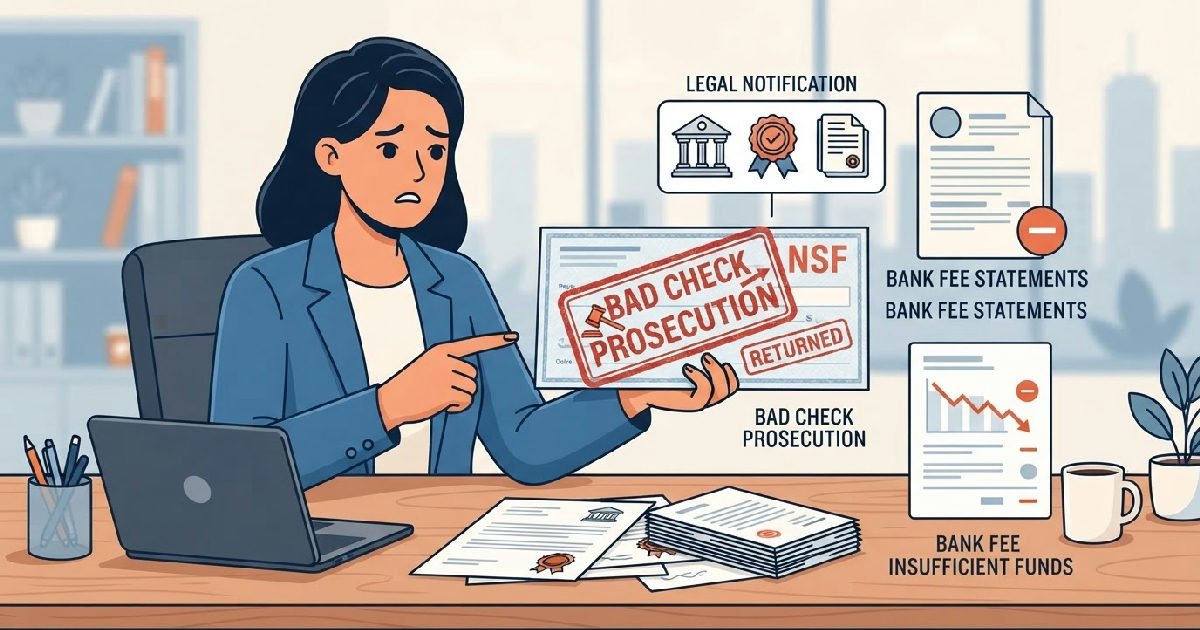
A guide to bad cheque prosecution fundamentals
Navigating the legal procedures required for recovering funds after receiving a dishonored check is complex, involving distinct civil and criminal pathways known broadly as bad check prosecution. This process starts with identifying the nature of the bounced check, often categorized as either insufficient funds (NSF) or drawn on a closed account.
Successfully recovering the debt hinges on meticulous adherence to state-specific regulations regarding formal notification and the required proof of intent to defraud.
When a check is returned by a bank because it cannot be honored, the payee—the person or entity owed the money—is immediately faced with a monetary loss and associated bank fees. Legal steps are often pursued either sequentially or concurrently to ensure full restitution, covering the original amount, fees, and sometimes additional damages.
Key Definitions for Check Recovery Actions
Before initiating any formal bad check prosecution, it’s essential to understand the technical terms that define the event and the parties involved. A bad check, also referred to variously as a worthless check, bounced check, or hot check, is fundamentally a payment instrument the drawee bank refuses to honor.
This refusal typically happens because the account is defunct or lacks sufficient money to cover the specified sum.
The core issue is usually Insufficient Funds (NSF), meaning the drawer’s account—the person who wrote and signed the check—simply did not hold enough cash for the transaction. Writing a check on a closed account carries even greater legal ramifications, as it is often viewed as outright check fraud.
The Drawee is the financial institution directed to pay the sum, while the Payee is the recipient named on the check.
When legal action is successful, the expected outcome is Restitution. This legal principle ensures the restoration of the lost funds, usually encompassing the check amount and any fees the payee incurred. Understanding these roles and definitions clarifies the documentation needed for successful recovery, whether civil or criminal.
The Crucial Initial Steps: Demand and Notice
Every recovery process begins with attempting to resolve the matter informally, contacting the drawer directly to explain the error or deficiency. If this initial contact fails to produce payment, the payee must escalate the issue by issuing a formal Demand Letter.
This document is not merely a request for money; in most jurisdictions, it is a legal prerequisite for pursuing further action, both civil and criminal.
The demand letter formally notifies the check writer that the payment was dishonored and demands full repayment within a specific deadline. State laws dictate this timeframe, which commonly falls between 10 and 30 days from the date the letter is received. Crucially, the demand must request the check’s full amount, any bank fees incurred, and the associated cost of preparing and mailing the demand itself.
Establishing Proof of Delivery
To satisfy court requirements, this demand letter must almost universally be sent via certified mail with a return receipt requested. The return receipt provides undeniable proof that the drawer received the formal notice of non-payment. Without this proof of delivery, many state courts will not allow the payee to proceed with either a civil suit or criminal charges, potentially derailing the entire case.
This formal notification process serves a dual legal purpose. It demonstrates the payee’s good faith in attempting settlement outside of court. More importantly for criminal bad check prosecution, it starts the clock, creating a window during which the drawer’s failure to pay can be used to establish intent to defraud.
Pursuing Civil Actions for Recovery
If the demand letter is ignored or the specified deadline passes without payment, the payee can move forward by initiating civil recovery proceedings. Civil action focuses solely on regaining the monetary loss and is generally less burdensome to prove than criminal charges. The two primary avenues are small claims court or a full civil lawsuit, depending on the debt’s magnitude.
Small claims court is often the quickest and least expensive route, designed for resolving disputes under a specific dollar threshold. These limits vary significantly between states but typically range from $5,000 to $10,000. In this venue, the payee sues for the check amount, bank fees, and potentially additional statutory damages if permitted by local statute.
Statutory Damages and Financial Penalties
Some states implement specific statutory damages designed to penalize non-payment after notice. For instance, in California, if the check writer fails to remit payment within 30 days of receiving the demand letter, the payee may recover damages up to three times the check amount. However, this recovery is often capped at a maximum figure, such as $1,500 in California.
For amounts exceeding the small claims threshold or cases involving complex business transactions, a full civil lawsuit becomes necessary. While this process is significantly more time-consuming and costly, it allows for the recovery of larger sums, potentially including attorney’s fees. The goal remains consistent: obtaining a court judgment forcing the drawer to provide the due payment.
When considering whether Navigating civil recovery is the right path, it helps to understand the financial limits of the jurisdiction. This limits the time and cost associated with filing a claim.
| Legal Recovery Channel | Typical Claim Limit | Procedural Complexity | Potential Additional Recovery |
|---|---|---|---|
| Informal Contact | No limit | Minimal | None (Check Amount + Fees Only) |
| Small Claims Court | $5,000 to $10,000 (Varies by state) | Low | Statutory Damages (e.g., $1,500 max) |
| Full Civil Lawsuit | No limit | High | Attorney’s Fees, Comprehensive Damages |
Establishing Intent in Criminal Prosecution
Criminal prosecution moves beyond simple debt recovery; it seeks to punish the drawer for the crime of defrauding the payee. For a successful criminal bad check prosecution, the state must prove that the drawer possessed the specific intent to defraud the recipient at the time the check was issued.
This element of intent is the most difficult to prove and is the reason criminal charges are reserved for specific circumstances.
The criminal offense requires that the check writer issued the check knowing that the account had insufficient funds or was already closed. Writing a check on a known closed account almost automatically satisfies the intent element, leading to serious legal ramifications.
Presumption of Fraudulent Intent
In many jurisdictions, the law assists prosecutors by establishing a legal presumption of intent to defraud. This presumption is typically activated if the drawer fails to make full payment within a specified period—often 10 days—after receiving formal notice that the check was dishonored. This is why the certified demand letter is such a critical component of both civil and criminal recovery efforts.
Once the presumption of intent is established, the burden shifts to the drawer to prove they did not intend to defraud the payee. This mechanism makes the collection process explained in the demand letter phase incredibly important for laying the groundwork for criminal charges.
If convicted, the drawer faces penalties that can include fines, probation, and even jail time, depending on the check amount and previous offenses.
Despite the potential for harsher penalties, criminal prosecution is not focused on immediate financial recovery for the payee. Its primary function is punitive and societal. However, courts often condition probation or reduced sentences on the drawer providing full restitution to the victim, ensuring the payee eventually recovers their loss.
Weighing Civil vs. Criminal Recovery Channels
Victims often must decide whether to pursue criminal action, civil action, or both, as they serve different purposes. Civil recovery offers direct financial compensation and usually involves a lower burden of proof. It is focused entirely on making the victim whole.
Criminal bad check prosecution, handled by state or district attorneys, focuses on punishing the illegal behavior. The decision to prosecute rests with the state, not the victim, though the victim’s willingness to cooperate and provide evidence is vital. For large debts or instances where the drawer is clearly attempting to deceive others, the criminal route may be a necessary deterrent.
Often, the threat of criminal charges or the filing of a police report motivates prompt civil restitution. By establishing the formal paper trail necessary for criminal proceedings—the demand letter and proof of delivery—the payee gains leverage in civil settlement negotiations. The dual approach provides the most comprehensive strategy for both recovery and deterrence against future offenses.
In many legal systems, the process for recovering funds from a bad check is standardized to ensure fairness and adherence to due process. This standardization dictates the timelines for notice and the specific requirements for proving fraudulent activity. Understanding these procedural demands is essential for any business or individual who accepts checks as a form of payment.
What is the difference between NSF and check fraud?
Insufficient Funds (NSF) occurs when the account simply lacks the money to cover the check, which may be an accident or mismanagement. Check fraud, on the other hand, requires proof of the drawer’s intent to defraud the payee, typically involving writing a check on a closed account or using forged information.
While NSF can sometimes escalate to fraud if the drawer fails to pay after notice, fraud inherently requires intent.
How long does the check writer have to make restitution?
The timeframe for restitution is usually specified in the formal demand letter, commonly dictated by state law to be between 10 and 30 days after the drawer receives the notice. Failure to pay within this legally defined period may create a presumption of fraudulent intent, strengthening the payee’s case for both civil damages and criminal prosecution.
Can I recover my bank fees in a bad check case?
Yes, the recovery process, both civil and often criminal (via restitution orders), generally allows the payee to recover the bank fees they incurred when the check was dishonored. The initial demand letter must specifically itemize and request these bank fees along with the original check amount and the cost of the certified mail notice.