
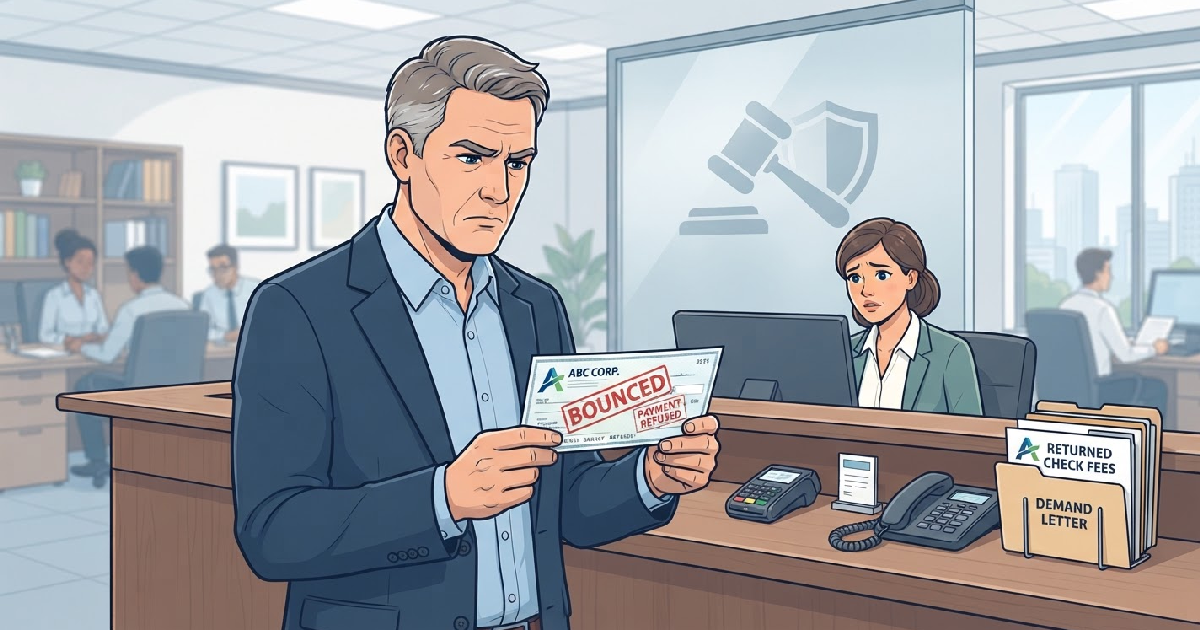
Bad check laws for businesses offer clear legal avenues for recovering funds and imposing check bounce case punishment for companies receiving dishonored checks. Fortunately, bad check laws for businesses exist to provide clear legal avenues for companies to recover funds and impose penalties when they receive dishonored checks.
These state-specific statutes offer both civil remedies and, in cases of fraudulent intent, the possibility of criminal prosecution. The primary goal for businesses dealing with such issues is often to reclaim the owed amount, along with any associated fees and damages incurred due to the bad check.
Understanding Bad Check Laws and Legal Frameworks
Bad check laws are primarily governed by state statutes, which detail the specific conditions for both civil and criminal actions. These laws also outline critical notice requirements and available penalties, providing a framework for businesses to protect their financial interests.
It’s crucial for businesses to understand these varied legal frameworks, as they dictate how and when recourse can be pursued against individuals who issue worthless checks.
Defining Key Terms in Check Transactions
To fully grasp the implications of bad check laws, it helps to understand the terminology. A “bad check,” also known as a worthless, bounced, or NSF check, is one that cannot be honored by the bank.
This usually occurs because the person who wrote it, known as the “drawer,” has insufficient funds, the account is closed, or payment was stopped without a valid reason. For criminal charges to apply, the drawer typically must have known about the insufficient funds and intended to defraud the recipient, or “payee.”
The “drawee” is the bank or financial institution responsible for honoring the check from the drawer’s account.
The Uniform Commercial Code and Business Responsibilities
The Uniform Commercial Code (UCC) provides the fundamental legal basis for liability in check fraud losses. It also clearly defines the responsibilities for both banks and their customers in these situations.
Under UCC Sections 3-103(7), 3-403(a), and 4-401(a), banks can only charge items against a customer’s account if they are “properly payable” and signed by an authorized individual. Account holders, in turn, must exercise “ordinary care” by following “reasonable commercial standards” within their industry.
They’re also expected to promptly reconcile bank statements and report any unauthorized checks, typically within 30 days. If both the bank and the account holder fail to exercise ordinary care, any losses may be allocated based on each party’s contribution to the problem, under the principle of comparative negligence.
Proactive Strategies to Prevent Bad Checks
Businesses aren’t powerless when it comes to preventing bad checks. Implementing smart preventative measures can significantly reduce a company’s exposure to financial losses.
These strategies help create a more secure transaction environment, minimizing the chances of encountering a worthless check that could disrupt cash flow.
Establishing Clear Check Acceptance Policies
One of the most effective preventative steps is to establish and clearly post a check acceptance policy. This policy should outline criteria such as limiting check amounts and requiring management approval for larger checks.
It also needs to specify identification requirements for anyone writing a check. This transparency can deter potential fraudsters and guide legitimate customers, making transactions smoother for everyone.
The Importance of Requiring Identification
Always requesting identification is a simple yet powerful deterrent against bad checks. Businesses should ask for a driver’s license or a state-issued identification card.
Recording the identification number on the check itself and verifying that the name, picture, and signature match are crucial steps. This practice adds a layer of accountability for the drawer and protects the business.
Types of Checks to Approach with Caution
Not all checks are created equal, and some carry a higher risk. Businesses should generally avoid post-dated or held checks because they are not payable on demand.
Accepting a check with an agreement to hold it implies knowledge of insufficient funds at the time of acceptance, which can complicate legal recourse. Two-party checks also have a higher incidence of unreliability and can be more difficult to collect. Businesses might also want to review how to stop payment on a cheque for their own protection.
And, in many cases, checks for pre-existing debt (antecedent debt) are not considered under bad check laws, though checks for Cash On Delivery (COD) orders may be. Understanding these distinctions helps businesses make informed decisions.
Verifying Check Details and Prompt Deposit
Before accepting any check, businesses should carefully verify all its details. Ensure the check has a date, payee, both written and numerical amounts, and a signature.
It’s also wise to look for any erasures, alterations, or abnormalities. Low check numbers might indicate a new account, warranting extra caution. Once accepted, deposit checks promptly to reduce the risk of issues and allow for quicker processing.
Navigating the Collection Process for Dishonored Checks
Even with robust prevention strategies, a business might still receive a bad check. When this happens, a structured collection process becomes essential to recover the funds efficiently.
Businesses must follow specific legal steps to maximize their chances of successful recovery and enforce legal penalties if necessary, following state guidelines.
Initial Contact and Formal Demand Letters
The first step after receiving a bad check should always be to attempt direct contact with the check writer. Sometimes, a bad check is simply an unintentional error that can be resolved quickly, without further action.
If direct contact doesn’t work, sending a formal demand letter is crucial and often legally required before pursuing further action. This letter should be sent by certified mail with a return receipt requested, to the address on the check or the last known address.
The content of the letter must notify the check writer that the check was dishonored, state the full amount owed, and include any permissible service charges. It must also inform them of potential civil and criminal penalties.
The check writer is given a specific period, such as 10, 15, or 30 days depending on the state, to pay the full amount. Failure to pay within this notice period can create a legal presumption of intent to defraud, strengthening the business’s legal position in subsequent actions. Businesses can learn more about legal penalties and protections for businesses in these situations.
Pursuing Civil Remedies and Additional Damages
If the demand letter does not lead to payment, businesses can pursue civil action. This typically involves filing a lawsuit to recover the original amount of the check.
Many states also allow businesses to recover additional damages beyond the check’s face value. These can include service fees for the returned check, which vary by state.
For instance, California allows $25 for the first returned check and $35 for subsequent ones. Florida permits a returned check processing fee of $25-$40 or 5% of the check amount, depending on the check’s value. Understanding these state-specific fees is vital for businesses calculating their total recoverable losses.
State-Specific Guidelines for Returned Check Fees
The exact fees for returned checks vary significantly across states, underscoring the importance of understanding local regulations. Businesses should consult their state’s specific statutes to ensure compliance and maximize recovery, as these figures can change.
| Jurisdiction | Returned Check Service Fee | Notice Period for Payment |
|---|---|---|
| California | $25 (1st check), $35 (subsequent) | Varies by state (e.g., 10, 15, or 30 days) |
| Florida | $25-$40 or 5% of check amount | Varies by state (e.g., 10, 15, or 30 days) |
| General State Laws | Varies; check state statutes | Varies by state (e.g., 10, 15, or 30 days) |
These figures are illustrative based on the research, and actual penalties can depend on the amount of the check and specific state laws. Businesses should always verify the latest statutes in their jurisdiction for precise information. For a broader understanding of how checks function, businesses might find it useful to review how a cheque book functions.
What constitutes a “bad check” under the law?
A “bad check” is generally defined as one that cannot be honored by a bank due to insufficient funds, a closed account, or a payment stop without valid reason. For criminal intent, the drawer must typically have known about the lack of funds when issuing the check.
What is the first step a business should take when receiving a bad check?
The initial step is to contact the check writer directly to try and resolve the issue. It’s possible the bad check was an honest mistake. If this informal approach doesn’t work, a formal demand letter is the next necessary step.
Can a business recover more than just the original check amount?
Yes, many states allow businesses to recover additional damages beyond the face value of the check. These can include permissible service fees for the returned check, which vary by state depending on local statutes and the check amount.