
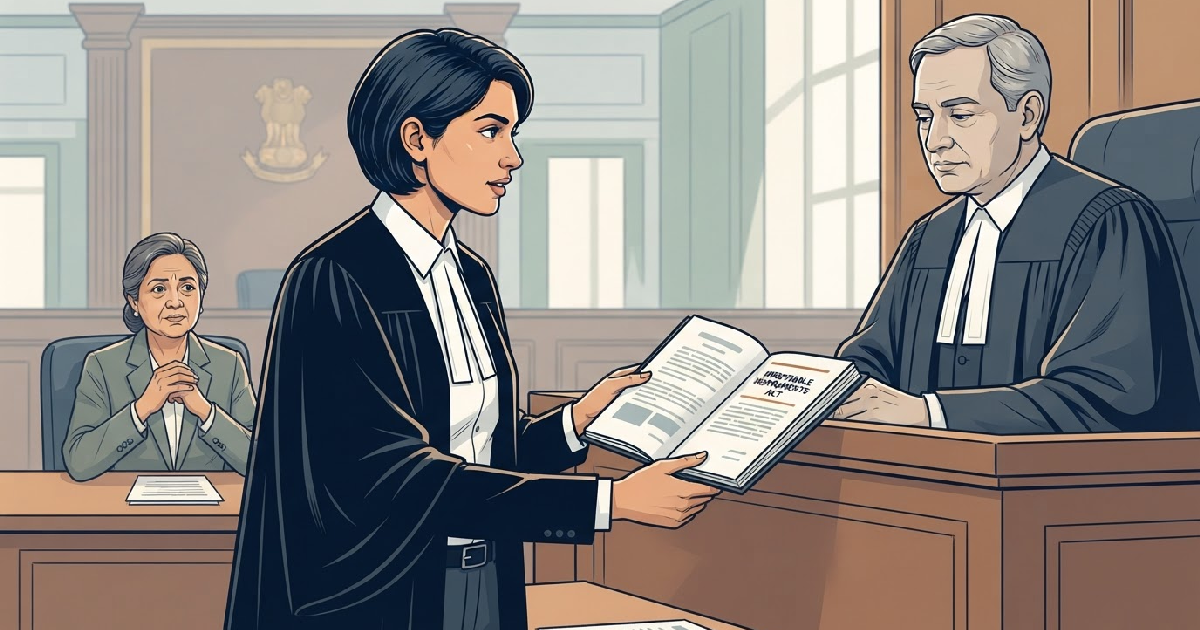
Navigating the complexities of Indian law when defending a cheque bounce case as an NGO treasurer requires a clear understanding of the Negotiable Instruments Act, 1881 (NI Act). The primary defense strategy involves demonstrating that the legal conditions for an offense haven’t been met or that the treasurer, as an individual, doesn’t bear personal liability.
An NGO treasurer’s liability isn’t automatic; instead, it hinges significantly on their active role and direct responsibility in the financial actions leading to the dishonoured cheque. This crucial distinction forms the cornerstone of any effective defense.
Understanding India’s Cheque Dishonour Laws
India’s legal framework concerning cheque bounce cases is predominantly governed by the Negotiable Instruments Act, 1881. This Act was established to enforce financial discipline and provide a strong legal recourse for payees against individuals or entities issuing cheques without sufficient backing.
The law aims to protect the integrity of financial transactions, ensuring that cheques function as reliable instruments of payment. A cheque bounce, also known as dishonour, occurs when a bank refuses to process a cheque presented for payment.
Key Concepts in Cheque Dishonour Cases
Several defined terms are crucial to understanding the NI Act. The “drawer” is the individual or entity that issues the cheque, while the “payee” is the person or entity designated to receive the funds.
Section 138 of the NI Act specifically criminalizes the dishonour of cheques under certain conditions. It imposes criminal liability on the drawer if a cheque bounces due to insufficient funds or if the amount surpasses the agreed arrangement with the bank.
Crucially, a cheque bounce case under Section 138 can only be initiated if the cheque was issued to discharge a “legally valid and recoverable debt or liability.” Cheques given as gifts, donations, or as security deposits where no primary obligation has yet arisen may not fall under this section’s purview. You can find more detailed information regarding Section 138 NI Act provisions.
Establishing Personal Liability for NGO Treasurers
When an NGO is involved in a cheque bounce case, the liability of its treasurer isn’t presumed. It’s a nuanced area of law that requires careful examination of the treasurer’s specific involvement in the issuance of the bounced cheque.
Prosecutors must prove that the treasurer had a direct and active role in the financial affairs related to the dishonoured instrument. Simply holding the title of treasurer doesn’t automatically confer criminal responsibility.
Defining an Active Role in Financial Affairs
An active role typically implies that the treasurer was directly responsible for the day-to-day financial operations. This includes involvement in the decision to issue the cheque and awareness of the account’s financial status.
Evidence demonstrating a lack of such active involvement can be a powerful defense. This might include showing that another officer managed finances, or that the treasurer had limited signing authority within the organisation.
Strategic Defenses in Cheque Bounce Cases
A key aspect of defending a cheque bounce case as an NGO treasurer is to challenge the fulfillment of the conditions stipulated under Section 138 of the NI Act. If any of these foundational requirements are not met, the case against the treasurer may not stand.
One common defense involves proving that the cheque was not issued for a legally enforceable debt. Cheques given for purposes like charity or as an advance without a present liability might be exempt from Section 138.
Challenging the Basis of the Claim
Defendants can argue that the cheque bounced for reasons other than insufficient funds, such as a signature mismatch or a stop payment order. While these are still forms of dishonour, they can affect the applicability of Section 138 liability, which specifically targets insufficient funds or exceeding arrangements with the bank.
Understanding the precise reasons for the cheque’s dishonour is paramount. The legal team defending the treasurer will meticulously examine bank records and communications to ascertain the exact cause.
Key Considerations for Defense and Evidence
Effective defense in these cases relies heavily on robust documentation and a clear legal strategy. Maintaining meticulous records of all financial transactions, meeting minutes, and internal communication is vital for an NGO.
This documentation can help establish the scope of the treasurer’s responsibilities and who authorized specific financial decisions. Legal counsel often advises on collecting evidence to support claims of non-involvement or the absence of a legally enforceable debt.
Understanding the overall cheque dishonour framework in India is crucial for building a strong defense. The law has specific criteria that must be met for a criminal case to proceed successfully.
Common Reasons for Cheque Dishonour and Defense Implications
| Reason for Dishonour | Direct Implication for Drawer | Defense Strategy for Treasurer |
|---|---|---|
| Insufficient Funds | High likelihood of Section 138 liability | Prove lack of direct knowledge/responsibility for account balance |
| Signature Mismatch | Technical reason for dishonour; S.138 liability not automatic | Demonstrate signature was not treasurer’s or not authorized |
| Stop Payment Order | Reason for dishonour; S.138 liability contingent on underlying funds | Argue decision not made by treasurer, or valid reason for stop payment |
| Account Closed | Reason for dishonour; typically results in insufficient funds | Show treasurer unaware of closure or not responsible for it |
Each reason for dishonour requires a tailored defense strategy. The specific circumstances surrounding the cheque’s issue and subsequent bounce determine the best course of action. This includes exploring details around the punishment for cheque bounce, which can be severe.
What makes a cheque bounce a criminal offense in India?
A cheque bounce becomes a criminal offense under Section 138 of the Negotiable Instruments Act, 1881, primarily when the cheque is dishonoured due to insufficient funds or if the amount exceeds the agreed bank arrangement, and it was issued to settle a legally enforceable debt.
Is an NGO treasurer automatically liable for a bounced cheque?
No, an NGO treasurer is not automatically liable for a bounced cheque. Their liability depends on proving their direct and active involvement in the issuance of the cheque and their responsibility for the financial affairs that led to its dishonour.
What are common defenses in a cheque bounce case for an NGO treasurer?
Common defenses include demonstrating that the cheque was not issued for a legally enforceable debt or that it bounced for technical reasons like a signature mismatch. Proving a lack of direct involvement in the issuance or financial management related to the cheque is also a strong defense.