
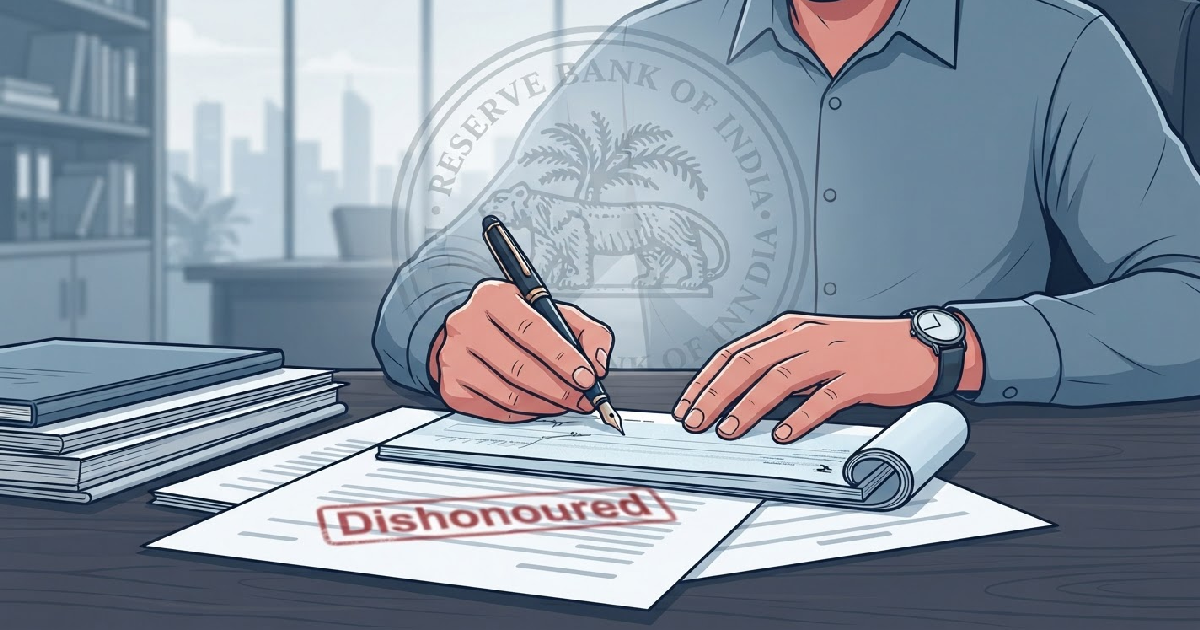
NGO treasurer cheque dishonour liability in India is a critical concern for financial officers within non-governmental organizations. Understanding the legal ramifications of a dishonoured cheque is paramount for treasurers to avoid personal liability.
The Indian legal framework, specifically the Negotiable Instruments Act, 1881 (NI Act), holds not only the NGO accountable but also places considerable legal liabilities on individuals in key financial roles, such as treasurers and authorized signatories. Understanding these obligations is crucial for anyone managing an NGO’s finances to avoid criminal prosecution under specific conditions.
Cheque dishonour liability for NGO treasurers
While an NGO is primarily responsible for its financial commitments, the law carves out provisions that extend accountability to those who directly manage and approve financial instruments. This necessitates a clear comprehension of roles, responsibilities, and the legal repercussions associated with a bounced cheque.
Cheque dishonour, commonly known as a “bounced cheque,” occurs when a bank refuses to process a cheque due to insufficient funds, a mismatch in signature, or other technical reasons. For Non-Governmental Organizations, this can disrupt operations and damage reputation, but its legal ramifications extend far beyond financial inconvenience.
Under the Negotiable Instruments Act, 1881, cheque dishonour isn’t just a civil matter; it can lead to criminal prosecution. Section 138 of the NI Act is specifically designed to enforce financial discipline and deter the issuance of cheques without adequate backing. This provision acts as a powerful tool for creditors.
The Negotiable Instruments Act, 1881, and its Reach
The NI Act provides the legal backbone for all negotiable instruments, including cheques, in India. Its primary aim is to enhance the credibility of these instruments in commercial and financial dealings. Section 138, in particular, criminalizes the act of issuing a cheque that bounces due to insufficient funds or if it exceeds the arrangement with the bank.
This section ensures that drawers of cheques are held responsible for their financial commitments. The law specifies a rigorous process that must be followed for a cheque dishonour case to proceed, including strict notice periods. Understanding India’s strict notice period for cheque dishonour cases is vital for both complainants and accused parties.
Direct Liabilities for NGO Treasurers and Signatories
The core issue for NGO officials lies in Section 141 of the NI Act, which deals with offences by companies. Since an NGO is often considered a “company” in this legal context, directors, managers, secretaries, or other officers responsible for the conduct of the organization’s business can be held liable.
Treasurers, as the primary custodians of an NGO’s financial health, and authorized signatories, who execute financial transactions, fall squarely within this ambit. Their liability arises if the offence was committed with their consent or connivance, or if it’s attributable to their neglect.
Conditions for Individual Accountability
An individual’s criminal liability in a cheque dishonour case isn’t automatic. The prosecution must establish that the person was in charge of, and responsible to, the NGO for the conduct of its business at the time the offence was committed. Simply holding a designation isn’t enough; active involvement or specific neglect needs to be proven.
The legal precedent emphasizes that the person must have been actively involved in the day-to-day affairs of the NGO, particularly its financial decisions. This includes the issuance of the cheque and ensuring adequate funds. The Section 138 NI Act cheque dishonour case for NGO treasurer explained makes it clear that mere signatory status may not suffice without proving their operational role.
| Role in NGO | Primary Accountability | Conditions for Individual Liability | Potential Penalties |
|---|---|---|---|
| NGO (Entity) | Direct Issuer of Cheque | Strict liability under NI Act | Fine (up to double the cheque amount), legal costs |
| Treasurer | Financial Oversight, Fund Management | In charge of and responsible for NGO business at time of offence, consent/connivance, or neglect proven | Imprisonment (up to 2 years), fine (up to double the cheque amount) |
| Authorized Signatory | Execution of Financial Transactions | Signed cheque and was responsible for NGO business, consent/connivance, or neglect proven | Imprisonment (up to 2 years), fine (up to double the cheque amount) |
| Other Board Members | Governance & Strategic Direction | Only if actively involved in the financial decision leading to dishonour, consent/connivance, or neglect proven | Imprisonment (up to 2 years), fine (up to double the cheque amount) |
Navigating the Legal Framework and Key Protections
The process begins with the payee sending a legal notice within 30 days of receiving the “cheque return memo.” If the drawer fails to make payment within 15 days of receiving this notice, a complaint can be filed in court. The legal action typically targets the NGO first, then extends to individuals if specific conditions are met.
While the law is stringent, it also offers avenues for defence. Individuals can argue that the cheque was not issued for a legally enforceable debt or that they were not responsible for the conduct of the NGO’s business. This often involves demonstrating a lack of knowledge or active participation in the specific transaction.
Proving Lack of Involvement or Due Diligence
For treasurers and signatories, proving that they exercised due diligence to prevent the offence is a key defence strategy. This might include demonstrating clear delegation of duties, robust internal financial controls, or immediate action upon discovering any financial irregularities. Documentation of such practices becomes paramount in court.
The burden of proof often rests on the accused to show they were not complicit or negligent. Understanding India’s Section 138 NI Act: Navigating Cheque Dishonour Laws and Key Rulings can provide deeper insights into successful defence strategies and judicial interpretations.
Mitigating Risks for NGO Officials
To shield themselves from personal liability, NGO treasurers and authorized signatories must adopt rigorous financial management practices. This includes maintaining transparent financial records, regularly reconciling bank statements, and ensuring that all cheques are issued against sufficient funds.
Clear internal policies outlining cheque issuance procedures, approval hierarchies, and reporting mechanisms are also essential. Regular training for financial staff on the legal implications of cheque dishonour can further reduce risk. Establishing an oversight committee for financial decisions can also help distribute responsibility and ensure checks and balances.
Best Practices in Financial Governance
Beyond compliance, robust financial governance involves proactive measures. This means never issuing post-dated cheques without confirmed future funds, and always maintaining a healthy reserve for unforeseen circumstances. It’s also crucial to promptly respond to any communication from banks or creditors regarding potential dishonour.
Legal counsel should be sought immediately if a cheque is dishonoured or a legal notice is received. Early intervention can often prevent escalation to criminal prosecution. Clear communication channels between the board, treasurer, and signatories are also vital for effective oversight.
Broader Implications for Non-Profit Governance
The stringent provisions of the NI Act underscore the need for impeccable governance within the non-profit sector. Organisations must foster a culture of financial prudence and accountability from the top down. This ensures that the noble objectives of an NGO are not undermined by preventable legal challenges.
Effective governance protects not only the individuals involved but also the reputation and operational continuity of the NGO itself. It builds trust with donors, beneficiaries, and the wider public, reinforcing the organization’s integrity. This also helps in attracting and retaining dedicated professionals.
Enhancing Transparency and Accountability
Transparency in financial dealings is not merely a legal requirement; it’s a cornerstone of ethical non-profit management. Regular audits, clear reporting to the board, and open communication with stakeholders can prevent many issues that lead to cheque dishonour. These practices also serve to protect all involved parties.
Ultimately, a strong governance framework reduces the personal and organizational risks associated with financial transactions. It ensures that NGOs can focus on their mission, rather than being entangled in legal disputes arising from financial mismanagement or oversight.
What is cheque dishonour?
Cheque dishonour, or a bounced cheque, occurs when a bank refuses to process a cheque presented for payment. This usually happens because there are insufficient funds in the account, a signature mismatch, or other technical issues. It carries serious legal consequences under Indian law.
Can an NGO treasurer face criminal charges for a bounced cheque?
Yes, an NGO treasurer can face criminal charges under Section 138 read with Section 141 of the Negotiable Instruments Act, 1881. This happens if it’s proven they were in charge of and responsible for the NGO’s business at the time the cheque was issued and dishonoured, or if the offence occurred with their consent, connivance, or due to their neglect.
What are the typical penalties for cheque dishonour in India?
The penalties for cheque dishonour under Section 138 of the NI Act can include imprisonment for a term up to two years, a fine which may extend to twice the amount of the cheque, or both. The specific penalty depends on the circumstances of the case and the discretion of the court.