
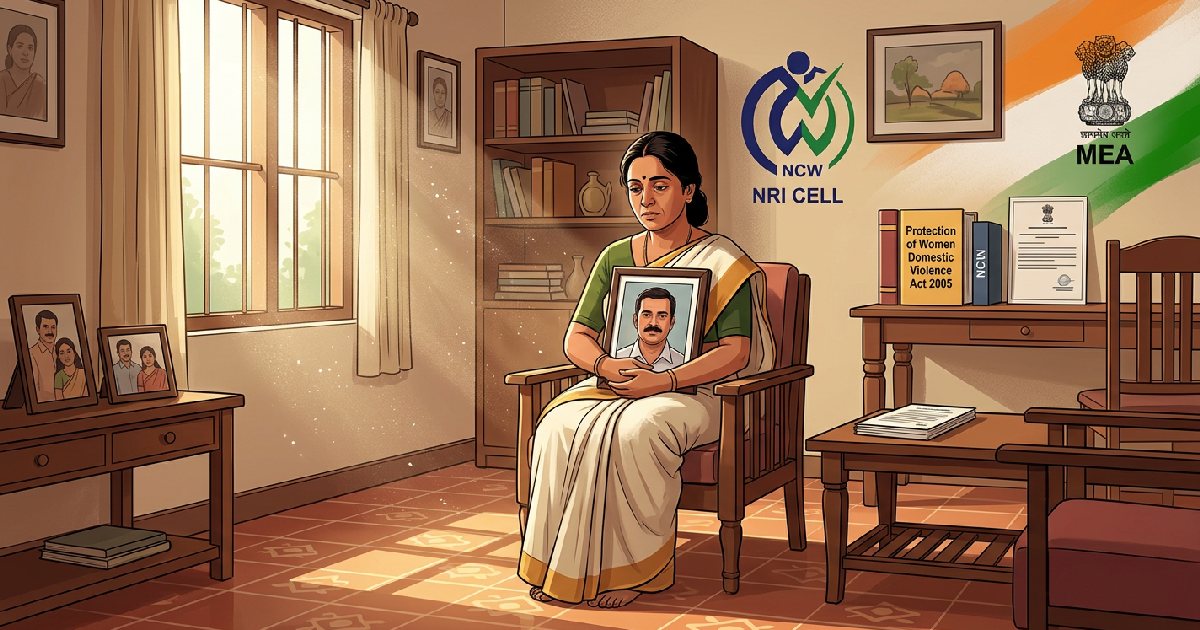
Domestic violence laws for Non-Resident Indians (NRIs) in India offer robust protections, allowing victims to seek legal remedies even if abuse occurs abroad or they reside outside India. These comprehensive legal provisions ensure that NRI women have access to justice and support, safeguarding their rights to residence, maintenance, and protection from various forms of abuse.
Recent judgments by the Kerala High Court and other judicial bodies have further reinforced these safeguards. These rulings clarify jurisdictional aspects and the scope of relief available under Indian law for affected individuals.
Key legal protections under domestic violence laws for NRIs
The primary legislative instrument addressing domestic violence in India is the Protection of Women from Domestic Violence Act, 2005, commonly known as the DV Act. This landmark legislation was enacted to provide effective protection to women who are victims of domestic violence within their homes.
The DV Act defines domestic violence broadly, encompassing not just physical abuse but also emotional, verbal, sexual, and economic abuse. This wide scope ensures that various forms of harm experienced by women are legally recognized and actionable.
For Non-Resident Indians (NRIs), the DV Act extends its protective umbrella, offering crucial legal recourse. It allows NRI women to seek justice in Indian courts, regardless of where the violence might have initially occurred.
Jurisdictional Considerations for NRIs Under DV Act
A significant aspect of domestic violence laws for NRIs in India is the extraterritorial reach of the DV Act. Indian courts can exercise jurisdiction over cases even if the acts of abuse occurred on foreign soil, a critical provision for the diaspora.
A Bombay High Court ruling on March 29, 2023, affirmed this principle, stating that the location of the offense does not matter. The court emphasized the DV Act’s nature as “social beneficial legislation,” designed to protect vulnerable women universally.
The concept of “constructive residence” further strengthens this jurisdictional stance for NRI women. The 2022 Supreme Court ruling in Prabha Tyagi v. Kamlesh Devi clarified that an aggrieved woman does not need to be physically residing with the respondents at the time of the alleged violence.
This ruling is a game-changer for those forced to flee an abusive shared home abroad and return to India for safety. It ensures that their inability to reside with the abuser does not negate their right to seek protection under Indian law.
The DV Act’s broad reach ensures that jurisdictional boundaries do not prevent victims from accessing relief in Indian courts. This is provided there is a clear connection to India through marriage, citizenship, or the presence of the respondents within the country.
Understanding Shared Household Rights for NRI Women
The concept of a “shared household” is central to the DV Act, particularly regarding a woman’s right to residence. Legal protections concerning this right have evolved significantly through various Supreme Court rulings, directly impacting NRI women.
Initially, the 2007 case of SR Batra v. Taruna Batra took a more restrictive view of what constituted a shared household. This interpretation limited a woman’s right to reside only in properties solely owned by her husband.
However, the 2021 Satish Chander Ahuja v. Sneha Ahuja judgment reversed this restrictive stance. This landmark decision granted wives the right to live in a joint household, even if it is owned exclusively by the in-laws or other family members.
This expanded definition is especially relevant for Non-Resident Indians managing complex real estate disputes while navigating marital discord. It provides crucial security against arbitrary eviction from the matrimonial home.
A recent Kerala High Court ruling in Chenthamara @ Kannan and others v. Meena further solidified these protections. The court confirmed a widow’s right to reside in her shared household even after her husband’s death, dismissing eviction attempts by in-laws.
Justice MB Snehalatha observed that the DV Act specifically combats abuse and protects a woman’s right to shelter, reinforcing the permanent residency aspect. This decision is vital for the Indian diaspora, preventing the displacement of vulnerable women from Indian properties, even if they have been residing primarily abroad.
Legal Remedies Available to Non-Resident Indian Victims
The Protection of Women from Domestic Violence Act, 2005, empowers courts to issue various orders designed to protect aggrieved women. These remedies are crucial for NRI women seeking justice and security from abuse.
The ability to pursue legal cases remotely has become an essential component of seeking justice for many facing such hurdles. The DV Act provides a structured approach to addressing different facets of domestic abuse.
Protection Orders Safeguarding NRI Women
Protection Orders are among the most immediate and vital remedies available under the DV Act. These orders prohibit the abuser from committing further acts of domestic violence, including threats or harassment.
They can also restrain the abuser from entering the victim’s workplace, school, or any other place she frequents. Such orders are critical for ensuring the physical and emotional safety of NRI women and their children.
Residence Orders Ensuring Shelter for Victims
Residence Orders, primarily under Section 19 of the DV Act, are designed to secure a woman’s right to live in her shared household. These orders prevent the abuser from evicting the aggrieved person from the matrimonial home.
A court can also direct the abuser to provide alternative accommodation of the same standard, or pay rent for it. This ensures that the woman is not left without shelter, regardless of who owns the property.
Monetary Relief for Financial Independence
Monetary Relief orders compensate the aggrieved person for expenses incurred and losses suffered due to domestic violence. This includes loss of earnings, medical expenses, and loss caused by destruction, damage, or removal of any property.
For Non-Resident Indians, economic abuse often manifests as the withholding of financial support, disposal of stridhan, or the confiscation of travel documents. These actions constitute actionable forms of economic abuse under the 2005 Act.
The Act allows for claims of maintenance and compensation to address such financial harms. This ensures victims can regain financial stability and independence.
Custody Orders for Children’s Welfare
The DV Act also provides for temporary custody orders concerning any child or children of the aggrieved person. The court can make arrangements for the custody of children, prioritizing their best interests and welfare.
These orders are crucial in situations where the safety and well-being of children are compromised due to domestic violence. They provide a legal framework for ensuring a stable environment.
Compensation Orders for Damages and Injuries
Beyond monetary relief for maintenance and expenses, the DV Act allows for Compensation Orders. These orders specifically address damages for injuries, including mental and emotional distress, caused by acts of domestic violence.
This provision acknowledges the profound psychological impact of abuse. It ensures that victims receive recompense for the non-economic suffering they endure.
Procedural Aspects for NRIs Navigating Legal Action
Initiating legal proceedings under the DV Act involves specific procedural steps, which can be particularly complex for Non-Resident Indians. Understanding these steps is crucial for effectively seeking justice in India.
An aggrieved person or a Protection Officer can file an application before a Judicial Magistrate First Class or a Metropolitan Magistrate. This application details the incidents of domestic violence and the specific reliefs sought.
For NRIs, filing a complaint can often be done through a representative or power of attorney if they cannot be physically present in India. This flexibility ensures that geographical distance does not become an insurmountable barrier to justice.
The court then issues notices to the respondents, providing them an opportunity to present their case. The process emphasizes a speedy resolution, with efforts made to dispose of applications within sixty days from the date of its first hearing.
Challenges for cross-border cases often include serving notices to respondents residing abroad and gathering evidence from different jurisdictions. Specialized legal services are often required to navigate these complexities effectively.
Government Support and Assistance Mechanisms for NRIs
Recognizing the unique challenges faced by Non-Resident Indian women, the Indian government has established several support mechanisms. These initiatives aim to provide assistance and recourse in cases of domestic violence and marital disputes.
The Ministry of External Affairs (MEA) and the National Commission for Women (NCW) play pivotal roles in this support system. They offer dedicated services to address the specific needs of the Indian diaspora.
The NCW’s NRI Cell, established in 2009, serves as a crucial coordinating agency for issues like desertion and passport confiscation. This cell acts as a single point of contact for women facing difficulties in NRI marriages.
In 2022 alone, the NCW’s NRI Cell received over 400 complaints from women seeking assistance for various issues related to NRI marriages and domestic disputes. This highlights the ongoing need for such specialized support.
The MADAD portal, launched in 2015 by the MEA, provides a digital avenue for Indian nationals to seek consular assistance for marital disputes abroad. It streamlines the process of lodging grievances and tracking their resolution.
Furthermore, the MEA offers financial and legal assistance of up to US $4,000 per case under the Indian Community Welfare Fund (ICWF). This fund helps women in distress abroad prepare legal defenses and obtain counseling in countries like the UK, USA, and Canada.
Despite these protections, many individuals still require specialized legal services to resolve disputes because of the complexities of international law. The Integrated Nodal Agency (INA) also provides a single-window solution for women deserted by NRI spouses, ensuring that domestic violence and fraudulent behavior are addressed by multiple government departments simultaneously.
| Statute / Law | Legal Nature | Specific NRI Protections |
|---|---|---|
| DV Act, 2005 | Civil | Residence orders, monetary relief, and custody |
| Section 498A IPC | Criminal | Criminalizes cruelty and dowry harassment |
| Section 125 CrPC | Maintenance | Financial support for wives and children |
| Dowry Prohibition Act | Criminal | Illegalizes giving or receiving dowry assets |
Can an NRI woman file a DV case in India if the abuse happened abroad?
Yes, Indian courts have jurisdiction over domestic violence cases involving NRIs even if the abuse occurred outside Indian territory. High Court rulings have clarified that as long as the parties are associated with India through citizenship or residence, the DV Act remains applicable.
What is a ‘residence order’ under the DV Act?
A residence order, primarily under Section 19 of the Act, prevents an abuser from evicting a woman from the shared household. It can also direct the abuser to provide alternative accommodation, ensuring the woman is not left without shelter regardless of who owns the property.
What financial assistance does the Indian government provide to NRI women?
Through the Indian Community Welfare Fund (ICWF), Indian Missions abroad can provide up to US $4,000 per case. This financial aid is specifically designated for legal counseling and the preparation of a legal defense for Indian women facing domestic crises or desertion abroad.