
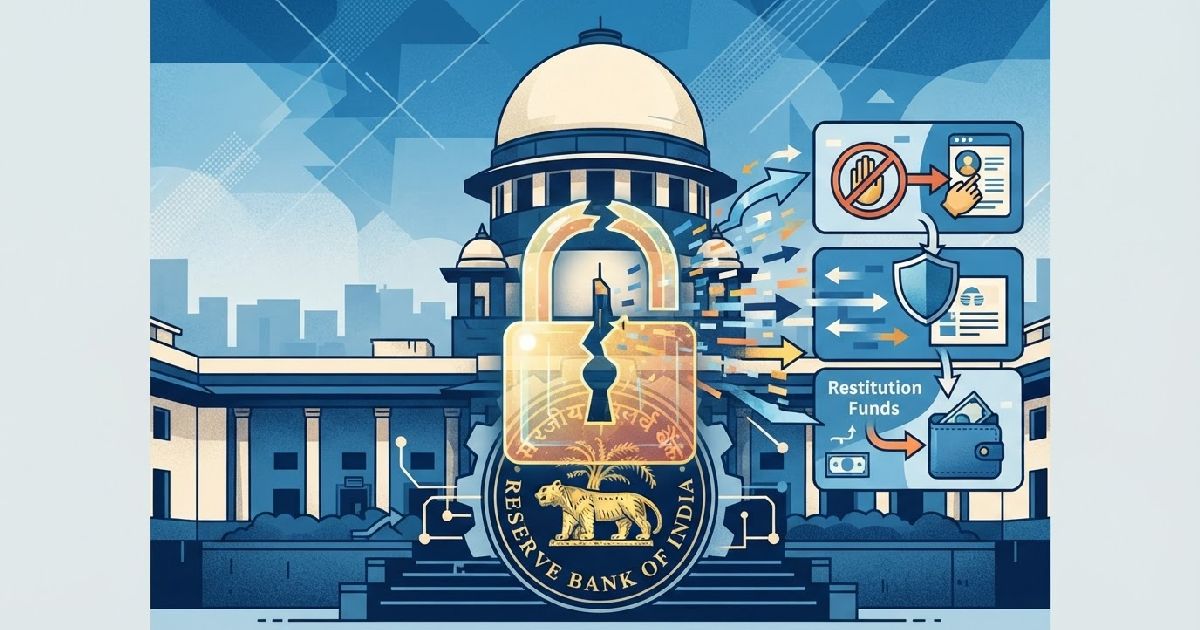
The Supreme Court of India delivered a landmark ruling on Tuesday, August 4, 2026, issuing a comprehensive set of directions to combat the escalating threat of “digital arrest” scams. This decisive intervention mandates immediate action from various authorities, including the Reserve Bank of India (RBI), state governments, and law enforcement agencies.
The directives aim to significantly bolster prevention, investigation, compensation, and grievance redressal mechanisms across the country.
The alarming rise of digital arrest scams
A bench comprising Chief Justice of India Surya Kant, Justice Joymalya Bagchi, and Justice V Mohana passed these crucial directions during suo motu proceedings concerning the widespread fraudulent practice. Their ruling came after hearing extensive arguments from Attorney General for India R Venkataramani, Solicitor General Tushar Mehta, and Amicus Curiae Senior Advocate NS Nappinai.
Digital arrest scams represent a sophisticated and pervasive form of cybercrime plaguing India. Fraudsters impersonate law enforcement officials or government agency representatives, tricking victims into believing they face imminent arrest for fabricated offenses like money laundering or drug trafficking. These scammers often use high-pressure tactics, creating a false sense of urgency and fear to coerce individuals into transferring substantial sums of money.
The scam typically unfolds with a phone or video call where the imposters present fake documents, including doctored arrest warrants or forged court orders. These documents sometimes carry counterfeit signatures of judges, adding a layer of deceptive legitimacy. Victims, often vulnerable individuals like the elderly, are then manipulated into making payments to avoid prosecution or secure their “bail.”
Staggering financial losses and psychological trauma
The financial toll of these scams has been immense. Between 2022 and 2025, India recorded a staggering 241,537 cases related to digital arrest scams, resulting in cumulative losses of ₹3,012 crore. The year 2024 alone saw Indians lose ₹1,918 crore to these fraudulent schemes, highlighting the rapid escalation of the problem.
Beyond the financial devastation, these scams inflict severe psychological trauma on victims. The National Human Rights Commission (NHRC) reported on June 10, 2026, that approximately 8% of the ₹52,976 crore lost to cyber-enabled frauds over the past six years was specifically due to “digital arrest” scams.
This underlines not just financial impact but also significant human rights violations stemming from the emotional distress and coercion involved.
Supreme Court’s comprehensive directives
The Supreme Court's decision on August 4, 2026, marks a pivotal moment in the fight against cybercrime. The bench issued 13 interim directions, designed to create a more robust and responsive ecosystem for tackling these scams. It's a proactive step, born from a suo motu case initiated in October 2025, following a complaint from a senior citizen couple defrauded of ₹1.5 crore.
Chief Justice of India Surya Kant expressed profound concern over the scale of the fraud during proceedings. “It’s shocking that almost Rs 3,000 crore has been collected from the victims,” he stated. He added that if stringent orders weren't passed, the problem would only escalate, a stark warning about the ongoing threat.
Acknowledging progress, stressing vigilance
The Court reviewed a status report from the Indian Cyber Crime Coordination Centre (I4C), noting positive developments. Money restoration has been completed in 36,290 cases, recovering an aggregate of ₹18.05 crore. This success involved 57 banks and participation from all States and Union Territories.
The Central Bureau of Investigation (CBI) has also made significant headway. The agency registered numerous digital arrest cases, identified victims through transactions in 67 first-layer bank accounts, and conducted searches at 93 locations across 16 states. Despite this progress, the bench emphasized that the existing mechanisms require “wide adoption, faster disposal and continued follow-up” to be truly effective.
New regulatory framework for financial institutions
A key aspect of the Supreme Court's directives focuses squarely on the financial sector. The Reserve Bank of India (RBI) now has a critical mandate to streamline the process of dealing with fraudulent transactions. This step is expected to create a more uniform and responsive approach to cyber-enabled financial fraud across all banking operations.
Within four weeks, the RBI must formally adopt and circulate a Standard Operating Procedure (SOP). This SOP will prescribe actions for banks, specifically concerning placing temporary debit holds on accounts linked to cyber-enabled financial fraud. It's a crucial measure to stem the flow of defrauded money before it's fully siphoned away.
RBI’s crucial role in fraud prevention and redressal
The new SOP from the RBI won't just cover immediate account freezes. It's also required to incorporate a comprehensive grievance redressal mechanism, providing victims with a clear path to report and resolve issues. Furthermore, a dedicated money restoration module will be established, offering a structured way to retrieve lost funds.
Public awareness measures regarding both these modules are also a mandatory part of the RBI's directive. The Supreme Court also instructed the Registrars General of all High Courts to inform their respective courts and adjudicating authorities about this new grievance redressal mechanism. This encourages aggrieved persons to use this channel first when dealing with frozen bank accounts.
Strengthening state-level cybercrime coordination
The Supreme Court recognized that effective combat against digital arrest scams requires strong coordination at the state level. They've issued clear directives to all States and Union Territories to enhance their operational capabilities in this regard. This move aims to standardize and accelerate the response to cybercrime incidents nationwide.
Within four weeks, all States and Union Territories must notify and operationalize their State Cyber Crime Coordination Centres. This ensures a dedicated hub for managing cybercrime incidents. Additionally, they are directed to adopt the e-Zero FIR mechanism in consultation with the I4C, with the Ministry of Home Affairs (MHA) providing necessary assistance.
This mechanism allows FIRs to be filed irrespective of jurisdiction, speeding up initial investigations.
Expeditious disposal and public awareness
The directives also push for faster handling of cases. Authorities must ensure expeditious disposal of matters related to freezing bank accounts that arise from cyber-enabled financial frauds. Delays in this area often allow fraudsters more time to move stolen funds, making rapid action essential for recovery.
The inter-departmental committee has been tasked with issuing advisories to all States, Union Territories, Ministries, and government departments. These advisories will focus on extensive public awareness programs covering cybercrime prevention, digital arrest scams, and the grievance redressal and money restoration modules.
They'll also inform the public about the MHA's SOP regarding the custody and restoration of defrauded money. This broad educational effort is crucial for empowering citizens against these sophisticated threats.
Victim protection and compensation framework
A significant focus of the Supreme Court's ruling is on enhancing victim protection. The current landscape often leaves victims struggling to recover their losses, even when the perpetrators are identified. The Court wants a more equitable and systematic approach to recompense. This aligns with the broader goal of making victims whole again.
The inter-departmental committee has been directed to examine a proposal for introducing a shared liability and victim compensation framework. This framework would address how losses are distributed and how victims can be adequately compensated for financial damages incurred due to digital arrest scams. Such a system could provide a much-needed safety net for those who fall prey to these frauds.
Legal aid and proactive public initiatives
Legal Services Committees across the country are now mandated to formulate schemes for public awareness. These initiatives will focus on preventing digital arrest scams, general cybercrime awareness, cybersecurity best practices, and the mechanisms available for recovering defrauded amounts. Education remains a powerful tool in preventing future victimization.
The inclusion of legal services bodies ensures that vulnerable populations, who might otherwise lack access to information or legal recourse, receive crucial support. They're meant to provide concrete information on how to navigate the complex process of reporting and recovering from cyber fraud. This proactive approach helps victims understand their rights and available pathways for restitution.
Revisiting CBI investigation thresholds
The Supreme Court has also turned its attention to the Central Bureau of Investigation (CBI) and its capacity to pursue cyber fraud cases. Currently, the CBI has a monetary threshold for taking over investigations, which can sometimes leave smaller, yet equally devastating, frauds unaddressed by the central agency. This is a critical consideration given the cumulative impact of numerous smaller scams.
The inter-departmental committee has been specifically instructed to examine a proposal for reducing this existing monetary threshold for CBI intervention in cyber fraud cases. This could allow the CBI to investigate a broader range of incidents, particularly those that involve sophisticated, organized networks where individual losses might be lower but the collective impact is high.
They are also asked to consider whether cases involving the same organised network could be aggregated to satisfy the prescribed threshold for CBI intervention, a move that could significantly enhance the agency's ability to dismantle large-scale fraud operations.
The aggregation challenge in criminal cases
Aggregating cases is particularly important in cybercrime, where individual victims may lose relatively small amounts, but the total stolen by a criminal network is vast. By lowering the threshold or allowing aggregation, the Court aims to ensure that organized cyber fraud networks don't escape central investigation simply because their crimes are distributed among many victims.
This strategic shift could significantly impact how high-value, complex criminal cases are pursued. It underscores a recognition that the nature of cybercrime often demands a different investigative approach.
Future of telecom services and fraud prevention
The Court's directives extend beyond banking and law enforcement, reaching into the realm of telecommunications. Many digital arrest scams rely heavily on voice and video calls to impersonate officials and pressure victims. Addressing this vector is crucial for comprehensive prevention.
The Ministry of Electronics and Information Technology (MeitY), the Department of Telecommunications (DoT), and the Indian Cyber Crime Coordination Centre (I4C) have been given a specific task.
They are directed to examine the feasibility of introducing time-based restrictions on telecom services for audio and video calls. This could involve limits on call durations or other measures designed to disrupt the prolonged, high-pressure interactions that scammers exploit.
These authorities must now prepare a brief note for the Court, outlining the proposal's feasibility, utility, and any possible alternatives. This forward-looking approach seeks to address the technological enablers of these frauds.
The path ahead for cybercrime combat
The Supreme Court's August 4, 2026, ruling is a powerful signal that India is intensifying its battle against cybercrime. It moves beyond mere prosecution to encompass proactive prevention, rapid response, and victim support. The directives create a multi-pronged strategy that involves regulatory bodies, law enforcement, and public outreach.
These measures are vital given the evolving nature of cyber threats and the increasing sophistication of fraudsters. By mandating a coordinated effort across various government departments and financial institutions, the Court aims to create a more resilient system. The matter is set for further consideration in September, indicating ongoing judicial oversight and a commitment to sustained action.
Ultimately, the success of these directives will depend on the diligent implementation by all stakeholders. The integrated approach, spanning from banking SOPs to public awareness campaigns, is designed to protect citizens and ensure justice for those affected by these malicious digital arrest scams. Moreover, promoting secure financial transactions remains paramount.
Digital arrest scam impact data
The widespread nature and severe financial repercussions of digital arrest scams are clear from the latest statistics. These figures underscore the urgency of the Supreme Court's recent directives.
| Metric | Period | Value (approx.) |
|---|---|---|
| Total Digital Arrest Scam Cases | 2022-2025 | 241,537 |
| Total Amount Lost to Digital Arrest Scams | 2022-2025 | ₹3,012 crore |
| Amount Lost in 2024 (Digital Arrest Scams) | 2024 | ₹1,918 crore |
| Money Restored in Digital Arrest Cases | To date (Aug 2026) | ₹18.05 crore |
| Cases with Money Restored | To date (Aug 2026) | 36,290 |
| Percentage of Total Cyber Fraud Linked to Digital Arrest | Past six years | 8% |
What are digital arrest scams?
Digital arrest scams involve fraudsters impersonating law enforcement or government officials, falsely accusing victims of crimes, and threatening arrest. They then coerce individuals into transferring money under the guise of bail, legal fees, or to avoid prosecution, often using fake documents and high-pressure tactics.
What specific actions has the Supreme Court mandated for banks?
The Supreme Court has directed the Reserve Bank of India (RBI) to establish and circulate a Standard Operating Procedure (SOP) within four weeks. This SOP will guide banks on placing temporary debit holds on fraudulent accounts, implementing grievance redressal and money restoration modules, and launching public awareness campaigns.
How will victims of digital arrest scams be compensated?
The Supreme Court has instructed an inter-departmental committee to thoroughly examine a proposal for a shared liability and victim compensation framework. This framework aims to ensure that victims receive appropriate financial recompense for their losses incurred due to these scams, providing a more structured and equitable system for recovery.