
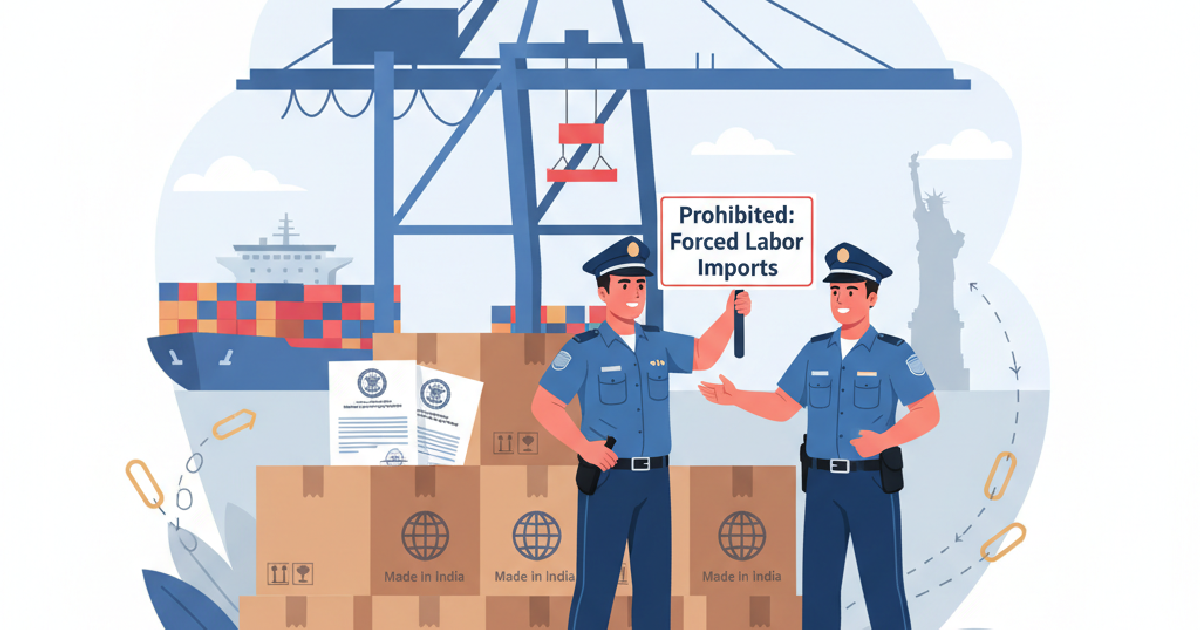
India has officially prohibited the import of goods produced using forced labor, a significant policy shift announced by the Directorate General of Foreign Trade (DGFT) on July 13, 2026.
This decisive action directly amends the nation’s Foreign Trade Policy (FTP) 2023, coming as the United States conducts a Section 301 investigation into forced labor practices across 60 economies, including India, which could lead to significant tariffs.
New Delhi tightens rules on forced labor imports
This move underscores New Delhi’s escalating commitment to ethical sourcing and aims to safeguard its international trade standing. It’s a proactive step designed to align India with global human rights standards while simultaneously addressing critical concerns from key trading partners.
The DGFT’s recent notification explicitly bans products manufactured, either wholly or in part, through the use of forced labor. This change marks a clear commitment from the Indian government to integrate stringent ethical considerations into its commercial regulations.
These new provisions will become effective 30 days after their official publication in the gazette. This grace period allows businesses across India to adjust their supply chain operations and ensure full compliance with the updated trade rules.
The Central Government holds substantial authority to prohibit the import of specific goods, a power likely to be exercised following detailed inquiry findings. This ensures a targeted approach to enforcement, focusing on sectors or products most susceptible to exploitative labor practices.
US investigation looms over Indian trade policy
This policy adjustment arrives amidst an ongoing U.S. Section 301 investigation, scrutinizing forced labor practices across 60 different economies. India is one of the countries under review, facing the prospect of significant tariffs if it fails to demonstrate adequate measures against forced labor.
New Delhi’s swift action could very well be a strategic effort to preempt potential trade penalties from Washington. By taking a definitive stance now, India aims to signal its commitment to eliminating such practices and protecting its crucial trade relations.
What this actually means for Indian exporters is clear: the ethical provenance of their goods has become an immediate economic imperative. This isn’t just about moral high ground; it’s about maintaining market access and avoiding costly trade barriers in vital markets like the US.
Global pressure reshapes supply chain ethics
The U.S. investigation has highlighted significant concerns over human rights in manufacturing and agriculture globally. This has put international companies under increased pressure to ensure their supply chains are clean.
India’s new ban underscores the widening impact of these international efforts on national trade policies worldwide. It reflects a growing consensus that ethical conduct is an integral part of sustainable global commerce.
This evolving landscape also creates new compliance requirements for businesses. Firms will need to develop robust due diligence processes to verify labor conditions at every stage of production, both domestically and internationally.
Compliance challenges and economic opportunities
The ban will undoubtedly introduce new complexities for Indian businesses involved in international trade. Exporters and manufacturers will now face heightened scrutiny to ensure their entire supply chain, from raw materials to finished products, is free from forced labor.
This increased oversight could lead to higher compliance costs and the need for more robust auditing mechanisms. However, it also presents an opportunity for Indian companies to enhance their ethical credentials and appeal to global consumers demanding socially responsible products.
Adopting these stricter ethical guidelines could improve India’s standing in the international community and attract investment from socially conscious entities. It reinforces the nation’s commitment to human rights within its vast manufacturing and export sectors.
Navigating new trade verification requirements
The practical implementation of this ban will require significant changes in how Indian businesses manage their sourcing. They’ll need to develop robust due diligence processes to verify labor conditions at every stage of production.
This includes working closely with suppliers, potentially implementing third-party audits, and investing in traceability technologies. Firms that proactively adapt stand to gain a competitive advantage in a market increasingly valuing ethical production.
India’s move sends a clear message about the increasing importance of ethical sourcing in international trade. Other nations currently under U.S. scrutiny may well consider similar policy changes to avoid economic repercussions.
The path ahead for India’s trade landscape
The enforcement of this ban will present its own challenges, particularly in verifying labor practices deep within complex global supply chains. Effective implementation will require robust monitoring systems and cooperation across various governmental and private sectors.
Ultimately, this ban contributes to a broader global shift towards greater transparency and accountability in manufacturing. It signals a future where adherence to human rights standards is becoming an indispensable component of international trade policy.
This comprehensive approach by New Delhi aims to solidify India’s position as a responsible global trading partner. It’s a balancing act between protecting national economic interests and upholding human rights principles on the world stage.