
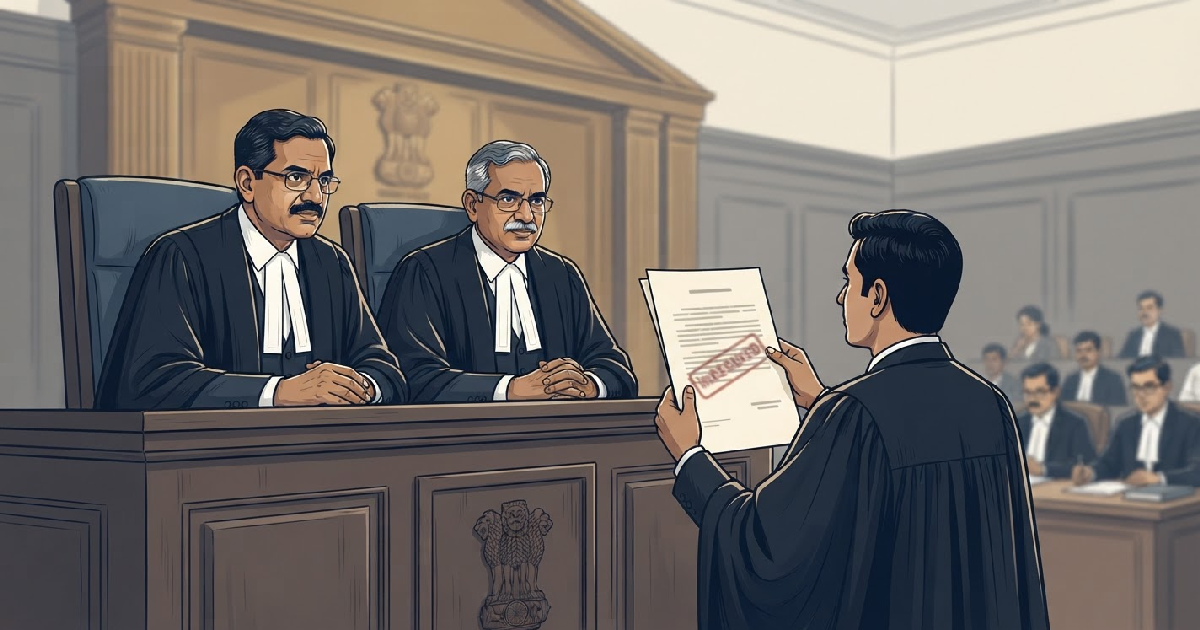
New Delhi, India – The Supreme Court of India on Thursday, July 23, 2026, delivered a critical judgment clarifying when inadequate communication of arrest grounds might invalidate an arrest. A bench comprising Justice M.M. Sundresh and Justice P.B. Varale ruled that while a complete failure to provide grounds would vitiate an arrest, mere inadequacy requires the accused to prove prejudice.
This significant distinction led the Court to revoke the bail granted to Sonam Raghuvanshi, the prime accused in the high-profile Meghalaya honeymoon murder case. The Court’s decision overturns previous rulings by the Meghalaya High Court and a lower Trial Court, which had erroneously granted Raghuvanshi bail citing invalid grounds of arrest, a move that has substantial implications for criminal procedure across India.
When are grounds of arrest considered inadequate?
The Supreme Court meticulously drew a sharp line between two distinct scenarios. On one hand, a total absence of communicated grounds for an arrest would undoubtedly render that arrest invalid, representing a fundamental breach of constitutional rights. On the other, if grounds are indeed provided, but are later deemed inadequate or contain errors, the Court emphasized that the burden of proof shifts significantly.
In such instances, the accused must demonstrate that this inadequacy caused them actual prejudice during their detention or legal proceedings. This nuanced approach moves beyond mere technicalities, focusing instead on the tangible impact on the accused’s rights. It forces a more rigorous examination of the circumstances surrounding the communication of arrest reasons.
The crucial distinction: non-service versus inadequacy
The Court articulated its position clearly. “It is not as if the respondent was not served with the grounds of arrest,” the bench observed. “There is a difference between non-service of grounds of arrest and not giving adequate reasons for arrest. While the first category would vitiate the arrest, in the second, one has to see the prejudice.”
This statement underscores the careful interpretation the highest court is introducing into arrest procedures. It means that simply pointing out a flaw in the documentation won’t be enough; one must also show how that flaw actually harmed the individual’s ability to understand their situation or defend themselves.
The Meghalaya High Court’s initial error
The legal journey that brought this matter to the Supreme Court began with the Meghalaya High Court, which had upheld a Trial Court’s decision to grant Sonam Raghuvanshi bail. The lower courts based their decision on a critical error found in her arrest documents. These papers incorrectly cited Section 403(1) of the Bharatiya Nyaya Sanhita (BNS), a non-existent provision, instead of the correct Section 103(1).
Both lower courts viewed this discrepancy as sufficient reason to invalidate Raghuvanshi’s arrest and, consequently, to grant her bail. However, the Supreme Court disagreed with this interpretation. They characterized the situation as a case concerning the adequacy of reasons provided, rather than a complete failure to serve grounds of arrest. This distinction proved pivotal in overturning the lower court judgments.
The Sonam Raghuvanshi Case Revisited
The Supreme Court’s ruling directly impacts the particularly gruesome Meghalaya honeymoon murder case, where Sonam Raghuvanshi is the prime accused. She stands accused of orchestrating the murder of her husband, Raja Raghuvanshi, a case that has gripped national attention. Their story began in May 2025, when they married in Indore, Madhya Pradesh, and subsequently travelled to Meghalaya for their honeymoon.
However, what should have been a joyous occasion turned tragic. On May 23, 2025, after checking out of a homestay in Nongriat village, the couple disappeared, their phones subsequently becoming unreachable. The disappearance triggered a search that led to a horrifying discovery.
The tragic Meghalaya honeymoon murder background
Raja Raghuvanshi’s decomposed body was later discovered on June 2, 2025, in a gorge near Wei Sawdong Falls, approximately 20 kilometres from where the couple was last seen. Meghalaya Police arrested Sonam Raghuvanshi on June 9, 2025, in Ghazipur, Uttar Pradesh, after she reportedly remained untraceable following her husband’s death.
Investigators allege she conspired with her purported lover, Raj Singh Kushwaha, and three hired assailants to murder her husband.
The alleged motive was financial gain, with the intent to stage the murder as a robbery gone wrong. This intricate plot led to a comprehensive investigation. A substantial 790-page chargesheet was subsequently filed on September 6, 2025, in the court of the Judicial Magistrate first class, Sohra Sub-Division.
Sonam Raghuvanshi and others were charged under various sections of the Bharatiya Nyaya Sanhita, including 103(I) for murder, 238(a) for disappearance of evidence of offence, and 61(2) for criminal conspiracy.
Raghuvanshi’s legal journey: prior bail rejections and acknowledgments
Before the Supreme Court’s latest intervention, Sonam Raghuvanshi had made three previous attempts to secure bail. All these applications were rejected on merits by the trial court, indicating that the courts had found sufficient grounds to keep her in custody based on the evidence.
It was her fourth bail application where the issue of “invalid grounds of arrest” was successfully raised at the lower courts, leading to her temporary release.
Crucially, the Supreme Court highlighted that Raghuvanshi had previously expressed satisfaction with the reasons provided for her arrest. This past acknowledgment significantly undermined her later claim of prejudice due to inadequate information, forming a key part of the Court’s reasoning in overturning her bail. The solicitor general for the state would later argue that the section citation was a mere typographical error.
Key Case Milestones
| Event | Date | Location / Detail |
|---|---|---|
| Raja and Sonam Raghuvanshi married | May 11, 2025 | Indore, Madhya Pradesh |
| Couple departed for honeymoon | May 20, 2025 | Meghalaya |
| Last seen, checked out of homestay | May 23, 2025 | Nongriat village, Meghalaya |
| Raja Raghuvanshi’s body discovered | June 2, 2025 | Wei Sawdong Falls, Sohra |
| Sonam Raghuvanshi arrested | June 9, 2025 | Ghazipur, Uttar Pradesh |
| Chargesheet filed | September 6, 2025 | Judicial Magistrate, Sohra Sub-Division |
Precedent and the Prospective Principle
This latest judgment from the Supreme Court operates within the shadow of another significant and recent ruling: the November 6, 2025, decision in the case of Mihir Rajesh Shah v. State of Maharashtra and Another. That landmark judgment fundamentally reshaped the understanding of the right to be informed of arrest grounds, making it a mandatory written requirement.
In Mihir Rajesh Shah, a bench led by Chief Justice B.R. Gavai and Justice A.G.
Masih unequivocally declared that failure to provide written grounds of arrest, in a language the arrestee understands, violates fundamental constitutional rights under Articles 21 (Protection of Life and Personal Liberty) and 22(1) (Protection against arrest and detention in certain cases) of the Indian Constitution.
This precedent significantly broadened the scope of these protections, extending the requirement of written grounds to all offenses, including those previously governed by the Indian Penal Code and now under the new Bharatiya Nyaya Sanhita.
The crucial timeline: why Mihir Rajesh Shah didn’t apply
The Mihir Rajesh Shah judgment stipulated severe consequences for non-compliance, stating that an arrest and subsequent remand would be illegal if written grounds weren’t furnished at least two hours before production before a magistrate. This would entitle the individual to immediate release. However, a critical caveat to that ruling was its prospective application, meaning it would only apply to arrests made after its pronouncement.
Since Sonam Raghuvanshi was arrested on June 9, 2025, several months before the November 2025 judgment was delivered, the present Court noted that the Mihir Rajesh Shah decision did not directly apply to her case. This temporal distinction was crucial.
It meant Raghuvanshi could not retroactively claim the stricter protections introduced by the *Mihir Rajesh Shah* ruling, allowing the Court to consider her case under the previously understood legal framework regarding adequacy of communication.
India’s Evolving Criminal Justice Framework
India’s constitutional framework provides robust safeguards for its citizens, particularly concerning personal liberty. Article 22(1) of the Constitution stands as a cornerstone against arbitrary detention. It mandates that no person arrested shall be detained in custody without being informed, as soon as may be, of the grounds for such arrest.
This fundamental right ensures transparency and allows the arrested person to seek legal counsel and adequately prepare their defense, preventing detention based on vague or undisclosed reasons.
This provision has been consistently interpreted by the Supreme Court to ensure that individuals are not held without understanding the charges against them. It is a critical check on state power, designed to protect individual freedoms at the initial stage of deprivation of liberty.
The Bharatiya Nyaya Sanhita’s new paradigm
The legal landscape in India underwent a monumental shift with the introduction of the Bharatiya Nyaya Sanhita (BNS), which became effective on July 1, 2024. This new legislation replaced the archaic, colonial-era Indian Penal Code (IPC) of 1860, marking a significant step towards modernizing the nation’s criminal justice system.
The BNS was enacted alongside the Bharatiya Nagarik Suraksha Sanhita (BNSS), which replaced the Code of Criminal Procedure (CrPC), 1973, and the Bharatiya Sakshya Adhiniyam (BSA), replacing the Indian Evidence Act of 1872.
Together, this new legal trifecta aims to streamline processes, enhance efficiency, and better align criminal law with contemporary notions of justice and inclusivity. In Sonam Raghuvanshi’s case, the specific error involved Section 403(1) of the BNS being cited instead of Section 103(1).
Section 103(1) of the BNS specifically pertains to the punishment for murder, serving as the direct equivalent to the former Section 302 of the IPC. The reference to a non-existent section highlights a procedural slip, but one that the Supreme Court now deems insufficient, on its own, to invalidate an arrest unless demonstrable prejudice occurred.
Practical Implications for Legal Practice
The Supreme Court’s latest pronouncement carries significant weight for both investigating agencies and legal practitioners across the country. For law enforcement, it clarifies that minor procedural lapses or technical errors in communicating arrest grounds won’t necessarily derail an investigation or lead to an automatic release of an accused.
This provides agencies with some operational leeway, as long as the intent to inform is clearly present and no significant, demonstrable harm comes to the accused.
Police forces will still need to ensure their documentation is as precise as possible, but this ruling offers a measure of protection against purely technical challenges. It reduces the risk of serious cases collapsing due to minor bureaucratic mistakes, shifting the focus towards the substantive question of whether an accused was truly deprived of their constitutional right to know why they were being arrested.
Reshaping defense strategies and police diligence
For defense lawyers, this ruling necessitates a recalibration of strategy. Simply identifying an error in the grounds of arrest might no longer be a guaranteed path to bail or quashing an arrest. Instead, counsel will need to meticulously demonstrate how such an inadequacy specifically prejudiced their client.
This means providing concrete evidence of how the error hampered the accused’s ability to understand the charges, communicate with legal counsel, or prepare their defense. It elevates the standard for challenging procedural defects, moving it from a technicality to a matter of substantive impact on rights.
The emphasis on “prejudice” places a heavier burden on the defense to prove actual harm, rather than relying on the mere existence of a mistake. This could lead to more robust arguments from the defense side, focusing on the real-world consequences of procedural flaws rather than their theoretical existence.
Conversely, it will require police and prosecutors to be more thorough, understanding that while minor errors might not vitiate an arrest, consistent sloppiness could still be challenged effectively by demonstrating cumulative prejudice.
The re-arrest clause: ensuring investigation continuity
Adding another layer to its pronouncement, the Court underscored that even if there is non-compliance with the requirement of communicating grounds of arrest, such a defect would not prevent the investigating agency from effecting a fresh arrest for the purposes of investigation. “Law does not restrain the investigating agency from re-arresting a person,” the Court observed.
“In other words, non-compliance with the requirement of serving the grounds of arrest will not act as a fetter to re-arrest for the purpose of investigation.” This statement is a powerful affirmation of the state’s power to pursue justice, even when initial procedural missteps occur.
It suggests that while constitutional rights remain paramount, they must be balanced against the practicalities of law enforcement and crime investigation. This clause reassures police that a technical error won’t lead to a permanent block on their ability to investigate a crime, provided they can rectify the procedural deficiency.
The Path Forward for Sonam Raghuvanshi
With her bail definitively revoked, Sonam Raghuvanshi now faces a mandated return to custody. The Supreme Court has given her a period of three weeks to surrender, providing a brief window for her to prepare for her re-detention. However, the Court also built in a significant safeguard, balancing the need for justice with the accused’s right to a speedy trial.
If her trial does not proceed and conclude within six months from the date of the Supreme Court’s order, Raghuvanshi will be at liberty to file a fresh bail application. This condition aims to prevent indefinite pre-trial detention, ensuring that while she faces trial, she is not unduly penalized by lengthy judicial processes.
Surrender directive and trial commencement
Solicitor General Tushar Mehta, representing the State of Meghalaya, had argued vigorously that Raghuvanshi had been duly informed of her arrest grounds and had acknowledged them before the Magistrate. He dismissed the erroneous section citation as a mere typographical error, contending it didn’t hinder her understanding of the charges.
The Supreme Court’s decision clearly supports the prosecution’s stance, indicating that the core issue was not a lack of information, but rather a technical defect that did not impede Raghuvanshi’s comprehension or ability to defend herself, especially given her prior acceptance of the reasons.
The Court explicitly rejected Raghuvanshi’s claim to bail “not only on merits but also on the grounds discussed by both the courts.” It emphasized that her earlier bail applications had been rejected on substantive grounds, and the trial has already commenced. Continued enlargement at this stage, the Court noted, “might hinder the ongoing trial,” solidifying its decision to set aside the High Court’s order.
Conditional fresh bail opportunity
The provision allowing Sonam Raghuvanshi to seek fresh bail if her trial doesn’t conclude within six months is a critical aspect of the Supreme Court’s ruling. It reflects a judicial recognition of the principle that while an accused must face justice, their liberty cannot be indefinitely suspended due to systemic delays.
This condition places an implicit deadline on the trial process, pushing for its expeditious conclusion.
It also clarifies that the rejection of her current bail, or her previous bail applications, will not prejudice any future application she might make under this specific condition. This offers a pathway for Raghuvanshi to potentially regain her liberty if the trial, for whatever reason, drags on beyond the stipulated timeframe.
This nuanced approach highlights the Supreme Court’s commitment to balancing the rights of the accused with the demands of an effective justice system.
What is the key distinction the Supreme Court made regarding grounds of arrest?
The Supreme Court distinguished between a complete non-service of grounds of arrest, which would invalidate an arrest, and an inadequate communication of reasons for arrest. In the latter case, the arrest is not automatically vitiated; instead, the accused must demonstrate that they suffered prejudice due to the inadequacy.
Why was Sonam Raghuvanshi’s bail revoked by the Supreme Court?
Sonam Raghuvanshi’s bail was revoked because the Supreme Court found that the error in her arrest documents (citing a non-existent section) constituted inadequate communication, not a complete non-service. Since she had previously expressed satisfaction with the reasons for her arrest and couldn’t prove prejudice, the lower courts erred in granting her bail on those grounds.
What is the significance of the Mihir Rajesh Shah judgment in this context?
The Mihir Rajesh Shah v. State of Maharashtra judgment, delivered on November 6, 2025, made the provision of written grounds of arrest mandatory for all offenses. However, this judgment was applied prospectively. As Sonam Raghuvanshi was arrested on June 9, 2025, before this judgment was delivered, its stricter requirements did not directly apply to her case.