
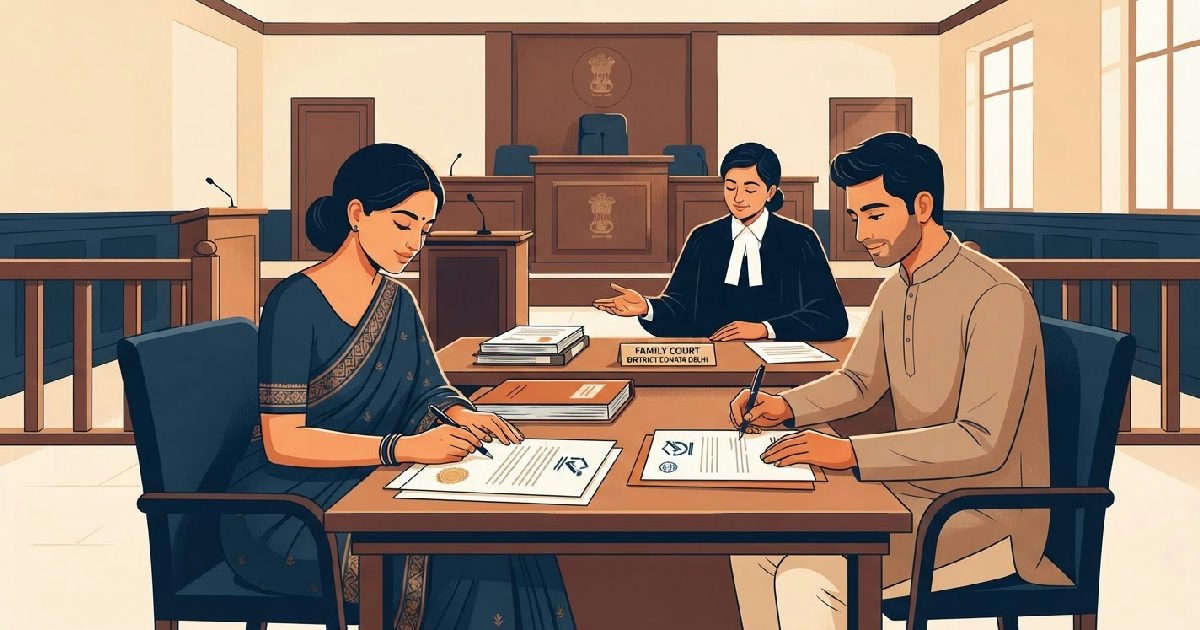
In a significant clarification for matrimonial disputes, Delhi courts consistently uphold that domestic violence (DV) complaints and divorce petitions can proceed simultaneously. This legal stance acknowledges the distinct nature and purpose of each legal remedy, allowing spouses to pursue both protection and marital dissolution without one case impeding the other.
The parallel operation of these cases means individuals in Delhi navigating marital discord often find themselves engaged in proceedings before both a Metropolitan Magistrate and a Family Court.
Distinct Legal Paths, Concurrent Remedies in Delhi: Domestic Violence Case and a Divorce Petition Running Together
This concurrent processing is vital for ensuring aggrieved parties receive timely relief under the Protection of Women from Domestic Violence Act, 2005 (PWDVA), while also pursuing long-term marital dissolution under personal laws like the Hindu Marriage Act, 1955. Courts have established clear guidelines to manage potential overlaps, particularly concerning financial maintenance, ensuring fairness and preventing double payments.
The legal landscape in Delhi permits spouses to pursue domestic violence complaints and divorce petitions concurrently, recognizing them as separate legal avenues designed for different objectives. This dual approach ensures that urgent protective measures and long-term marital dissolution can be sought without unnecessary delay or legal conflict.
It reflects a nuanced understanding of the complexities inherent in marital breakdowns, where immediate safety concerns often coexist with the desire to end a marriage.
Crucially, the filing of a divorce petition does not automatically stay or preclude a domestic violence complaint, and vice versa. Legal experts emphasize that parties must actively pursue both cases. Ignoring one on the assumption that the “main” case will resolve everything can lead to adverse outcomes, such as ex-parte orders or dismissal due to non-appearance.
Jurisdiction and primary objectives of each case
Each type of case operates under different statutes and jurisdictions. A divorce petition, typically initiated under Section 13 of the Hindu Marriage Act, 1955, aims for the dissolution of the marital bond and is heard exclusively by the Family Court. Its focus remains on the legal grounds for divorce, such as cruelty, desertion, or adultery, culminating in a decree of divorce or judicial separation.
Conversely, a domestic violence complaint, lodged under Section 12 of the PWDVA, 2005, seeks immediate civil relief for aggrieved women. These complaints are adjudicated by a Metropolitan Magistrate or Judicial Magistrate.
The PWDVA is designed as welfare legislation, offering protection orders, residence orders, monetary relief, temporary child custody, and compensation, often with a focus on urgent intervention. The legislation ensures that victims of domestic abuse can secure immediate safeguards.
| Legal Remedy | Governing Act | Primary Court | Main Objective |
|---|---|---|---|
| Divorce Petition | Hindu Marriage Act, 1955 (e.g.) | Family Court | Dissolution of marital bond |
| DV Complaint | Protection of Women from DV Act, 2005 | Metropolitan Magistrate | Immediate civil relief, protection orders, monetary relief |
| Maintenance Claim (CrPC) | Criminal Procedure Code (CrPC) | Magistrate Court / Family Court | Provide financial support to dependent spouse/children |
No automatic stay or precedence for either proceeding
One of the most critical aspects of these concurrent proceedings is that neither case holds automatic precedence over the other, nor does the filing of one act as a stay on the other. This means both the Family Court and the Magistrate’s Court can continue hearing their respective matters simultaneously.
Legal practitioners advise clients to diligently attend all scheduled hearings for both cases, ensuring compliance with court directives and timely presentation of evidence.
Section 26 of the DV Act further underscores this concurrency. It explicitly allows reliefs available under the DV Act – such as protection, residence, and monetary orders – to be sought in any ongoing legal proceeding before a civil court, family court, or criminal court. This provision facilitates a comprehensive approach, enabling courts to address multiple aspects of a dispute within existing frameworks.
This integrated approach allows courts to issue appropriate orders even within a divorce case. For instance, a Family Court handling a divorce petition might also grant an interim residence order if evidence of domestic violence is presented, leveraging the provisions of the PWDVA. For a deeper understanding of how these cases intertwine, consider reading about divorce and a domestic violence case together.
Navigating Maintenance Claims Across Multiple Laws
Maintenance is a common thread across matrimonial disputes, yet it can be claimed under various legal provisions, leading to potential complexities when both a divorce petition and a domestic violence complaint are ongoing.
The legal system in Delhi aims to ensure fair provision for spouses while preventing the respondent from being unfairly burdened with multiple payments for the same purpose. This requires careful consideration of the different statutes that allow for maintenance claims.
Claiming maintenance is possible under several laws, including Section 125 of the Criminal Procedure Code (CrPC), Sections 24 and 25 of the Hindu Marriage Act, 1955, and the Domestic Violence Act, 2005. Each act serves a slightly different context but aims to provide financial support to the economically dependent spouse.
The DV Act, in particular, offers a broader scope for monetary relief, encompassing medical expenses, loss of earnings, and property damage, alongside general maintenance.
Avoiding double payments: The Rajnesh v. Neha guidelines
To address the issue of potential double maintenance payments, the Supreme Court of India issued landmark guidelines in the 2020 case of Rajnesh v. Neha. This ruling mandates that both parties in a maintenance dispute file a detailed Affidavit of Assets and Liabilities.
This affidavit provides a transparent view of each party’s financial standing, income, and expenses, enabling courts to make informed decisions about maintenance awards.
The core principle established by the Supreme Court is that any financial maintenance awarded in one proceeding must be adjusted against awards in other concurrent proceedings. This prevents a husband, or indeed any respondent, from paying the same maintenance amount multiple times for the same objective. The goal is equitable relief, not punitive financial burdens.
Courts now meticulously review these affidavits to prevent such overlaps, ensuring that the final maintenance amount is just and reasonable across all legal avenues.
Delhi High Court rulings on interim maintenance
The Delhi High Court has further refined the application of maintenance laws through various pronouncements. A key clarification from the High Court is that interim maintenance should be granted from the date of filing the application, not from the date of separation.
This ensures that the applicant is compensated for the period during which the legal process unfolds, addressing immediate financial needs more effectively. This ruling provides crucial relief to applicants who might otherwise face prolonged financial hardship during litigation.
Furthermore, the Delhi High Court has affirmed that the DV Act does not differentiate between a first or subsequent marriage when determining entitlement to maintenance.
Once a man voluntarily enters into a marriage and accepts his partner, along with any children she may have, he cannot later use his marital history as a defense to avoid his statutory obligations. In one notable instance, the Delhi High Court upheld a trial court’s order directing a man to pay Rs.
1 lakh monthly maintenance to his wife, reinforcing the principle of equal financial responsibility regardless of marital order. Understanding the nuances of these financial claims is crucial; for more on this topic, refer to maintenance from the date of application.
DV Orders and the Cruelty Ground in Divorce
While domestic violence orders and divorce petitions can run concurrently, it
Can a domestic violence case and a divorce case run simultaneously?
Yes, Delhi courts consistently affirm that domestic violence complaints and divorce petitions can proceed concurrently. They are distinct legal remedies with different objectives, allowing both protective measures and marital dissolution to be sought without one impeding the other.
What is the main difference between a divorce petition and a DV complaint?
A divorce petition, typically heard by a Family Court, aims for the dissolution of the marital bond based on grounds like cruelty or desertion. A DV complaint, heard by a Metropolitan Magistrate, seeks immediate civil relief for aggrieved women under the PWDVA, offering protection orders, residence orders, and monetary relief.
How do courts prevent double payments for maintenance when both cases are active?
The Supreme Court’s guidelines in Rajnesh v. Neha (2020) mandate that parties file a detailed Affidavit of Assets and Liabilities. Any maintenance awarded in one proceeding must be adjusted against awards in other concurrent proceedings, ensuring equitable relief and preventing respondents from paying the same maintenance multiple times.
Both a DV case and a divorce are open in Delhi? Call or Whatsapp for consultation.
Related: https://arpitmarwah.com/matrimonial-lawyers-in-delhi/