
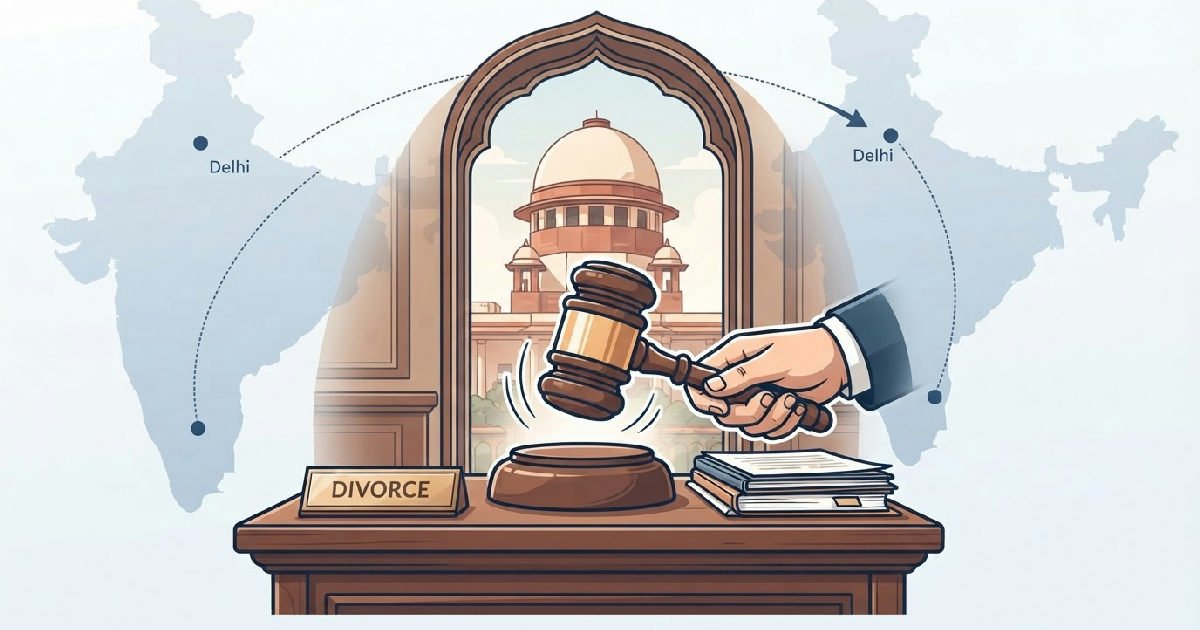
Divorce proceedings often present significant logistical hurdles, especially when spouses reside in different cities. Indian law provides a clear mechanism to transfer a divorce case to Delhi from another jurisdiction, ensuring that justice remains accessible despite geographical divides. The Supreme Court of India holds the ultimate authority for inter-state transfers, while High Courts manage intra-state movements.
This legal framework, primarily rooted in Section 25 of the Code of Civil Procedure (CPC), 1908, and Section 446 of the Bharatiya Nagarik Suraksha Sanhita (BNSS), 2023, aims to alleviate hardship for litigants. It addresses critical factors such as travel burden, the welfare of children, and the presence of related legal matters in the capital city.
Legal Mechanisms for: Transfer a Divorce Case to Delhi
The ability to move a divorce case across judicial boundaries in India is a critical aspect of family law, governed by specific statutes. These provisions delineate which courts have the power to order such transfers and under what circumstances.
This framework ensures that litigants are not unduly burdened by geographical constraints, allowing for cases to be heard in a forum that best serves the interests of justice. It takes into account the diverse legal landscape of India, where both central and state-level courts play distinct roles in matrimonial disputes.
The system is designed to provide clarity on the jurisdiction of the Supreme Court for inter-state transfers and High Courts for intra-state matters, alongside specific rules for criminal matrimonial cases. This structured approach aims to streamline legal proceedings while upholding fairness for all parties involved in a divorce or related family matter.
Inter-State Transfers by the Supreme Court
For matrimonial cases spanning different states, the Supreme Court of India is the sole authority to mandate a transfer. This power stems primarily from Section 25 of the CPC, 1908, which applies to civil and matrimonial disputes, including divorce, child custody, and maintenance claims.
The Supreme Court can direct a case to be moved if it determines such an order is “expedient for the ends of justice.” Article 139A(2) of the Constitution further reinforces this authority, particularly for consolidating cases.
High Court Authority for Intra-State Transfers
When both the original court and the desired new jurisdiction fall within the same state, the relevant High Court handles the transfer. For instance, moving a case from one district court to another within Delhi would fall under the Delhi High Court’s purview, as outlined by Section 24 of the CPC.
This provision grants High Courts the discretion to transfer cases within their territorial jurisdiction, often for reasons similar to those considered by the Supreme Court, but on a more localized scale.
Criminal Matrimonial Matters Under BNSS 2023
The legal landscape for criminal matrimonial disputes also includes provisions for transfer. Section 446 of the Bharatiya Nagarik Suraksha Sanhita (BNSS), 2023, which superseded Section 406 of the CrPC from July 1, 2024, governs these transfers.
This covers cases like those filed under Section 498A of the Indian Penal Code (now subsumed into the Bharatiya Nyaya Sanhita) related to cruelty, as well as matters under the Domestic Violence Act and dowry-related proceedings.
The shift to BNSS reflects a broader overhaul of India’s criminal justice system, modernizing procedures for various offenses, including those arising from matrimonial disputes.
| Jurisdiction Type | Governing Law | Authorised Court | Case Types |
|---|---|---|---|
| Inter-State Transfer | Section 25 CPC, 1908 & Article 139A(2) Constitution | Supreme Court of India | Civil & Matrimonial (Divorce, Custody, Maintenance) |
| Intra-State Transfer | Section 24 CPC, 1908 | Respective High Court | Civil & Matrimonial (Divorce, Custody, Maintenance) |
| Criminal Matrimonial | Section 446 BNSS, 2023 (formerly S. 406 CrPC) | Supreme Court or High Court | 498A IPC/BNS, Domestic Violence, Dowry cases |
Key Grounds for Initiating a Transfer Petition
While convenience is often a factor, courts don’t grant transfer petitions automatically. They scrutinize each request to ensure genuine hardship or a compelling reason that warrants shifting the legal venue.
The judiciary seeks a balance between facilitating access to justice and preventing the misuse of transfer provisions for tactical advantages or delays. Therefore, petitioners must present robust evidence to support their claims of hardship, ensuring the court can make an informed decision based on the specific circumstances of the case.
These grounds are not merely procedural formalities but reflect deeply embedded principles of equity and fairness within Indian family law. They enable courts to adapt to the real-life challenges faced by individuals during divorce, acknowledging that the location of proceedings can profoundly impact a litigant’s ability to effectively participate.
Addressing Hardship and Geographical Distance
Significant travel distance between a litigant’s residence and the court is a common and persuasive ground. Courts often consider distances of 200 kilometers or more to impose substantial travel costs and physical strain on a party, particularly for frequent appearances.
This hardship can impede a fair trial process if one party is severely disadvantaged by the location of the original court. Demonstrating specific financial burden or physical inability to travel regularly is crucial.
Prioritising the Wife’s Convenience
Indian courts frequently prioritize the wife’s convenience in matrimonial transfer petitions. This is especially true if she lacks independent income, has relocated to her parental home post-separation, or is caring for minor children.
The Delhi High Court has, in fact, ruled that a wife’s request for transfer should only be declined for “weighty reasons.” This judicial inclination acknowledges the societal realities and economic disparities often faced by women during divorce proceedings.
Child’s Welfare and Educational Stability
The presence and welfare of minor children significantly influence transfer decisions. If children are enrolled in schools in Delhi or are in the primary caregiver’s custody in the city, repeated travel for court hearings can disrupt their stability and education.
Courts often seek to minimize disruption to children’s routines, making their well-being a compelling reason for a case transfer. Child visitation arrangements also play a part in these considerations.
Safety, Health, and Fair Trial Concerns
Beyond convenience, transfer petitions can be based on serious concerns for safety or health. A litigant facing intimidation or threats, or one with a severe medical condition that complicates travel, can petition for a transfer.
Additionally, apprehension of local bias or undue influence that might compromise a fair trial can be a valid ground. The court ensures that the pursuit of justice is not undermined by external pressures or health constraints.
Navigating the Transfer Petition Process
Filing a transfer petition involves specific legal steps and disclosures. Understanding these requirements is essential for anyone considering moving their matrimonial case to Delhi.
The process demands meticulous attention to detail, from preparing the necessary documentation to ensuring all related legal matters are disclosed. Adherence to these procedural mandates is critical for the petition to be considered seriously and to avoid unnecessary delays or rejections based on technical grounds.
Furthermore, the involvement of specialized legal counsel, particularly an Advocate-on-Record for Supreme Court petitions, highlights the formal nature of these proceedings. This structured approach is designed to uphold the integrity of the judicial system and ensure that transfer requests are handled with due diligence and expertise.
Essential Documentation and Information
A transfer petition requires precise information, including the opposing party’s case number. Petitioners must clearly articulate the grounds for seeking the transfer, detailing how the current forum adversely affects their ability to participate effectively in the proceedings.
Supporting evidence is also critical. This can include medical reports, proof of residence, children’s school records, and details of travel expenses. An affidavit must accompany the petition, attesting to the truthfulness of the stated facts.
The Role of an Advocate-on-Record
For any transfer petition filed with the Supreme Court of India, representation by an Advocate-on-Record (AOR) is mandatory. An AOR is a lawyer specially qualified and registered with the Supreme Court, ensuring adherence to its specific rules and procedures.
This requirement underscores the formality and gravity of proceedings before the apex court. Choosing an experienced AOR is crucial for navigating the complex filing process effectively.
Crucial Disclosures and Avoiding Fresh Filings
Petitioners must fully disclose any existing related cases in Delhi, such as domestic violence (DV), maintenance under Section 125 CrPC, or custody disputes. Transparency is key, as courts frown upon attempts to conceal information or manipulate the system.
It’s also vital to avoid filing a fresh divorce case in Delhi merely to circumvent the original court. If both spouses file divorce petitions, Section 21-A of the Hindu Marriage Act, 1955, typically mandates the later petition be transferred to the court where the first was filed, preventing multiple parallel proceedings.
Judicial Discretion and Timelines for Resolution
The process of transferring a matrimonial case isn’t always straightforward; courts retain significant discretion in their decisions. Understanding the typical timelines and available alternatives can help manage expectations.
This discretionary power allows judges to assess each case’s unique circumstances, weighing factors like genuine hardship against potential for abuse of process. Such a nuanced approach ensures that justice is served on an individual basis, rather than through a rigid application of rules that might not fit every situation.
Furthermore, the emphasis on alternative dispute resolution, such as mediation, reflects a broader judicial trend towards encouraging amicable settlements. These alternatives can often provide a quicker and less confrontational path to resolution, potentially circumventing the need for a formal transfer and its associated delays.
Court’s Holistic Assessment
The power to transfer a case is entirely discretionary. Courts don’t apply a rigid, automatic rule but instead examine the totality of circumstances in each specific case. They weigh the merits of the hardship claims against potential motives for delay or forum shopping.
This means that simply citing one of the common grounds isn’t enough; solid evidence and a compelling narrative are necessary to persuade the court.
General Timelines for Resolution
Once filed, most matrimonial transfer petitions are listed for hearing within four to eight weeks. Simple, uncontested transfers might be resolved in one or two hearings, offering a relatively quick resolution.
However, contested petitions, where the opposing party raises objections, naturally take longer. For Supreme Court transfer petitions, the typical resolution time ranges from three to 12 months, reflecting the rigorous scrutiny involved.
Considering Alternative Solutions Like Mediation
In some instances, courts may suggest alternatives to outright transfer. The Supreme Court, for example, often refers parties to mediation, including its own Supreme Court Mediation Centre, especially during transfer proceedings.
Mediation can lead to a comprehensive settlement that addresses the core issues of the dispute, potentially making a formal transfer unnecessary. This approach prioritizes amicable resolution over prolonged litigation.
Another increasingly common alternative is video conferencing. Courts may allow parties to attend hearings virtually, particularly in matrimonial matters, to alleviate travel burdens without moving the entire case. This solution balances convenience with judicial efficiency, especially for interim maintenance matters where frequent attendance is required.
Key Considerations for All Parties
Both petitioners and the opposing parties need to understand the nuances of transfer petitions. The court’s approach is designed to be fair and prevent misuse of the legal system.
This fairness extends to ensuring that the application of transfer rules is gender-neutral, allowing any litigant to seek relief if they can demonstrate legitimate grounds. Awareness of potential pitfalls, such as allegations of forum shopping or deliberate delays, is crucial for crafting a successful petition and avoiding rejection.
Grasping the distinction between a transfer request and an appeal is also fundamental, as it clarifies the scope and purpose of the petition. Litigants must focus their arguments on the practical expediency of moving the case rather than attempting to re-litigate substantive issues, which is outside the purview of a transfer application.
Gender-Neutral Application of Rules
While historically, wives more frequently filed transfer petitions due to socio-economic reasons, the Supreme Court’s stance is now gender-neutral. Husbands are equally eligible to file for transfer if they can demonstrate genuine hardship.
This equitable approach ensures that the legal system provides relief to any party facing legitimate difficulties in attending court proceedings. The focus remains on demonstrable need rather than gender.
Potential Rejection Grounds
Transfer petitions are not infallible; courts may reject them if they suspect ulterior motives. Delay tactics, attempts at “forum shopping” (seeking a more favorable court), or late-stage disruption of proceedings are strong reasons for refusal.
Weak grounds or insufficient proof will also lead to rejection. For instance, if a husband agrees to cover the wife’s travel and accommodation expenses, her transfer petition based on travel hardship might not succeed.
However, the consolidation of multiple related proceedings, such as a divorce and a domestic violence case, is often a reason for transfer, not rejection, to prevent conflicting decisions and ensure uniformity.
Distinction Between Transfer Petition and Appeal
It is crucial to understand that a transfer petition is not an appeal against the merits of the case. It does not challenge any prior orders or rulings within the matrimonial dispute itself.
Instead, a transfer petition solely seeks to change the geographical location, or forum, where the case is heard. The legal arguments presented focus on the expediency of moving the case, not the substantive legal issues of the divorce or related matters.
Implications for Family Law in Delhi
The ability to transfer divorce cases to Delhi has significant ramifications for both litigants and the city’s judicial system, streamlining processes and ensuring equitable access to justice.
This centralizing mechanism helps alleviate the burden on individuals who might otherwise struggle to participate in proceedings far from their residence or support networks. It reinforces Delhi’s role as a key legal hub, capable of handling a broad spectrum of family law matters from across the nation.
Furthermore, by preventing the proliferation of related cases across different jurisdictions, these transfers contribute to judicial efficiency and coherence in legal outcomes. This strategic advantage benefits all parties by potentially reducing litigation costs and the emotional toll associated with protracted, fragmented legal battles.
Preventing Multiplicity of Proceedings
One of the primary benefits of case transfers is the consolidation of related legal actions. When multiple cases—such as divorce, maintenance, child custody, and domestic violence—involving the same parties are pending in different courts, transfers allow them to be heard in a single forum.
This consolidation is vital for preventing conflicting judicial decisions, ensuring uniformity in rulings, and making the overall legal process more efficient for everyone involved. It reduces the burden on litigants who would otherwise have to pursue multiple cases simultaneously.
Ensuring Access to Justice for Vulnerable Parties
The emphasis on hardship and the wife’s convenience in transfer petitions directly enhances access to justice for vulnerable parties. By enabling cases to be heard in a location that is safer, more accessible, or closer to their support systems, courts ensure that economic or geographical disadvantages do not obstruct legal recourse.
This equitable consideration is fundamental to the Indian legal system, reflecting a commitment to fair and accessible judicial processes for all citizens, particularly in emotionally charged matrimonial disputes.
Strategic Considerations for Litigants
Parties contemplating a transfer petition must consider their strategy carefully. Beyond demonstrating genuine hardship, they need to prepare robust documentation and anticipate potential objections from the opposing side.
Understanding the court’s discretionary power and the specific legal provisions is paramount. A well-prepared petition that aligns with established judicial precedents stands a much higher chance of success, guiding the case towards a more suitable legal environment in Delhi.
What is the primary legal basis for transferring a divorce case to Delhi?
The primary legal basis depends on whether the transfer is inter-state or intra-state. For inter-state transfers, Section 25 of the Code of Civil Procedure, 1908, is used by the Supreme Court. For intra-state transfers within Delhi, the Delhi High Court uses Section 24 of the CPC.
What are common grounds for a court to grant a divorce case transfer?
Courts often grant transfers based on geographical hardship (e.g., significant distance), the wife’s convenience (especially if she has no income or minor children), child welfare, safety concerns, health issues, or to prevent a multiplicity of legal proceedings.
How long does it typically take for a Supreme Court transfer petition to be resolved?
While some simple, uncontested petitions can be resolved quickly, the typical resolution time for Supreme Court transfer petitions ranges from three to 12 months. Contested petitions generally require more time for hearings and deliberation.
Matrimonial case listed outside Delhi and you cannot attend? Call or Whatsapp for consultation.
Related: https://arpitmarwah.com/matrimonial-lawyers-in-delhi/