
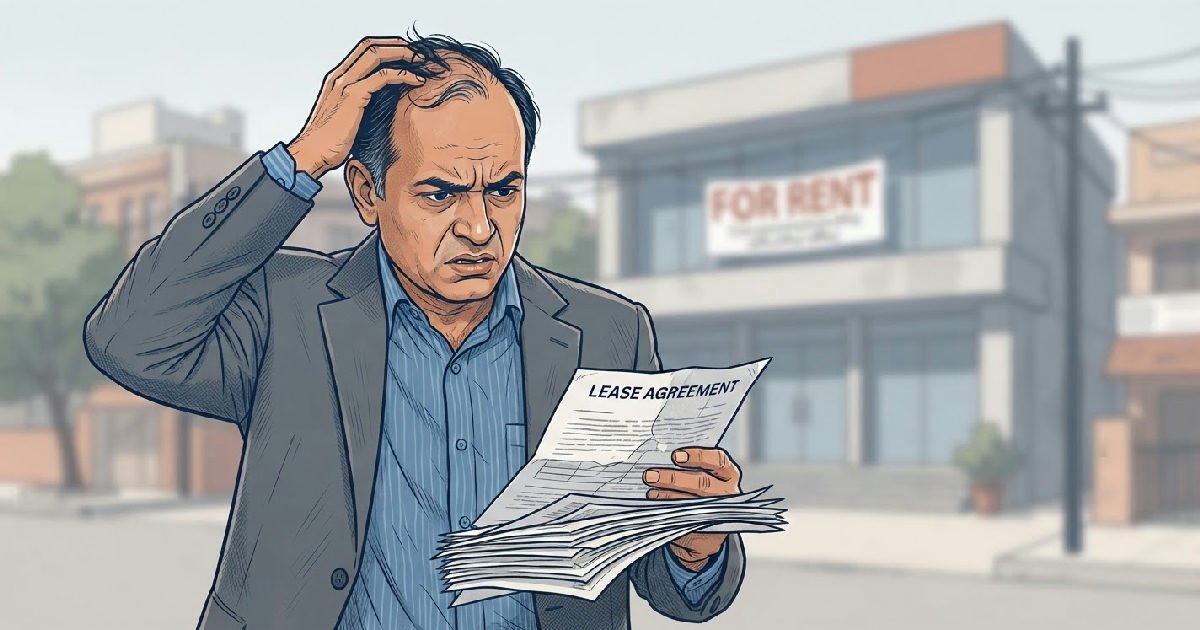
Commercial tenants in Delhi and the broader National Capital Region (NCR), including Gurugram and Noida, frequently find themselves in disputes with landlords over the return of security deposits. This common issue arises when landlords withhold funds after a lease terminates, often citing vague “repairs” or “pending dues” without offering itemized bills or clear justification.
Many businesses find themselves navigating a legal maze as landlords fail to provide concrete evidence of negligence or actual repair expenses, despite common excuses like “walls need repainting” or “wear and tear.” Understanding the legal framework and available recourse is crucial for tenants seeking to reclaim their rightful deposits.
Security deposit not returned after a commercial lease
The practice of landlords retaining security deposits without adequate cause has become a significant point of contention for commercial establishments in Delhi. Businesses vacating premises often encounter resistance when seeking the return of their initial security payment.
Landlords commonly justify these retentions by referencing alleged damages or outstanding payments. However, they frequently neglect to supply the necessary proof of tenant negligence or itemized costs for repairs. This creates a challenging situation for businesses attempting to close out their lease agreements.
Understanding the Legal Landscape for Security Deposits
India’s legal system governs security deposits primarily through contract law, state-specific rent and tenancy Acts, and various High Court decisions. There isn’t one comprehensive, all-India statute specifically addressing security deposits, leading to a nuanced legal environment.
These legal provisions generally stipulate that landlords cannot deduct for normal wear and tear on a property. Any deductions must relate to actual damage caused by the tenant beyond reasonable usage. This distinction often becomes a core point of dispute.
Key Regulatory Frameworks
The 2020 amendment to the Delhi Rent Control Act, for instance, aligns with the Model Tenancy Act. This update explicitly caps the security deposit for non-residential, or commercial, premises at up to six months’ rent.
For residential properties, the cap is even lower, set at two months’ rent. These caps aim to standardize practices and prevent excessive financial demands from landlords at the outset of a lease.
Navigating Deposit Caps and Refund Timelines
Commercial lease agreements typically specify a security deposit equivalent to two to three months’ rent. However, recent legislative changes have provided clearer boundaries for these amounts.
The legal framework also outlines reasonable expectations for the return of these funds. Most rent agreements establish a refund window, often between 15 and 30 days after the tenant vacates the property. Unreasonable delays can lead to legal challenges.
| Property Type | Security Deposit Cap (Delhi) | Common Refund Timeline |
|---|---|---|
| Commercial | Up to 6 months’ rent | 15-30 days after vacating |
| Residential | Up to 2 months’ rent | 15-30 days after vacating |
| State-Specific (e.g., Tamil Nadu) | Varies by Act | 1 month (per 2017 Act) |
Interest on Delayed Refunds: A Court Precedent
Even if a rent agreement lacks an explicit interest clause, courts in India frequently award reasonable interest on delayed security deposit refunds. This is done under Section 34 of the Code of Civil Procedure, 1908.
This legal provision serves to prevent landlords from unfairly benefiting from holding a tenant’s money for extended periods. It acts as a disincentive for landlords to delay refunds without proper justification, helping to ensure fairness.
Tenants pursuing legal action for withheld deposits should always include a claim for interest on the delayed amount. This aspect of the law is particularly important for commercial entities, where larger sums are often at stake. Claiming interest on a Delhi commercial suit can significantly impact the final recovery.
Critical Role of Documentation for Tenants
For tenants, maintaining a meticulous paper trail is paramount in any dispute over security deposits. Comprehensive documentation can significantly strengthen a tenant’s position and provide irrefutable evidence.
This includes the original rent agreement, clear proof of the initial deposit payment, and visual records like move-in and move-out photos or videos. Retaining final utility bill receipts and all written correspondence with the landlord about vacating the premises is also crucial.
Tenant Obligations at Lease End
Tenants must ensure they hand over vacant possession and the keys to the property before demanding the security deposit. The Delhi High Court has consistently ruled that a tenant cannot retain possession of the premises as leverage.
Should a tenant hold onto the property to force a refund, they become liable for rent for the entire period until actual handover. This underscores the importance of vacating cleanly and then pursuing legal channels for deposit recovery.
Legal Avenues for Reclaiming Withheld Funds
When informal negotiations fail, commercial tenants have several well-defined legal pathways to recover a withheld security deposit. Each step requires careful adherence to legal protocols to ensure the best chance of success.
The initial response to a landlord’s non-compliance should always be a formal written request. This establishes a clear record of the demand and sets the stage for further action if ignored. Understanding things to keep in mind is crucial before proceeding with legal action.
Formal Request and Legal Notice
If the formal request yields no results, the next step involves sending a legal notice through a lawyer. This notice should precisely detail the deposit amount, payment date, vacation date, and explicitly state that no valid deductions were provided.
It must also set a clear deadline, typically 15 days, for the refund. Crucially, the notice should warn of impending legal proceedings if the landlord fails to meet this deadline, underscoring the tenant’s seriousness in pursuing their claim. This comprehensive approach ensures the tenant’s legal position is clearly communicated and documented.
Arbitration Clause Considerations
Many commercial lease agreements include an arbitration clause, which dictates that disputes be resolved through arbitration rather than traditional court litigation. If present, this clause often mandates arbitration as the primary method for dispute resolution.
The Delhi High Court has confirmed that such clauses in rent agreements can cover disputes concerning withheld or forfeited security deposits. However, not all landlord-tenant issues are arbitrable; matters like eviction might fall under specific rent control statutes requiring specialized forums.
Civil Suit for Recovery
Should all informal attempts, legal notices, and arbitration efforts prove unsuccessful, tenants can initiate a “suit for recovery” in a civil court. This is a widely used and effective method in the Delhi NCR to reclaim deposits.
Such suits can also include claims for interest on the delayed refund, further penalizing landlords for unjust enrichment. Tenants looking to file a commercial suit in Delhi should ensure all preceding steps are thoroughly documented.
Rent Authority and Consumer Forum
Under the Delhi Rent Control Act, tenants can approach the Rent Controller, a government-appointed authority dedicated to resolving landlord-tenant disputes. This body provides an administrative route for redressal.
Tenants in states with their own tenancy laws can apply to the respective Rent Authority or Rent Court. Additionally, tenants have the option to approach the consumer forum for resolution, treating the landlord’s service as a consumer transaction.
What This Means for Delhi NCR Businesses
The prevalence of security deposit disputes underscores a critical challenge for businesses operating in the Delhi NCR region. These disputes can tie up significant capital, affecting a business’s cash flow and operational flexibility at a crucial transition point.
Proactive measures, such as meticulous record-keeping and a thorough understanding of the legal recourse, are no longer optional. They are essential components of sound business practice in the current commercial leasing environment.
For landlords, the repeated legal rulings awarding interest on delayed refunds serve as a clear warning. Unjustified retention of deposits can lead to financial penalties far exceeding the initial repair claims. This situation demands greater transparency and adherence to legal obligations from property owners.
What is the maximum security deposit a landlord can demand for a commercial property in Delhi?
Under the 2020 amendment to the Delhi Rent Control Act, which aligns with the Model Tenancy Act, landlords can cap the security deposit for commercial premises at up to six months’ rent.
How long does a landlord have to return a security deposit after a commercial lease ends?
Most commercial rent agreements specify a return window of 15 to 30 days after the tenant vacates the property. If the agreement is silent, a “reasonable timeframe” is expected, and unreasonable delays can be legally challenged.
Can I claim interest if my landlord delays returning my security deposit?
Yes, courts routinely award reasonable interest on delayed refunds under Section 34 of the Code of Civil Procedure, 1908, even if your rent agreement does not explicitly include an interest clause. This is to prevent unjust enrichment by the landlord.
Deposit stuck after you handed back a Delhi commercial premises? WhatsApp or call for free consultation.
Related: https://arpitmarwah.com/commercial-lawyers-in-delhi/