
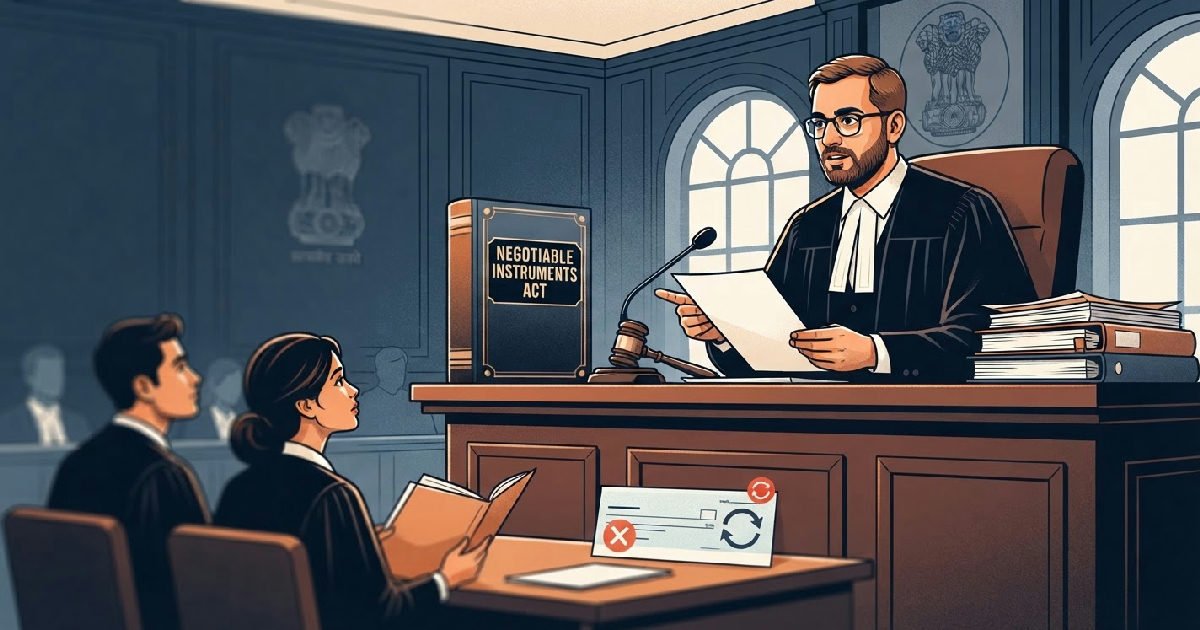
Individuals facing prosecution under Section 138 of the Negotiable Instruments Act (NI Act) for cheque dishonour frequently seek early relief from the Delhi High Court, aiming for quashing a cheque bounce complaint before trial commences.
Recent judgments from the High Court continue to refine the specific, narrow grounds upon which such complaints can be dismissed, offering clarity for both complainants and the accused regarding second cheque bounce complaint maintainability.
While the court acknowledges the potential for hardship in prolonged litigation, it maintains a cautious approach, generally reserving quashing for cases exhibiting clear legal infirmities or an absence of a foundational element required for the offence. This often means that substantive factual disputes are left for the trial court to resolve.
Delhi High Court Narrows Scope for Early Dismissal of Cheque Cases
The Delhi High Court has underscored that while an accused might wish for a swift end to cheque bounce proceedings, merely desiring an early dismissal isn’t sufficient. The court differentiates between procedural defects that render a complaint unsustainable and factual arguments that require a full trial.
Its decisions consistently highlight that only certain fundamental flaws in the complaint or its underlying basis can lead to quashing at the initial stage. This approach aims to prevent the High Court from becoming a forum for pre-trial investigations into disputed evidence.
Crucial Procedural Flaws Allowing Quashing
Several procedural missteps by the complainant can provide solid grounds for quashing a Section 138 NI Act complaint. These are often related to the strict timelines and prerequisites laid out in the law itself, acting as a safeguard for the accused.
Observing these technicalities is paramount for a complaint to be legally maintainable. A failure to adhere to these foundational steps can render the entire proceeding void, regardless of the underlying debt.
Mandatory Notice Period Violations
A critical requirement under Section 138 NI Act is that the legal demand notice demanding payment must be issued within 30 days of the complainant receiving information about the cheque’s dishonour. This 30-day window is absolute and cannot be extended.
Justice Neena Bansal Krishna of the Delhi High Court, in the January 5, 2026, case of Shri Sarvesh Puri v. Shri Rishab Kumar, quashed a complaint and summoning order precisely because the notice was issued nearly seven months after the dishonour event, well past the statutory limit.
Such delays fundamentally undermine the complaint’s validity, highlighting the importance of adhering to cheque bounce notice time limit.
Premature Filing Renders Complaint Void
Another common procedural error is filing the complaint prematurely. The law stipulates a 15-day period after the demand notice is served during which the drawer can make payment. Only if payment isn’t made within this specific timeframe can a complaint be initiated.
On April 30, 2025, Justice Ravinder Dudeja of the Delhi High Court, in CRL.M.C. 976/2024, underscored this point by quashing a complaint filed before this 15-day payment window expired, declaring it “no complaint in the eye of law.” This contrasts with arguments that a combined 45-day period exists, a notion dismissed by Justice Girish Kathpalia on September 8, 2025.
Absence of Legally Enforceable Debt
The very essence of a Section 138 NI Act offence lies in the dishonour of a cheque issued against a “legally enforceable debt or other liability.” If no such debt exists on the date of presentation, the complaint may be quashed.
A significant ruling on February 17, 2026, saw the Delhi High Court quash a complaint where a ₹15 lakh cheque amount had already been returned via RTGS before the prosecution even began. This confirmed that if the underlying liability is extinguished, the grounds for a cheque bounce complaint disappear.
However, the defence that a cheque was issued as “security” and not for an immediate, legally enforceable debt is generally considered a factual dispute. Courts typically require such claims to be proven during trial rather than as a basis for quashing at an earlier stage.
Entity Status and Signatory Requirements
The legal standing of the parties involved in a cheque bounce case is crucial. Specific issues can arise concerning companies and joint account holders, demanding careful legal scrutiny.
Proceedings can be fundamentally flawed if the entity or individual against whom the complaint is filed lacks the proper legal status or connection to the instrument. These are often clear-cut legal issues, not matters of factual dispute.
Dissolved Companies Cannot Prosecute
A company that has been dissolved or struck off the register loses its juristic personality and cannot initiate or sustain legal proceedings. This point was firmly established by Justice Arun Monga of the Delhi High Court in two criminal complaints, Krishan Lal Gulati and another (CRL.M.C. 7534/2023 and CRL.M.C. 7559/2023) on October 8, 2025.
The court clarified that a dissolved entity ceases to exist legally, rendering any cheque presented by or drawn by it without legal effect for the purposes of Section 138 NI Act. This means a complaint initiated by such a company is not maintainable.
Joint Account Holders and Signatories
For a joint account holder to be prosecuted under Section 138 NI Act, they must be a signatory on the dishonoured cheque. The law targets the person responsible for issuing the instruction to the bank, which is typically the signatory.
Furthermore, for directors to incur vicarious liability under Section 141 NI Act, the company itself must first be properly arrayed as an accused. Without the company as a primary accused, directors cannot be held liable.
Settlement and Compounding as an Alternative
While quashing focuses on legal defects, a practical alternative for ending cheque bounce complaints is through settlement and compounding of the offence. This approach allows parties to resolve disputes amicably, often saving significant legal costs and time.
The law explicitly permits compounding, recognizing the largely civil nature of these financial disputes. It provides a structured mechanism for withdrawal of the criminal complaint.
Encouraging Out-of-Court Resolutions
The Delhi High Court has actively encouraged and recognized settlements between parties, often quashing complaints once a mediation agreement is reached. This reflects a broader judicial policy to reduce litigation backlog and promote resolution.
Compounding an offence under Section 138 NI Act is permissible at any stage, from trial to appeal, or even after conviction, as per Section 147 of the NI Act, provided the complainant consents. This flexibility makes settlement a viable option throughout the legal process.
Costs Associated with Compounding
The Supreme Court has outlined guidelines for compounding, imposing varying percentages of costs on the accused depending on the stage at which the settlement occurs. These costs are designed to encourage earlier settlements and compensate the judicial system for resources expended.
For instance, compounding before a Sessions or High Court typically involves a 15% cost of the cheque amount. This increases to 20% if the matter reaches the Supreme Court, providing a clear financial incentive for early resolution and compounding a cheque bounce case. These guidelines from the Supreme Court aim to encourage timely resolutions.
The Supreme Court has set out specific costs associated with compounding. These vary depending on the stage of resolution.
| Stage of Compounding | Cost as Percentage of Cheque Amount |
|---|---|
| Pre-trial (Magistrate Court) | Not specified in Supreme Court guidelines |
| Trial (Magistrate Court) | Not specified in Supreme Court guidelines |
| Sessions Court / High Court | 15% |
| Supreme Court | 20% |
Limits on Quashing: What Courts Won’t Entertain
High Courts generally avoid quashing cases based on disputed factual issues. They won’t conduct a pre-trial inquiry into facts where a statutory presumption, like that under Section 139 NI Act, already operates. This means many defenses, though potentially valid, must be proven during trial.
The defense that a cheque was issued purely as “security” and not against a legally enforceable debt is a classic example. Courts usually view this as a matter of evidence requiring full examination at trial. It’s rarely a ground for quashing at an early stage.
Once the execution of a cheque is admitted, Section 139 NI Act raises a presumption that it was for a legally enforceable debt. This shifts the burden of proof to the accused. Rebutting this Section 139 presumption typically requires presenting evidence during trial, not just asserting it at the quashing stage.
Furthermore, civil and criminal remedies for cheque dishonour can proceed simultaneously. The recovery of dues and criminal liability serve distinct purposes. Payment of the cheque amount after a complaint has been lodged also doesn’t automatically lead to quashing, particularly if the complainant isn’t willing to settle.
What are the primary grounds for quashing a cheque bounce complaint?
The Delhi High Court primarily quashes complaints for clear legal infirmities, such as mandatory notice period violations, premature filing of the complaint, or the absence of a legally enforceable debt. Other grounds include issues with the legal standing of parties, like a dissolved company prosecuting.
Can a company that has been dissolved pursue a cheque bounce case?
No, according to the Delhi High Court, a company that has been dissolved or struck off the register loses its legal personality and cannot initiate or sustain legal proceedings under Section 138 of the NI Act.
What is the significance of the 15-day payment window after a demand notice?
After a demand notice is served for a dishonoured cheque, the drawer has a mandatory 15-day period to make the payment. A complaint filed before this 15-day window expires is considered premature and “no complaint in the eye of law,” making it liable for quashing.
Summons received and you think the complaint is dead on paper? Call or Whatsapp for free consultation.
Related: https://arpitmarwah.com/cheque-bounce-lawyers-in-delhi/