
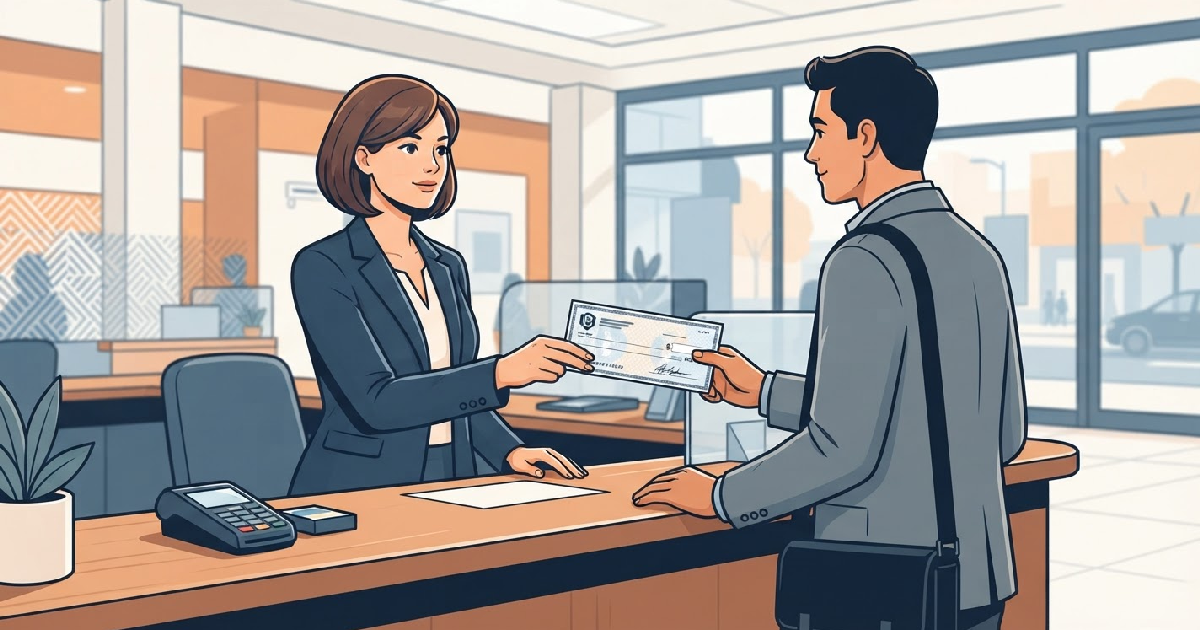
A cashier’s cheque, often known as an official check or bank draft in Canada, represents one of the most secure forms of payment available today. Unlike personal cheques, this instrument is guaranteed by the issuing bank itself, drawing directly on the bank’s own funds.
This crucial distinction means the bank assumes full responsibility for the funds, providing recipients with assurance that the payment is legitimate and will not bounce.
Obtaining a Cashier’s Cheque: A Step-by-Step Process
These cheques are frequently mandated for significant financial transactions. They’re common for down payments on mortgages, vehicle purchases, and security deposits, where the recipient requires verifiable proof of funds. Understanding the process to obtain a cashier’s cheque and its inherent protections is vital for both payers and recipients.
Getting a cashier’s cheque typically involves visiting a bank branch, equipped with specific information and sufficient funds. This structured approach ensures accuracy and security throughout the issuance process.
Gathering Essential Information
Before you approach a teller, you’ll need to gather precise details. This includes the exact amount of the cheque, which cannot be changed once it’s printed. You must also have the full, correct name of the payee, as cashier’s cheques cannot be left blank or made out to “cash.”
Always bring a government-issued photo identification for verification. If you’re a customer, know which account the funds will be drawn from. You can also include an optional memo line to specify the purpose of the payment.
Ensuring Sufficient Funds and Visiting the Bank
You must have the full cheque amount, plus any applicable fees, available in your bank account or in cash. The bank will immediately withdraw these funds at the time of your request. This immediate withdrawal guarantees the cheque from the bank’s reserves.
Visit a local branch of your bank or credit union. While some institutions offer online ordering for existing accounts, these options often involve additional postage and delivery fees. Some banks might issue cashier’s cheques to non-account holders, though this typically comes with higher fees and may require cash payment.
The Bank’s Role in Guaranteeing Payments
A cashier’s cheque operates on a different principle than a personal cheque. When a customer requests one, the bank immediately withdraws the full amount plus fees from the customer’s account. The bank then issues the cheque, drawing the funds from its own institutional account.
This mechanism means the bank itself guarantees the payment, making it highly secure. It eliminates the risk of insufficient funds from the purchaser’s account. Cashier’s cheques often include security features like watermarks and are signed by official bank employees.
Funds from a deposited cashier’s cheque can often become available as soon as the next business day. This timeline can vary by institution and specific circumstances, however, providing a relatively quick settlement for recipients.
Safeguarding Against Cashier’s Cheque Fraud
Despite their robust security, cashier’s cheques are not completely immune to fraud, particularly counterfeit cheques. Scammers employ advanced printing technologies to create highly convincing fake cheques, which can sometimes deceive even bank employees.
If you deposit a fraudulent cheque and spend the funds before the fraud is detected, you could be held liable for the loss. This detection process can often take days or even weeks. It’s crucial to protect yourself from these schemes.
Verifying Cheque Legitimacy
To guard against counterfeit cheques, always verify a cheque’s legitimacy before considering the funds cleared. Never rely on contact information printed on the cheque itself. Instead, independently obtain the issuing bank’s phone number from a trusted source, then call them directly to confirm authenticity.
Be wary of any cheque with a blank payee line or unusual formatting. These are often red flags for potential fraud attempts. Protecting yourself means exercising caution and meticulous verification.
Key Differences: Cashier’s vs. Personal Cheques
Understanding the fundamental differences between payment instruments can help you choose the right one for your transaction. A cashier’s cheque provides a level of guarantee that a personal cheque cannot match. This makes it suitable for high-value exchanges.
The bank’s backing of the cashier’s cheque significantly reduces risk for the recipient. Personal cheques, on the other hand, are drawn from an individual’s account. They inherently carry the risk of insufficient funds.
| Feature | Cashier’s Cheque | Personal Cheque |
|---|---|---|
| Issuing Party | Bank | Individual Account Holder |
| Fund Guarantee | Guaranteed by Bank | Not Guaranteed |
| Risk of “Bounce” | Extremely Low | Moderate to High |
| Typical Cost | $5 – $15 (may be waived) | (Not specified in research) |
| Clearing Time (Deposit) | Next business day (often) | (Not specified in research) |
For individuals needing to deposit and cash a cheque, this distinction is particularly important. The guaranteed nature of a cashier’s cheque often leads to quicker fund availability, fostering trust in transactions.
What makes a cashier’s cheque more secure than a personal cheque?
A cashier’s cheque is guaranteed by the issuing bank, drawing funds directly from the bank’s own account, not an individual’s. This means the bank has already verified the funds and taken responsibility for the payment, eliminating the risk of a “bounced” cheque due to insufficient funds in the payer’s account.
Can I get a cashier’s cheque if I don’t have a bank account?
While most banks prefer to issue cashier’s cheques to existing account holders, some financial institutions may issue them to non-account holders. However, they typically charge higher fees for this service and may require payment for the cheque in cash.
What should I do if I suspect a cashier’s cheque I received is fraudulent?
If you suspect a cashier’s cheque is fraudulent, do not attempt to deposit it or spend any of the funds. Instead, contact the issuing bank directly using a phone number you’ve obtained independently, not from the cheque itself, to confirm its authenticity.