
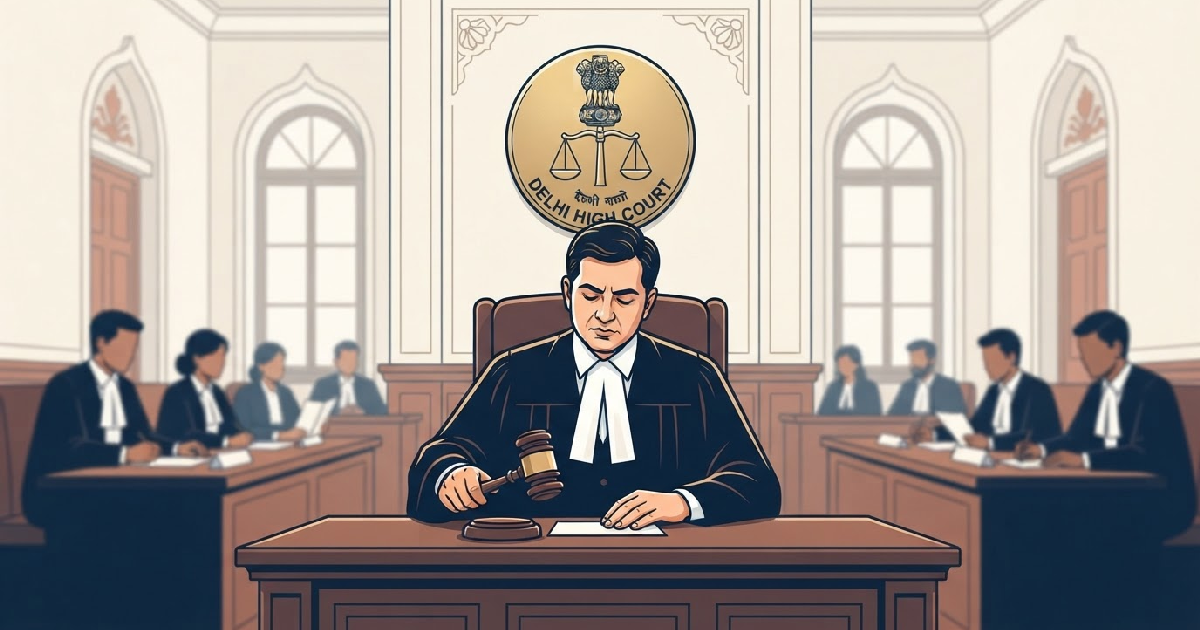
The Delhi High Court, on September 17, 2024, dismissed a significant recovery suit filed by Jain Irrigation Systems Limited against M/S. Pragyawan Technologies Private Limited. The court’s decision hinged on a fundamental legal principle: a lack of territorial jurisdiction for the Delhi courts to hear the matter.
This ruling, specifically concerning Interlocutory Application (I.A.) No. 4516/2024, means that Jain Irrigation Systems Limited’s claim, seeking approximately INR 3.49 Crore, cannot proceed in Delhi. The defendant, M/S. Pragyawan Technologies Private Limited, had successfully argued that the Delhi courts lacked the geographical authority to adjudicate the dispute.
jurisdictional hurdles block substantial commercial recovery suit
The dismissal of I.A. No. 4516/2024 marks a critical juncture in the ongoing legal tussle between the two companies. Jain Irrigation Systems Limited, a prominent player in its sector, had initiated the recovery suit to recoup substantial unpaid dues.
The core of the matter involved two Purchase Orders (POs) which formed the basis of the INR 3,49,70,864.13 claim. Courts often scrutinize where a contract was formed, where services were rendered, or where payments were due to determine proper jurisdiction.
understanding territorial jurisdiction in Indian law
Territorial jurisdiction is a cornerstone of legal proceedings, dictating which court has the authority to hear a case based on geographical boundaries. It ensures that litigants are not dragged to distant courts unnecessarily.
For commercial disputes in India, factors like the location of the defendant’s business, where the cause of action arose, or where the contract was executed typically determine jurisdiction. A misstep here can lead to delays and outright dismissal, as seen in this case.
The Delhi High Court’s ruling reinforces the importance of meticulous contract drafting and careful consideration of jurisdictional clauses. Companies must ensure their agreements clearly define the competent courts for dispute resolution.
implications for commercial litigation across India
This judgment serves as a stark reminder for businesses operating across multiple states in India. Ignoring proper jurisdictional protocols can invalidate years of litigation efforts and significant financial outlay.
It underscores the need for thorough legal due diligence before initiating any recovery proceedings. Legal teams must carefully analyze all transactional documents and relevant laws to identify the correct forum. Failure to do so incurs considerable legal costs and delays.
The concept of returning the plaint, as sought by M/S. Pragyawan Technologies Private Limited, allows a plaintiff to file the case in the appropriate court. However, it still represents a setback and additional procedural steps.
judicial precedent: navigating procedural complexities
Indian courts frequently grapple with jurisdictional issues, especially in complex commercial transactions spanning different states. The Delhi High Court’s decision aligns with a broader judicial trend emphasising strict adherence to procedural rules.
Similar judicial pronouncements have been made concerning pecuniary jurisdiction defects, where the financial value of a suit determines the court. These rulings collectively highlight the judiciary’s commitment to defined procedural frameworks.
This approach aims to streamline the legal process and prevent forum shopping, where parties try to find a court they believe will be more favorable. It ultimately protects defendants from undue burden.
financial and strategic fallout for Jain Irrigation Systems Limited
For Jain Irrigation Systems Limited, the dismissal means a halt to their recovery efforts in the Delhi courts. The company will now need to evaluate its options, which likely include filing the suit in a different jurisdiction.
This restart would involve fresh court fees, legal costs, and a significant delay in potentially recovering the INR 3.49 Crore. It’s a substantial financial and strategic blow, impacting cash flow and operational planning.
Shareholders and investors will be closely watching how the company navigates this procedural hurdle. Timely resolution of such large outstanding dues is crucial for any publicly traded entity’s financial health.
examining the defendant’s successful argument
M/S. Pragyawan Technologies Private Limited’s successful argument focused squarely on the lack of territorial jurisdiction. The defendant would have presented evidence showing that the cause of action did not arise within Delhi’s geographical limits.
This could involve demonstrating that the contract was executed elsewhere, payment obligations were to be fulfilled outside Delhi, or the defendant’s registered office and primary business operations were not in the capital.
Their victory in Interlocutory Application No. 4516/2024 spares them from defending the merits of the recovery claim in an inconvenient forum. It’s a significant procedural win, potentially extending the overall timeline of the dispute.
broader implications for contract enforcement
The case serves as an important case study for companies in India concerning contract enforcement. It highlights that even with a strong claim for recovery, procedural accuracy is paramount.
Ensuring that contracts clearly specify the governing law and the exclusive jurisdiction for dispute resolution can prevent such lengthy and costly detours. Ambiguity can lead to prolonged legal battles over preliminary issues rather than substantive ones.
The Supreme Court has also weighed in on plaint rejection for various reasons, reinforcing the judiciary’s proactive stance on procedural rectitude. This broader trend favors early resolution of jurisdictional defects.
what comes next for the parties involved
Jain Irrigation Systems Limited now faces the task of re-filing their recovery suit in a court with appropriate territorial jurisdiction. This process could take several weeks or months to initiate, depending on their legal strategy.
The company will need to meticulously review the terms of the Purchase Orders and the geographical nexus of their transactions to determine the correct forum. They might also explore out-of-court settlements to avoid further litigation delays.
Meanwhile, M/S. Pragyawan Technologies Private Limited has secured a temporary respite, but the underlying commercial dispute remains unresolved. They’ll likely prepare to defend the claim in whatever court Jain Irrigation next approaches.
| Aspect | Details |
|---|---|
| Case Title | Jain Irrigation Systems Limited vs. M/S. Pragyawan Technologies Private Limited |
| Court | Delhi High Court |
| Judgment Date | September 17, 2024 |
| Application No. | I.A. No. 4516/2024 |
| Applicant | M/S. Pragyawan Technologies Private Limited (Defendant) |
| Claim Amount | Approximately INR 3.49 Crore (INR 3,49,70,864.13) |
| Outcome of Application | Granted (return of plaint ordered) |
| Reason for Dismissal | Lack of territorial jurisdiction |
legal frameworks and precedents shaping jurisdiction
The ruling underscores the foundational principles of the Code of Civil Procedure (CPC) regarding jurisdiction. Sections 15 to 20 of the CPC specifically outline where suits can be instituted.
These sections guide courts in determining whether they have the authority to entertain a case, preventing frivolous litigation and ensuring justice is delivered in the correct forum. The Delhi High Court’s decision is a direct application of these statutory provisions.
Previous rulings, such as those related to procedural limits in high courts, have consistently reinforced the judiciary’s meticulous approach to case management and adherence to legal formalities. This ensures fairness and predictability in legal outcomes.
What was the main outcome of the Delhi High Court judgment?
The Delhi High Court dismissed a recovery suit filed by Jain Irrigation Systems Limited against M/S. Pragyawan Technologies Private Limited. The dismissal was specifically due to a lack of territorial jurisdiction, meaning the Delhi courts weren’t the proper venue for the case.
What is territorial jurisdiction in the context of this case?
Territorial jurisdiction refers to the geographical area over which a court has legal authority. In this case, the Delhi High Court determined that the dispute between Jain Irrigation Systems Limited and M/S. Pragyawan Technologies Private Limited did not originate or fall within its designated territory.
What are the next steps for Jain Irrigation Systems Limited?
Jain Irrigation Systems Limited will likely need to re-file their recovery suit in a court that possesses the appropriate territorial jurisdiction. This means initiating new legal proceedings in a different state or district where the cause of action for the dispute is valid.