
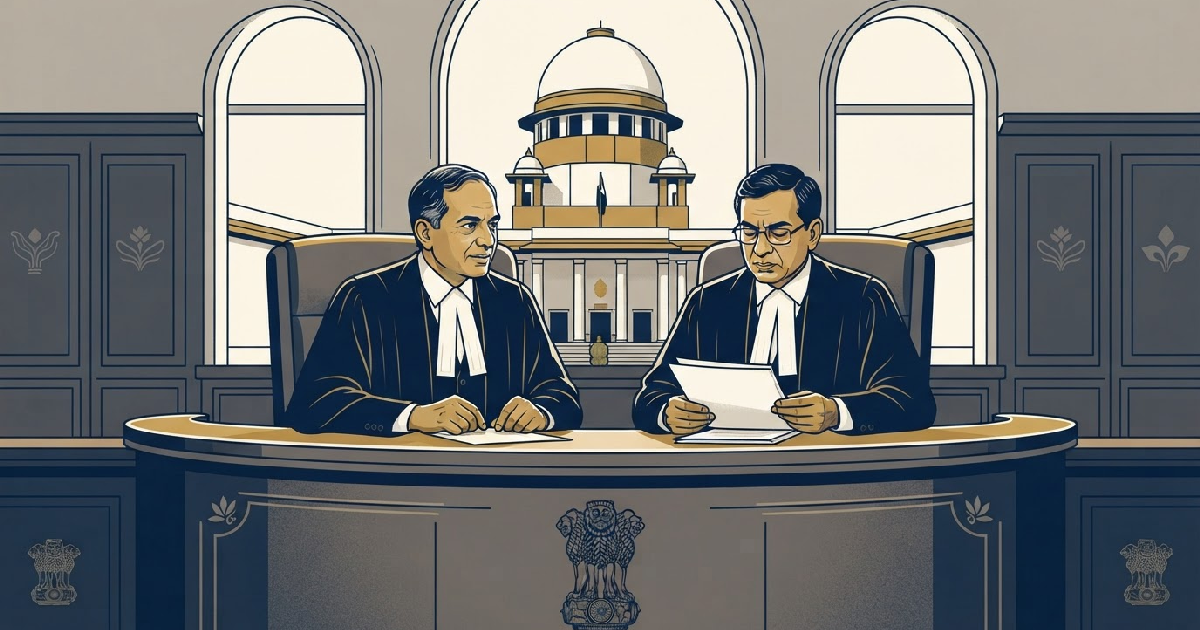
The Supreme Court of India delivered a significant ruling on November 30, 2023, clarifying the parameters for rejecting a plaint under Order VII Rule 11 of the Code of Civil Procedure, 1908 (C.P.C.).
Justices Vikram Nath and Rajesh Bindal unequivocally stated that courts must not examine external evidence or the merits of a legal controversy at this preliminary stage. The decision underscores that only the averments presented within the plaint itself should be considered when assessing its viability.
Supreme Court clarifies plaint rejection under CPC
This pronouncement reinforces a long-standing legal principle aimed at streamlining civil litigation and preventing the premature dismissal of genuine claims. It also acts as a critical filter against frivolous lawsuits. The ruling came in a case involving an appeal by Eldeco Housing And Industries Limited against an Allahabad High Court order, which had earlier approved a rejection application filed by Ashok Vidyarthi.
The Supreme Court’s ruling firmly establishes that a court’s purview at the plaint rejection stage is deliberately narrow. Judges are required to focus solely on the statements and documents submitted by the plaintiff. They cannot delve into the factual disputes or weigh the strength of the evidence that might be presented later during a full trial.
This limitation ensures that procedural mechanisms like Order VII Rule 11 C.P.C. are used to weed out inherently flawed cases, rather than becoming a mini-trial in themselves. It’s a vital distinction that protects judicial resources and maintains fairness. The court’s role here is to assess whether the plaint, on its face, discloses a cause of action or is barred by law.
Limiting judicial discretion to plaint averments
The bench comprising Justice Vikram Nath and Justice Rajesh Bindal emphasized that the court must not “travel beyond the four corners of the plaint.” This means the defendant’s counter-arguments, known as the written statement, or any other external evidence, are irrelevant at this initial phase. The integrity of this stage relies on a strict interpretation of the plaintiff’s submitted case.
This principle is fundamental to maintaining the procedural balance in civil disputes. It prevents defendants from prematurely derailing a case based on their own version of events. Instead, the focus remains squarely on the legal sufficiency of the plaintiff’s initial submission.
The Eldeco Housing versus Ashok Vidyarthi case
The specific case that led to this Supreme Court reiteration involved a dispute stemming from a 1998 Memorandum of Understanding for property sale. The agreement was contingent on resolving family litigation. Eldeco Housing And Industries Limited had initiated a suit that was dismissed by the Allahabad High Court following a rejection application by Ashok Vidyarthi.
The Supreme Court ultimately allowed Eldeco Housing’s appeal, setting aside the High Court’s order. They found that the cause of action for the specific performance suit had not fully arisen at the time of an earlier injunction suit. This nuanced understanding of when a cause of action accrues was central to the verdict, highlighting the careful consideration required in such matters.
Understanding Order VII Rule 11 of the Code of Civil Procedure
Order VII Rule 11 of the Code of Civil Procedure, 1908, is a pivotal provision in Indian civil law. It grants courts the power to reject a plaint at an early stage of litigation. This crucial mechanism acts as a procedural safeguard, preventing baseless or legally unsound lawsuits from unnecessarily proceeding to a full trial. This conserves valuable judicial time and resources.
The rule is designed to ensure that only meritorious claims that comply with legal requirements move forward. It’s a mandatory provision, meaning if any of the specified grounds for rejection are met, the court shall reject the plaint. This lack of discretion highlights its importance in maintaining an efficient legal system.
Key grounds for rejection of plaint
The C.P.C. outlines specific grounds under which a plaint must be rejected. These include failing to disclose a cause of action, undervaluation of the relief claimed, or insufficient stamping if the plaintiff fails to rectify it. Other reasons involve the suit appearing to be barred by any law, such as the law of limitation, or procedural non-compliance.
For instance, if a plaint does not clearly state the facts entitling the plaintiff to legal relief, it lacks a fundamental requirement. Similarly, if the legal claim is obviously time-barred, it falls under the “barred by law” category. These grounds allow courts to summarily deal with defective plaints.
Mandatory nature and its objective
The use of “shall be rejected” in Order VII Rule 11 signifies its mandatory character; courts have no discretion once a ground for rejection is established. The primary objective is to “nip meritless suits in the bud,” as legal scholars often describe it. This prevents the legal system from being bogged down by cases that have no legitimate standing.
This stringent approach helps protect defendants from prolonged and costly litigation initiated on shaky legal foundations. It ensures that judicial proceedings are focused on genuine disputes. The rule acts as an essential gatekeeper for the civil justice system.
Precedent and clarifying legal principles
The Supreme Court’s ruling in the Eldeco Housing case serves as a crucial precedent. It reaffirms the strict interpretation of Order VII Rule 11, emphasizing that the initial assessment of a plaint must be confined to its own averments. This clarification is vital for ensuring consistency and predictability in civil procedure across all Indian courts.
The apex court’s intervention aims to prevent lower courts from overstepping their boundaries at the preliminary stages of a lawsuit.
This ruling is expected to streamline the process and uphold the principle of natural justice by ensuring that cases are decided on their merits after a full trial, rather than being prematurely dismissed based on external factors or perceived weaknesses.
| Statistical Metric | Previous Practice (General) | Current Ruling’s Impact (Order VII Rule 11) |
|---|---|---|
| Stage of Review | Potentially broader, could include preliminary evidence. | Strictly limited to plaint averments. |
| Basis for Rejection | Could inadvertently include merits or external documents. | Exclusively based on the plaint’s text and annexed documents. |
| Judicial Discretion | Some latitude in interpretation. | Narrowed; mandatory rejection if grounds met within plaint. |
What is Order VII Rule 11 of the CPC?
Order VII Rule 11 of the Code of Civil Procedure, 1908, empowers civil courts in India to reject a plaint (the initial document filed by a plaintiff to initiate a lawsuit) at the outset if it fails to meet certain legal requirements, such as not disclosing a cause of action or being barred by law.
Can a court consider the defendant’s arguments when deciding on Order VII Rule 11?
No, according to the Supreme Court’s recent ruling, courts are strictly prohibited from considering any external evidence or the defendant’s arguments (like a written statement) when deciding whether to reject a plaint under Order VII Rule 11. The decision must be based solely on the averments made within the plaint itself.
What is the main objective of Order VII Rule 11?
The primary objective of Order VII Rule 11 is to prevent frivolous, vexatious, or legally unsustainable lawsuits from proceeding to a full trial, thereby saving valuable judicial time and resources and protecting defendants from unnecessary litigation.