
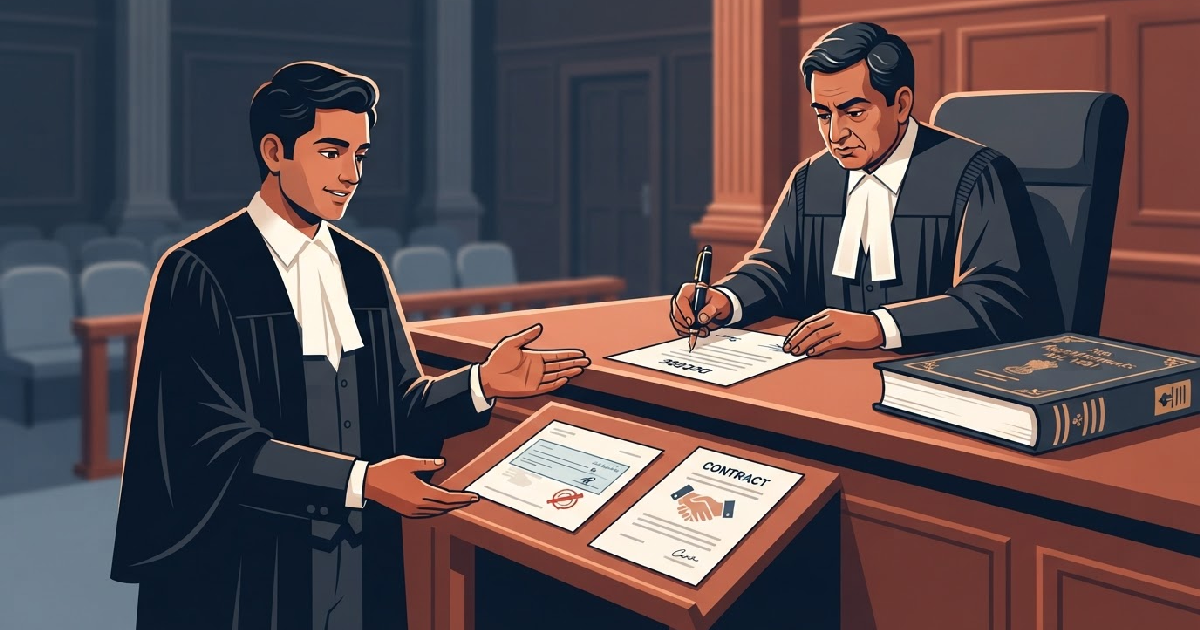
Cheque dishonour, civil compromise, and legal decrees are distinct yet interconnected concepts crucial to Indian jurisprudence, especially under the Negotiable Instruments Act, 1881 (NI Act).
These legal frameworks define how cases involving bounced cheques are processed, the role of mutual settlements, and the finality of court judgments, with a strong judicial emphasis on resolution.
Understanding cheque dishonour and civil compromise
Cheque dishonour, commonly known as a bounced cheque, occurs when a bank rejects a cheque presented for payment. This rejection can stem from various issues, leading the cheque to be marked “unpaid” and returned to the payee.
This act initiates a legal process primarily governed by the Negotiable Instruments Act, 1881 (NI Act) in India, which criminalizes certain instances of cheque dishonour. The legislation aims to enhance the credibility of cheques as financial instruments.
Key provisions under the NI Act
Sections 138 to 142 of the NI Act specifically deal with the penal provisions related to cheque dishonour. These sections outline the conditions under which a drawer can be prosecuted, including the issuance of a legal notice and failure to pay within a stipulated period.
The law provides a robust mechanism for payees to seek recourse against defaulting drawers. It creates a deterrent against the casual issuance of cheques without sufficient funds.
Common reasons for cheque dishonour
A cheque can be dishonoured for several reasons, impacting both the drawer and the payee. The most frequent cause involves insufficient funds in the drawer’s account, but other technical and administrative issues also lead to a cheque bounce.
Understanding these reasons is vital for both individuals and businesses to avoid legal complications. Proper cheque management and clear communication between parties can often prevent such incidents.
| Reason for Dishonour | Description |
|---|---|
| Insufficient Funds | The drawer’s bank account lacks adequate balance to cover the cheque amount. |
| Signature Mismatch | The signature on the cheque does not align with the specimen held by the bank. |
| Stale Cheque | The cheque is presented for payment after its three-month validity period has expired. |
| Account Closed | The bank account from which the cheque was issued has been permanently shut down. |
| Stop Payment Instruction | The drawer has issued a directive to their bank to halt payment on the specific cheque. |
| Overwriting/Material Alteration | Unauthenticated changes or corrections made on the face of the cheque. |
| Frozen Account | The account is inaccessible due to a legal order or regulatory action. |
| Exceeds Arrangement | The cheque value surpasses the agreed overdraft limit or other bank arrangements. |
The nuances of civil compromise in cheque cases
A civil compromise represents an out-of-court settlement between the parties involved in a cheque dishonour case. This agreement typically involves the drawer agreeing to pay the outstanding amount, often with some compensation or interest.
The judiciary has consistently encouraged such compromises, viewing them as an efficient way to resolve disputes and reduce the burden on courts. These settlements can be reached at various stages of litigation, from initial complaints to appeal proceedings.
Impact of compromise on criminal proceedings
While cheque dishonour cases often have a criminal aspect under the NI Act, a civil compromise can significantly influence the outcome. If a settlement is reached, the complainant may withdraw the criminal case, subject to court approval.
The Kerala High Court has clarified rules regarding partial payments, underscoring the flexibility in settlement arrangements. However, a civil compromise doesn’t automatically bar prosecution under Section 138, as a reported Kerala High Court ruling indicated, highlighting the court’s discretion.
Judicial encouragement for out-of-court settlements
Indian courts actively promote amicable resolutions in cheque dishonour cases. This approach stems from a recognition that many such disputes are primarily commercial in nature and can be resolved without protracted legal battles.
Settlements save judicial time and resources, providing quicker relief to the parties involved. They also preserve commercial relationships that might otherwise be irreparably damaged by adversarial litigation.
Mediating financial disputes
Alternative Dispute Resolution (ADR) mechanisms, such as mediation and conciliation, are frequently employed in these cases. Courts often refer parties to mediation centers to facilitate a mutual understanding and compromise.
This proactive stance by the judiciary reflects a broader policy shift towards promoting restorative justice in civil and quasi-criminal matters. It emphasizes practical solutions over punitive measures, where appropriate.
Distinction between civil compromise and legal decrees
While both civil compromises and decrees aim to resolve disputes, they differ significantly in their origin and enforcement. A civil compromise is a voluntary agreement between parties, negotiated outside the formal judgment process.
Conversely, a decree is a formal order or judgment passed by a court after adjudication. It represents the court’s decision on the rights of the parties, based on evidence and legal arguments presented during a trial.
Enforcement and finality
A civil compromise, once recorded by the court, becomes a legally binding agreement. Its enforceability often relies on the parties’ willingness to adhere to its terms, though it can be enforced through civil remedies if breached.
A decree, however, has the full force of judicial authority behind it and is enforceable through court machinery, including execution proceedings. The finality of a decree is generally higher, subject only to appeal or revision.
Implications for drawers and payees
For drawers, understanding the implications of cheque dishonour is crucial. It carries both civil and criminal liabilities, including potential imprisonment or fines, in addition to the obligation to repay the dishonoured amount.
Engaging in timely civil compromise can mitigate these severe consequences, allowing for a more amicable resolution. This proactive approach can help avoid the stigma and stress of a criminal trial.
Payees’ recourse and strategic considerations
Payees, on the other hand, have robust legal avenues to pursue their claims under the NI Act. They can initiate criminal proceedings to recover the cheque amount, often leveraging the punitive nature of the law to encourage settlement.
Strategic decisions include whether to pursue a full trial or engage in compromise talks. The choice depends on factors like the strength of the evidence, the drawer’s financial capacity, and the desire for a swift resolution.
Navigating legal avenues and dispute resolution
The legal landscape surrounding cheque dishonour cases is complex, requiring careful navigation. Parties must understand the procedural requirements, from issuing legal notices to filing complaints, to effectively pursue or defend a claim.
Given the judiciary’s push for settlements, engaging in pre-litigation mediation or exploring compromise options early on can be highly beneficial. This helps manage legal costs and potential delays.
Role of legal counsel
Expert legal counsel plays a pivotal role in advising parties on their rights and obligations. Lawyers can help draft settlement agreements, negotiate terms, and represent clients in court or during mediation sessions.
They ensure that any compromise reached is legally sound and enforceable, protecting the interests of both the drawer and the payee. This is especially true for complex cases involving multiple parties or significant sums.
Ensuring compliance and avoiding pitfalls
Compliance with statutory timelines and procedural rules is paramount in cheque dishonour cases. Missing deadlines for issuing notices or filing complaints can lead to the dismissal of a case, regardless of its merits.
Moreover, parties should be wary of fraudulent compromises or agreements that do not fully address the underlying debt. A clear, unambiguous settlement document is essential to prevent future disputes.
The legal framework in India, particularly under the NI Act, is designed to balance the need for commercial credibility with opportunities for dispute resolution. The ongoing emphasis on civil compromise reflects a pragmatic approach to justice.
What constitutes cheque dishonour under Indian law?
Cheque dishonour occurs when a bank refuses to process a cheque for payment, typically due to insufficient funds, signature discrepancies, or other issues. The Negotiable Instruments Act, 1881, governs the legal ramifications of such events in India.
How does a civil compromise affect a cheque bounce case?
A civil compromise allows parties in a cheque dishonour case to settle their dispute out of court, often involving the drawer paying the outstanding amount. While it can lead to the withdrawal of criminal proceedings, court approval is usually required, and the specific impact can vary depending on the case’s stage and jurisdiction.
What is the difference between a civil compromise and a court decree?
A civil compromise is a voluntary, mutual agreement between the parties to resolve a dispute, often before a judgment. In contrast, a court decree is a formal, binding order issued by a judge after adjudicating the case, representing the court’s final decision on the matter.