
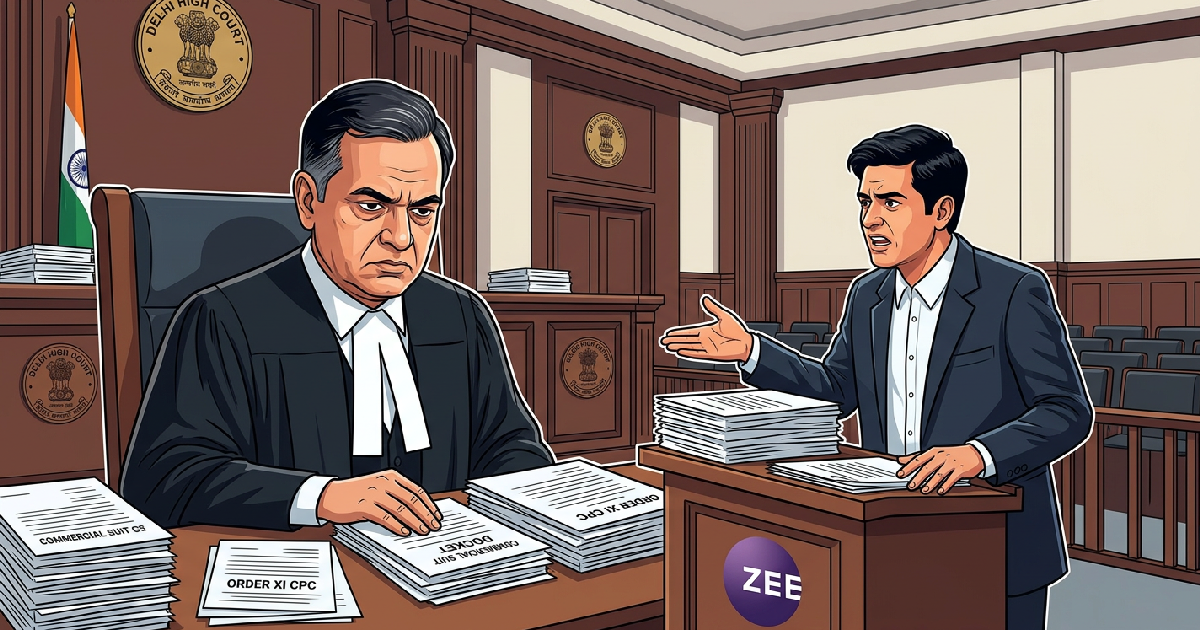
Justice Amit Bansal of the Delhi High Court has dismissed an application by Zee Entertainment Enterprises Ltd. to introduce additional documents and a fresh affidavit of evidence in its long-standing copyright dispute against Saregama India Ltd. In a judgment pronounced on February 28, 2025, the court held that a plaintiff cannot be permitted to file documents “as per its whims and fancies” at any stage of a commercial suit. The ruling underscores the judiciary’s strict adherence to the timelines set by the Commercial Courts Act, 2015, to ensure the swift resolution of business conflicts.
The dispute began in 2016 when Zee Entertainment Enterprises Ltd. sought a permanent injunction against Saregama India Ltd. for allegedly infringing on copyrights related to sound recordings in 29 films. Justice Bansal noted that the purpose of the law would be frustrated if parties could introduce new record materials late in the proceedings. He emphasized that the plaintiff was attempting to “improve its case” through an application filed on October 29, 2024, nearly seven years after issues were first framed in the suit.
Standardizing these procedures is critical for the efficiency of the legal system. Similar strictness regarding timeframes has been observed in other jurisdictions; for example, the Telangana High Court clarified filing limits for written statements recently, reinforcing that these windows are mandatory. In the present case, the Delhi High Court found that the documents Zee sought to introduce only came into existence between late 2023 and early 2024, long after the litigation was underway.
Court defines reasonable cause for delayed evidence
The core of the ruling rested on the interpretation of Order XI Rule 1(5) of the Code of Civil Procedure (CPC). Justice Bansal clarified that “reasonable cause” for filing additional documents must involve circumstances outside the plaintiff’s control that prevented them from filing at the appropriate stage. The court rejected Zee’s submission, noting that the plaintiff had already substituted its witness, Ms. Sucheta Deb Burman, and filed multiple evidence affidavits in 2022 and 2023.
This decision follows a broader judicial trend of curbing tactical delays. The Supreme Court guidelines for commercial suit summary judgments also highlight the need for procedural discipline to maintain the fast-track nature of commercial courts. Justice Bansal noted that allowing such late-stage filings would undermine the “expeditious disposal” mandated by the legislature for commercial disputes.
Timeline of the Zee v. Saregama commercial litigation
| Date | Event / Procedural Milestone | Details |
|---|---|---|
| 2016 | Suit Instituted | Zee filed suit for copyright infringement. |
| Oct 9, 2017 | Issues Framed | The court established the points of trial. |
| Sep 11, 2019 | Previous Application | First attempt to file additional documents dismissed. |
| Feb 25, 2022 | Witness Substitution | Mr. Anurag Bedi replaced by Ms. Sucheta Deb Burman. |
| Feb 28, 2025 | Final Judgment on Application | Justice Amit Bansal dismissed the evidence application. |
Preventing a reset of the trial process
The court highlighted that an earlier application by Zee for additional documents had already been dismissed in September 2019 for failing to establish reasonable cause. By seeking to introduce a modified affidavit of evidence now, the plaintiff was effectively trying to restart a process that should have been concludes years ago. The court’s refusal to allow this ensures that the trial proceeds on the existing record rather than a shifting narrative.
The ruling aligns with how other high courts handle the strict requirements of the Commercial Courts Act. For example, the Andhra Pradesh High Court commercial filing rules similarly demand specific justifications for any deviation from prescribed timelines. By dismissing application I.A. 44281/2024, the Delhi High Court has sent a clear message that corporate litigants must be diligent from the outset of a case.
Frequently Asked Questions
What does “reasonable cause” mean for filing late documents?
The court defines it as a cause outside the control of the plaintiff that prevented them from filing the documents at the relevant stage. It cannot be used simply to improve or supplement a case that has already progressed through framing of issues and witness statements.
Why was Zee Entertainment Enterprises Ltd.’s application dismissed?
The court found that the plaintiff failed to show reasonable cause for the delay and was attempting to introduce documents years after the suit was filed. Justice Amit Bansal noted that allowing such filings would frustrate the “expeditious disposal” of the commercial suit.
Which legal provision governs the filing of additional documents?
The ruling was based on Order XI Rule 1(5) of the Code of Civil Procedure, 1908, as amended by the Commercial Courts Act, 2015. This rule restricts the introduction of documents not disclosed at the time of filing the plaint unless specific criteria are met.