
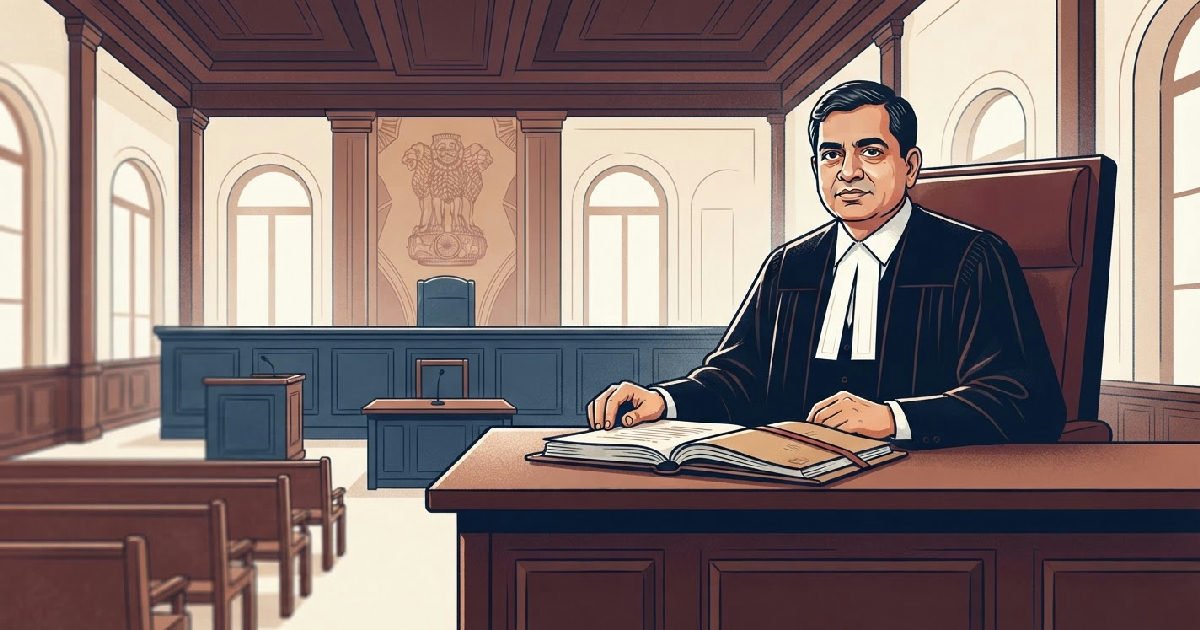
Justice Yogendra Kumar and the Allahabad High Court ruled that a third party’s independent ownership claim does not make them a necessary party to a landlord-tenant suit. In a judgment delivered by Justice Dr. Yogendra Kumar Srivastava, the court reinforced that the scope of summary proceedings in Small Causes Courts cannot be enlarged to include complex title disputes.
Mere Claim of Ownership and the legal limits of impleadment
This decision effectively prevents landlord-tenant cases from being delayed or complicated by external parties introducing their own title claims. The court reasoned that a third party can only be brought into the suit if a decision on their title is indispensable for resolving the plaintiff’s original claim for relief, such as eviction or rent arrears.
The case, Manish Bansal v. Jagdish Prasad Mittal and 7 others, hinged on the interpretation of two key legal provisions. The first is Order I Rule 10 of the Code of Civil Procedure, 1908 (CPC), which gives courts the power to add or remove parties to ensure a complete and just adjudication.
The second is Section 23 of the Provincial Small Cause Courts Act, 1887, which allows these specialized courts to return a case to a regular civil court if it hinges on a complex title question they cannot finally determine.
The court’s decision carefully balances the plaintiff’s right to choose who to sue against the need to resolve the core issue efficiently. In landlord-tenant matters, the primary dispute is between the person claiming to be the landlord and the tenant.
According to the court, introducing a third party who claims a superior title transforms the nature of the suit from a simple summary proceeding into a complicated title battle, which is not the intended function of a Small Causes Court.
The essential process for property title transfer is a matter for a comprehensive suit, not a tangential argument in a tenancy case.
Justice Srivastava’s judgment emphasized that the crucial test for adding a party is necessity. A “necessary party” is one without whom no effective order can be passed. A “proper party” is someone whose presence helps the court adjudicate more completely but isn’t strictly essential.
The court found that a third-party claimant with an independent title falls into neither category in a standard eviction or rent recovery suit.
The facts of the Bulandshahr shop dispute
The specific case involved a shop in Bulandshahr, originally owned by the late Jagdish Prasad Mittal. A small causes suit was filed by a plaintiff claiming rights based on a registered Will dated September 23, 2019. However, another individual, Manish Bansal, sought to be impleaded in the suit.
Bansal claimed he was the rightful owner based on a separate, unregistered Will dated November 22, 2019, executed by the same deceased owner.
Bansal, the revisionist, argued that his claim to ownership made him a necessary party. He contended the competing Wills created a legitimate title dispute that the Small Causes Court was obligated to consider.
He further argued that, under Section 23 of the 1887 Act, the court should return the plaint to a regular civil court capable of deciding the title issue. The plaintiff opposed this, arguing Bansal was a stranger to the family and his Will was a fabrication designed to delay the proceedings.
The trial court in Bulandshahr rejected Bansal’s application, noting he had no declaration from a competent court validating his claim under the unregistered Will. Dissatisfied, Bansal took the matter to the Allahabad High Court, which ultimately upheld the lower court’s decision.
Justice Srivastava’s clear distinction on court jurisdiction
In his detailed ruling, Justice Dr. Yogendra Kumar Srivastava affirmed that the lower court acted correctly. He stated that the power to implead a party under Order I Rule 10 CPC is meant to facilitate the adjudication of the *existing* dispute, not to introduce a new and separate controversy.
The core dispute was about the landlord-tenant relationship, not about who had the ultimate title to the property.
The court held that it could decide the plaintiff’s entitlement to relief (like eviction or rent) without deciding the genuineness of Bansal’s competing Will. “The mere assertion of an interest in the subject property does not, therefore, make a person either a necessary or a proper party,” Justice Srivastava observed.
He clarified that the revisionist’s claim was entirely independent of the landlord-tenant relationship that formed the basis of the suit. This aligns with other judicial views, such as rulings on the implications of a tenancy agreement to sell, which also seek to keep distinct legal issues separate.
The court also drew upon its own precedent in Murti Markandeshwar Ji Maharaj… v. Smt. Jyoti Gangwani. In that case, which was under the U.P. Regulation of Urban Premises Tenancy Act, 2021, the court had similarly refused to implead a third party asserting an independent title in eviction proceedings.
The principle, the court stated, is that landlord-tenant proceedings are not the forum to settle claims of title adverse to the landlord.
Incidental vs. final determination of title
A key part of the High Court’s reasoning was the distinction between a court incidentally considering a title question and finally determining it. A Small Causes Court can examine documents to establish a prima facie landlord-tenant relationship. However, its findings on title do not operate as *res judicata*, meaning they are not legally binding in a future, dedicated title suit in a competent civil court.
The court clarified that Section 23 of the Provincial Small Cause Courts Act, 1887, is discretionary. It applies only when the plaintiff’s very right to the relief claimed is founded upon proving a title that the court cannot determine.
It is not triggered every time a title question is merely raised by a defendant or a third party. In this instance, the court found the revisionist’s claim was not foundational to the plaintiff’s suit but rather an independent and competing claim that should be pursued elsewhere.
Notably, the court pointed out that the revisionist, Manish Bansal, had already filed a separate original suit seeking a declaration of his rights under the 2019 unregistered Will. The High Court stated that this separate suit was the correct legal avenue for his claim, but its existence did not grant him the right to be impleaded in the summary tenancy suit.
Comparing the competing claims
The dispute presented a classic conflict between two parties claiming inheritance to the same property through different legal instruments. While the plaintiff relied on a registered Will executed earlier in September 2019, the revisionist asserted ownership based on a subsequent but unregistered document from November of the same year.
This stark contrast in the foundational documents forced the judiciary to evaluate whether such profound inheritance disputes belonged within the narrow confines of an ongoing tenancy proceeding.
By attempting to inject this severe title conflict into a summary suit, the revisionist challenged the operational scope of Small Causes Courts. Rather than defending against an eviction, the application sought to validate the unregistered document, threatening to transform a straightforward tenancy assessment into an exhaustive evidentiary battle.
Ultimately, the High Court recognized that resolving these conflicting inheritance assertions was entirely severable from the immediate question of rent and eviction. The structural mismatch between the plaintiff’s targeted tenancy enforcement and the revisionist’s broad ownership claim underscored the necessity for separate legal actions.
The table below outlines the core differences in the claims presented before the court, illustrating why the judiciary insisted on keeping the primary rental dispute insulated from external property battles.
| Feature | Plaintiff’s Claim | Revisionist’s (Third Party) Claim |
|---|---|---|
| Basis of Claim | Will from the deceased owner | Will from the deceased owner |
| Will Date | 23rd September 2019 | 22nd November 2019 |
| Will Status | Registered | Unregistered |
| Legal Position | Plaintiff in an ongoing small causes suit for a landlord-tenant matter | Seeking impleadment as a third party, claiming superior title |
| Court’s View | Claim can be adjudicated within the small causes suit’s limited scope | Claim represents a complex title dispute to be settled in a separate civil suit |
Implications for residential property litigation
This ruling from the Allahabad High Court has significant practical implications for landlords, tenants, and property owners across Uttar Pradesh. It serves as a strong precedent to prevent the derailment of summary eviction and rent recovery proceedings. Landlords can proceed with more confidence that their suits won’t be indefinitely stalled by third parties with speculative or unverified title claims.
The decision streamlines litigation by reinforcing the distinct roles of different courts. Small Causes Courts can focus on their mandate of providing speedy justice in straightforward civil matters, primarily landlord-tenant disputes.
Parties with legitimate but complex title claims, like those arising from competing Wills or inheritance disputes, are directed to the proper forum: a comprehensive civil suit where evidence can be thoroughly examined. It clarifies the procedural pathway, much like how the process for registering a sale deed in Uttar Pradesh has been streamlined.
Ultimately, the judgment protects the integrity of summary judicial processes. It ensures that a defendant or an intervening party cannot unilaterally change the nature of a suit by raising complex issues that are beyond the court’s intended jurisdiction. It forces all parties to use the appropriate legal channels to resolve their specific grievances, promoting a more orderly and efficient justice system.
Frequently Asked Questions
Navigating the procedural complexities of property litigation often raises significant queries regarding jurisdiction and party rights. As demonstrated by the Bulandshahr shop dispute, the intersection of tenancy laws and inheritance claims can create widespread confusion. The High Court’s stance provides essential clarity on maintaining the strict boundaries of summary proceedings.
By reinforcing the distinction between incidental reviews and comprehensive title adjudications, the judiciary ensures that everyday rental disputes are not indefinitely paralyzed by external interventions. Landlords and tenants alike must understand these jurisdictional thresholds to pursue their respective claims in the appropriate judicial forums without facing unnecessary procedural delays.
The following section addresses some of the most common inquiries related to impleadment rules, the validity of testamentary documents, and the structural limitations of Small Causes Courts in India.
What is a ‘necessary party’ in a lawsuit?
A necessary party is a person or entity whose presence is absolutely essential for the court to pass an effective and binding judgment. If a necessary party is not included in a suit, the court may not be able to provide complete relief, and any decision it makes might not be enforceable against them. This could lead to further litigation.
Can an unregistered Will be valid in India?
Yes, an unregistered Will can be legally valid in India. Under the Indian Registration Act, 1908, the registration of a Will is not mandatory. As long as the Will is in writing and properly executed by the testator (the person making the Will) and attested by at least two witnesses, it is considered a valid legal document.
Why couldn’t the third party join this particular landlord-tenant lawsuit?
The third party couldn’t join because their claim of ownership was independent of the landlord-tenant relationship at the heart of the suit. The Allahabad High Court ruled that deciding the third party’s title claim wasn’t necessary to resolve the eviction/rent issue. Adding them would have improperly expanded a summary suit into a complex title dispute, which belongs in a regular civil court.
Call or Whatsapp for free consultation.
Related Service: https://arpitmarwah.com/civil-law/